
TL;DR

Get business pricing on tools and workshop supplies
- Business-only prices and quantity discounts
- Tax-exempt purchasing
- Multiple users, one account, clear invoices
Insulation retrofits may help homes stay warmer and reduce heat loss, but savings are not guaranteed and depend on the building and the work chosen. Experts cited by Ideal Home warn that older properties need assessment for wall construction, moisture and ventilation before insulation is installed.
An Ideal Home report says retrofitting insulation can help homes retain heat, but the benefits and risks depend on the property’s construction and the insulation method. Experts quoted in the report caution that insulating older homes without understanding how their walls handle moisture or how the home is ventilated can contribute to damp problems.
Becky Lane, CEO of home-retrofit company Furbnow, said older buildings—particularly those built before the 1930s—may be designed to let moisture pass through their walls. She cautioned that adding insulation can make a home more airtight, and that inadequate ventilation may trap moisture indoors. Her advice is to identify the wall construction before choosing an insulation material or system.
Martyn Fowler, founder of Elite Renewables, said older homes may have more scope for improvement because many began with little insulation. But, he warned, a system suited to a Victorian solid-wall property may not suit a 1930s house with cavity walls. He said poor choice or installation can create damp problems, especially where solid walls need to dry out.
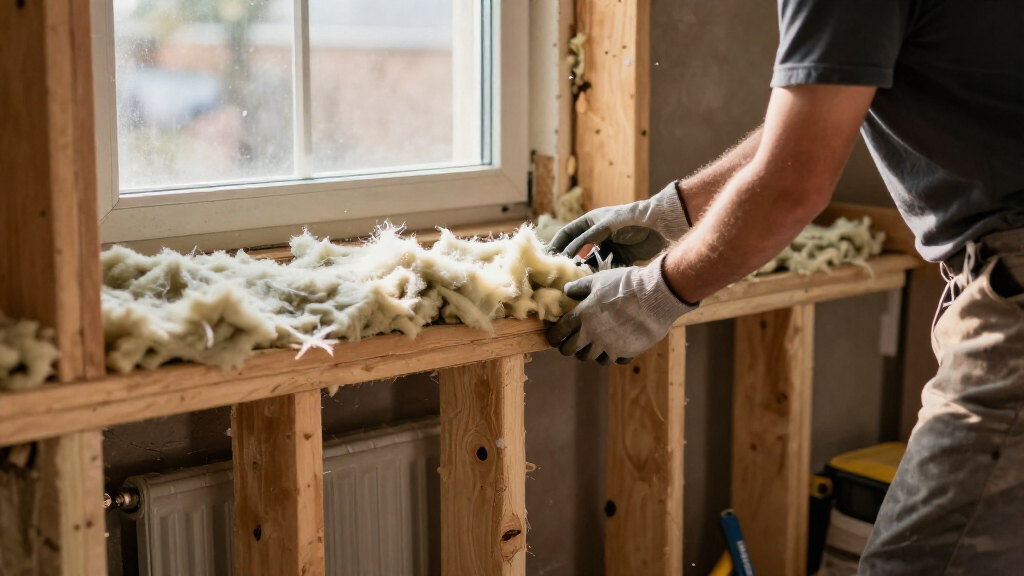
The report also distinguishes between installation methods. Loft insulation is generally straightforward, while cavity-wall insulation may take two to four hours and can be completed without occupants leaving the property, if the building is suitable. Internal wall insulation is more disruptive: it can involve moving radiators, sockets, skirting boards and, in some cases, kitchen fittings, followed by wall finishing and redecorating. External insulation is installed from outside but may require scaffolding and adjustments to downpipes, window surrounds or other fittings.
Comfort, Cost and Retrofit Risks
For households trying to keep rooms comfortable while limiting heating use, insulation can reduce the amount of heat escaping through parts of the home. That may support lower heating demand, but the supplied report does not provide measured bill savings, costs or a payback period. The financial result will vary with the home, the work undertaken and other factors, so insulation should not be treated as a guaranteed bill reduction.
The practical stakes go beyond energy use. A suitable retrofit may make rooms warmer, while an unsuitable system or poor installation can cause moisture-related damage. Homeowners therefore need to weigh expected comfort and energy benefits against upfront costs, disruption and the building-specific risk of damp. The report presents expert guidance, not a study of outcomes across a sample of homes.
Popular right now

Hisense E6SR Series 55-Inch 4K UHD Hi-QLED Roku Smart TV

Samsung 48 4K OLED Smart TV (2026) with WireLogic 8ft Ultra High Speed HDMI Cable

Philips 3300 Series Fully Automatic Espresso Machine with Milk Frother, Grinder, Hot and Iced Coffee Presets, SilentBrew, 15-Bar Pressure (E
As an affiliate, we earn on qualifying purchases.
Choosing Insulation for the Building
The report frames insulation as one option for reducing heat loss during colder weather, particularly in homes where heating costs are a concern. It emphasizes that “insulation” covers different jobs rather than one uniform upgrade: loft, cavity-wall, internal solid-wall and external solid-wall insulation have different requirements and levels of disruption.
Fowler said cavity insulation requires checks on the wall’s condition, exposure to driving rain and whether the cavity is clear. For solid-wall insulation, the work can take place inside or outside the existing walls, with different effects on the home and its appearance. Floor insulation may also depend on access beneath suspended timber floors; the supplied source text ends before giving further detail on that work.
“With an old house you really need to understand what you’re dealing with before you start.”
— Becky Lane, CEO of Furbnow
Savings and Suitability Vary
The report does not quantify likely heating-bill reductions, installation prices or the time needed to recover the cost of the work. It also does not provide a property-specific assessment, so it cannot establish whether a particular home is suitable for cavity filling or solid-wall insulation.
Whether a retrofit could cause moisture problems depends on details that are not available in the report, including the building’s construction, condition, exposure and ventilation. The supplied source also cuts off during its discussion of floor insulation. No independent performance data or follow-up on completed projects is included, leaving the scale of typical savings and outcomes unclear.
Assess the Home Before Work
For homeowners considering a retrofit, the experts quoted by Ideal Home advise identifying the wall type and checking the condition of the building before choosing a system. Suitability checks matter especially for cavity-wall work, while older solid-wall homes need attention to moisture and ventilation. The report advises planning for disruption in advance; internal work can be phased room by room, while external insulation may involve scaffolding and changes to fittings.
The source does not announce a policy change, new product or scheduled follow-up. The next step for an individual household is a property-specific assessment and a clear estimate of the work, disruption and expected performance. Until those details are known, the general possibility of a warmer home and lower heating use should not be read as a promise of a particular bill saving.
Key Questions
Can retrofitting insulation lower heating bills?
It may reduce heat loss and heating demand, but the report gives no typical savings figure or guarantee. Results depend on the home and the insulation installed.
Is insulation suitable for every older home?
No. The experts quoted say the wall construction and moisture behaviour need to be understood first. A system suitable for a cavity-wall home may not suit an older solid-wall property.
Which insulation work is least disruptive?
The report describes loft insulation as generally straightforward. Cavity-wall insulation can take two to four hours when a property is suitable, while internal wall insulation can require moving fittings and redecorating.
Can insulation cause damp?
Lane and Fowler warn that choosing or installing an unsuitable system, or making a home more airtight without adequate ventilation, can contribute to moisture problems. The risk depends on the building and the work.
What should homeowners check before starting?
Establish the wall construction and condition, check whether a cavity is clear and consider exposure to driving rain, moisture management and ventilation. The report does not provide a one-size-fits-all assessment.
Source: idealhome.co.uk