
TL;DR
Apartment Therapy published advice from two interior designers who flagged six living room decor choices they consider tacky or impersonal. Their suggestions are opinions, not universal design rules, and the report says homeowners should keep items they genuinely love.
Apartment Therapy has published a report in which two interior designers recommend reconsidering six living room decor choices they say can make a home feel impersonal or overly staged. The list includes cheap-looking rugs, fake books, generic artwork and imitation luxury decor, but the advice is a matter of design opinion, not a set of established rules.

Get business pricing on tools and workshop supplies
- Business-only prices and quantity discounts
- Tax-exempt purchasing
- Multiple users, one account, clear invoices
Freelance writer Sarah Lyon’s report, titled “6 Tacky Things You Should Remove from Your Living Room Right Now,” draws on comments from designers Holly Thompson and Behin Forghanifar, founder of Behinteriors. The designers’ shared concern is that decor can feel inauthentic when it is chosen mainly to imitate a more expensive look or to fill space rather than reflect the people who live there.
Thompson advises against low-quality rugs, too many carefully arranged vignettes and decorative fake books. She suggests considering natural-fiber rugs, affordable cotton flatweaves, secondhand pieces or layered rugs instead. She also says a room can look more like a shop than a home when every surface is styled, and argues that real books add both warmth and something to read.
Forghanifar names generic, mass-produced art, poorly made mirrors with artificial-looking gold finishes and fake luxury accessories as choices she would avoid. Her alternatives include artwork with a personal connection, pieces from local artists or vintage sources, and decor made from genuine materials. The report also stresses that price alone does not determine whether an item feels special.
How the Advice Changes a Room
The recommendations matter as practical guidance for people deciding what to keep, replace or buy for a living room. Both designers focus less on a particular style and more on whether an object appears personal, usable and honestly made. That offers a way to review a room without treating every trend or inexpensive item as a problem.
The advice also does not require a costly makeover. The report suggests options such as secondhand rugs, affordable natural fibers and locally sourced art. A homeowner could also remove excess accessories or keep only the objects they genuinely enjoy, rather than replacing everything on the list.
These are subjective judgments from two designers, not findings from a survey or a formal design standard. Readers may value convenience, price, personal taste or sentimental meaning differently. The report itself acknowledges that a person who loves an item can choose to keep it.
Popular right now

De’Longhi Classic Matte Black Espresso Machine with Milk Frother

Vitamix Touch & Go Advance 32-Ounce Bar Blender, White

De'Longhi Magnifica Duo Fully Automatic Espresso Machine with Milk Frother, Silver
As an affiliate, we earn on qualifying purchases.
The Designers’ Decorating Criteria
The Apartment Therapy article is a service-oriented interior design report, not an announcement of new regulations or a change in industry standards. Lyon asked two designers to identify decor they personally consider poor fits for living rooms. Their responses are framed as expert opinions and recommendations, rather than claims that particular products are objectively wrong.
The six categories share a concern about presentation: objects that imitate costly materials, artwork selected only to fill a wall, or so many styled arrangements that a room appears staged. The designers instead favor authentic materials and signs of personal use. Thompson’s rug suggestions also recognize budget limits, while Forghanifar says art need not be expensive to have meaning.
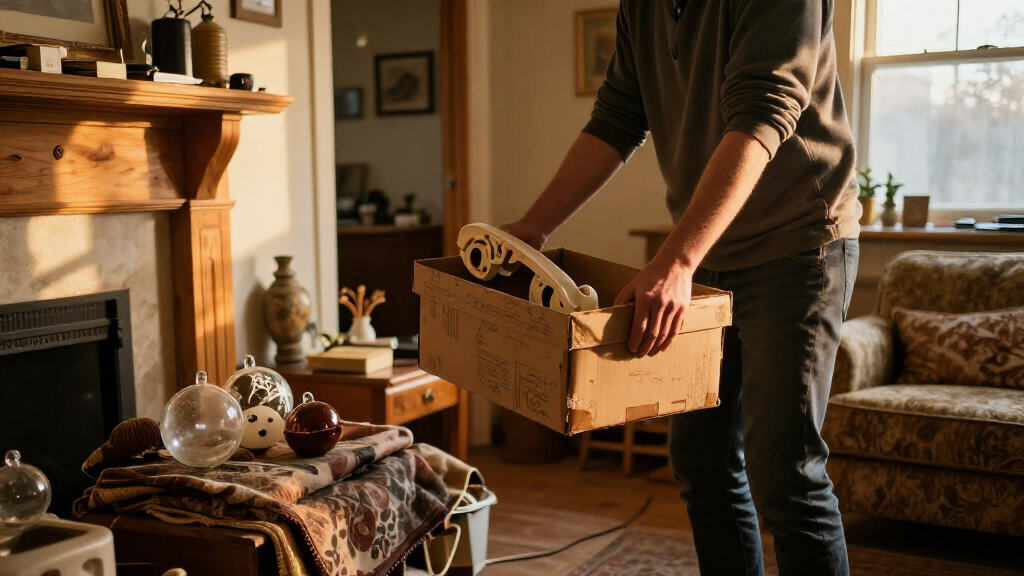
“When every nook is too perfectly styled with objects, it looks more like a store than a home.”
— Holly Thompson, designer, as quoted by Apartment Therapy
Taste Is Not a Design Rule
The report does not establish that these items lower a home’s value, harm its function or are disliked by all designers. It presents the views of two designers, and it does not include consumer research or a broader review of professional opinion. “Tacky” is a subjective label, not a measurable standard.
It is also unclear which specific products or price ranges count as “cheap-looking” or “generic,” since the article does not set objective thresholds. The designers’ recommendations may not fit every budget, household or aesthetic. The report’s qualification is direct: people can keep decor they love, even if it appears on the list.
A Personal Room-by-Room Review
The article does not announce a follow-up, policy change or product launch. For readers applying its advice, the next step is simply to look at each item’s role: whether it is useful, meaningful, well made for its price or there because a space felt empty. The designers’ suggestions point toward editing rather than automatically replacing decor.
Anyone considering a change can start with one area, such as a crowded shelf or a wall of generic prints, and decide what they want the room to communicate. Affordable alternatives named in the report include secondhand finds, natural-fiber rugs and locally made art. The source provides no timeline or evidence that the recommendations represent a wider shift in interior design.
Key Questions
Which six living room items do the designers advise reconsidering?
The list is cheap-looking rugs, too many styled vignettes, fake books, generic mass-produced art, poorly made mirrors with artificial-looking gold finishes, and fake luxury decor made to imitate materials such as marble, crystal or expensive wood.
Are these items objectively considered tacky?
No. The article reports the opinions of two designers. It does not present a universal design rule or research showing that all homeowners or designers agree.
Do the designers say everything on the list must be thrown away?
No. The report says people can keep items they genuinely love. Its advice is to avoid relying on several accessories from the list if they make a room feel over-styled or impersonal.
What lower-cost alternatives does the report suggest?
Thompson suggests cotton flatweave rugs, natural-fiber layering and secondhand rugs. Forghanifar recommends looking for vintage pieces or work by local artists, noting that meaningful artwork does not have to be expensive.
Source: apartmenttherapy.com