TL;DR

Get business pricing on tools and workshop supplies
- Business-only prices and quantity discounts
- Tax-exempt purchasing
- Multiple users, one account, clear invoices
Field sharpening a chainsaw chain relies on matching the right file size to your chain’s pitch, maintaining proper angles with guides, and setting the depth gauges correctly. Doing so ensures efficient, safe cuts and extends your chain’s lifespan.
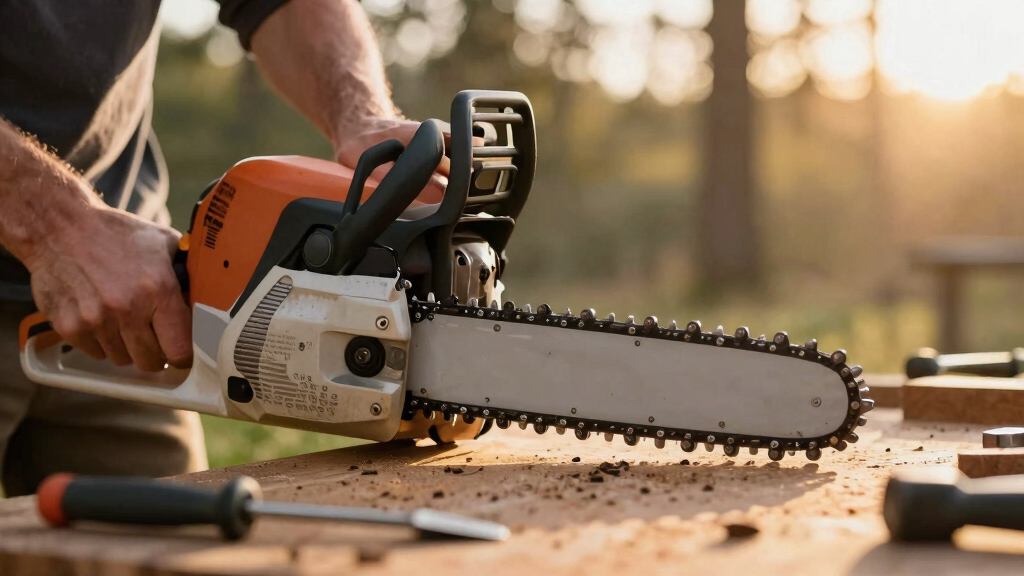
You grab your chainsaw, ready to tackle that stubborn log. But instead of slicing smoothly, the saw struggles — the chain’s dull. Sharpening a chain in the field isn’t just about running a file over the cutters; it’s a precise craft that saves you time, money, and frustration.
In this guide, you’ll learn how to pick the right file size, set the correct filing angles, and adjust the depth gauges for optimal performance. Whether you’re a weekend woodcutter or a professional, mastering these basics transforms a dull chain into a cutting beast.
Match your file size precisely to your chain’s pitch to avoid undercutting or flattening the cutting edge.
Use angle guides for consistent, safe filing angles — 30° for most chains, shallower for ripping or milling.
Regularly check and set your depth gauges to prevent inefficient cuts and reduce kickback risk.
Follow a systematic routine: secure the saw, file from inside out, and match all cutters to the shortest.
Recognize signs of dullness early — chips turning to dust, increased force needed, or uneven cuts — and sharpen promptly.
How to Pick the Perfect File Size for Your Chain
Choosing the right file size is the first step. The diameter of your round file must match your chain’s pitch — the distance between drive links, divided by two. For example, a 3/8″ full-size chain needs a 13/64″ (5.2 mm) file.
In practice, if your chain pitch is 3/8″, a 13/64″ file hits the sweet spot. Use a chart or the chain’s stamped info to match sizes. Too small, and you undercut the edge; too large, and you flatten the side plate, weakening the cut.
Remember: Files are consumables. When the file stops cutting cleanly, replace it. A worn-out file dulls your sharpening effort and wears your chain faster.
As an affiliate, we earn on qualifying purchases.
Mastering the Right Angles with Guides — No More Guesswork
Filing at the correct angle is key. Most chains use a 30° top plate angle, with a safe range of 25° to 35°. Ripping or milling chains prefer shallower, around 10°. A consistent angle ensures clean cuts and reduces kickback risk.
Using a guide makes this easier. Clip-on guides with etched angles (25°, 30°, 35°) rest on the top of the cutter, giving you a reliable reference. Roller guides and bar-mounted guides offer even more precision, especially if you’re sharpening frequently.
If you’re just starting out, guides prevent uneven edges that cause crooked cuts. For seasoned pros, freehand can work, but guides boost consistency—especially in the field where conditions are less controlled.
chainsaw angle guide for sharpening
As an affiliate, we earn on qualifying purchases.
As an affiliate, we earn on qualifying purchases.
Why Depth Gauge Settings Matter and How to Get Them Right
The depth gauge, or raker, controls how thick a chip each cutter takes. The standard setting is about 0.025″ (0.65 mm) below the cutter’s top edge. Setting it too high slows the cut; too low, and it risks kickback and chatter.
Check and adjust depth gauges every 3–4 sharpenings. Use a flat gauge tool — lay it over the cutter, file any protruding rakers flat, then round the front corner. This ensures the raker ramps up smoothly, reducing vibration and kickback.
For softwood, slightly higher (up to 0.030″) works; for hardwood, stick closer to 0.020″. Moving the rakers out of spec compromises both safety and performance.
As an affiliate, we earn on qualifying purchases.
Field Sharpening Step-by-Step: Your Easy Routine
- Secure the saw: clamp it in a stump vise or wedge it into a log. Engage the chain brake and check tension.
- Choose the right file size and guide angle.
- File from inside out, on the push stroke only. Apply 3–6 strokes per cutter, maintaining consistent pressure.
- Match all cutters to the shortest or dullest one.
- Check and set the depth gauges with a flat gauge tool.
- Repeat on the other side of the chain.
- Mark the starting tooth to keep track of your progress.
In practice, sharpening 10–15 times extends chain life significantly. Keep your strokes even, and don’t force the chain — a dull chain is safer and more efficient.
As an affiliate, we earn on qualifying purchases.
When and Why to Sharpen — Spot the Signs
Notice your saw producing fine dust instead of chips? That’s a clear sign the chain is dull. If you’re pushing harder than usual, or the saw drags to one side, it’s time to sharpen. Also, after hitting dirt, metal, or rocks, a quick touch-up keeps your chain safe and effective.
Sharpen regularly — don’t wait for the chain to become painfully slow. A light touch-up at every fuel stop prevents major downtime and keeps your cuts clean. Remember: a sharp chain makes every job safer, smoother, and faster.
New Tech & Trends That Make Field Sharpening Easier
Today, tools like 2-in-1 sharpeners combine filing and depth gauge control, making field sharpening faster and more consistent. Battery-powered grinders pack a punch, removing metal quickly but require careful handling to avoid heat damage.
Low-kickback chains with ramped depth gauges are safer and easier to maintain. Semi-chisel cutters hold their edge longer in dirty wood, making them popular for firewood cutters. Carbide-tipped chains excel in abrasive environments but need special tools.
These advancements mean sharpening is less guesswork, more precise, and safer — especially for homeowners or occasional users.
Frequently Asked Questions
How do I know what file size my chain needs?
Check the chain’s pitch, which is stamped on the bar or listed in your manual. Match the file diameter to the pitch using a chart — for example, 3/8″ pitch needs a 13/64″ file. Using the right size ensures proper edge formation.What angle should I file at for most chains?
Most chains use a 30° top plate angle. Use an angle guide set to 30°, within the 25°–35° range, to get consistent results. A proper angle improves cutting efficiency and reduces kickback.How often should I sharpen my chain?
Sharpen when you notice dust instead of chips, increased effort, or the saw pulling to one side. Regular light touch-ups at fuel stops keep your chain in top shape and prevent major downtime.Can I sharpen freehand or do I need a guide?
Freehand sharpening works if you’re experienced, but guides improve accuracy and consistency, especially in the field. Clip-on guides or roller guides are beginner-friendly options.How do I set the depth gauges correctly?
Use a flat gauge tool to measure 0.025″ below the cutter’s top edge. File protruding rakers flat, then round the front corner. Proper setting reduces kickback and ensures efficient cuts.Conclusion
Mastering the basics of field chain sharpening — file size, angles, and depth gauges — turns a frustrating chore into quick, confident work. When your chain is sharp, your cuts are cleaner, safer, and more efficient.
Keep your sharpening kit simple, your angles consistent, and your depth gauges on point. Your saw will thank you — and so will your logs.
Columbus Day / Indigenous Peoples' Day Picks
long weekend sales
As an affiliate, we earn on qualifying purchases.