
TL;DR

Get business pricing on tools and workshop supplies
- Business-only prices and quantity discounts
- Tax-exempt purchasing
- Multiple users, one account, clear invoices
A prototype autonomous flying umbrella has been developed that tracks and follows users to shield them from rain and sunlight. The device is still in testing, but shows promise for personal weather protection. Its impact could change how people stay protected outdoors.
An autonomous flying umbrella capable of following users and shielding them from rain and sunlight has been demonstrated by a tech startup. The device uses sensors and AI to track a person’s movements and adjust its position accordingly. This breakthrough could redefine personal weather protection, especially in urban environments.
The prototype, developed by AeroShield Technologies, employs a combination of GPS, computer vision, and obstacle avoidance sensors to maintain proximity to its user. According to the company, the umbrella can autonomously follow a person within a range of up to 10 meters, adjusting height and position to provide continuous coverage.
During demonstrations, the device successfully tracked users walking outdoors, shielding them from simulated rain and direct sunlight. The umbrella is equipped with lightweight propulsion systems that enable it to hover and move smoothly in response to user commands or pre-set routes. AeroShield emphasizes that the system is designed with safety features to prevent collisions with pedestrians or objects.
While still in testing, the company states that the device’s core functions—tracking, following, and weather shielding—are operational, with further development needed before commercial release. The project has garnered attention from urban mobility and personal safety sectors, highlighting its potential applications in daily life.
Potential Impact on Personal Weather Protection
The autonomous flying umbrella could significantly enhance outdoor comfort and safety, especially for commuters, outdoor workers, and event attendees. It offers a hands-free, mobile solution to unpredictable weather, reducing reliance on traditional umbrellas or sunshades. If commercialized, it may influence urban design and personal mobility devices, integrating weather protection into daily routines and smart city environments.As an affiliate, we earn on qualifying purchases.
Development of Personal Weather-Protection Technologies
This innovation builds on ongoing advancements in personal mobility and autonomous devices. Previous efforts have included wearable weather sensors and robotic umbrellas, but none have combined autonomous tracking with flight capabilities. The concept aligns with broader trends toward AI-driven personal assistants and smart environmental adaptation tools, with prototypes emerging in recent years. AeroShield’s project is among the first to demonstrate an operational flying umbrella that actively follows and shields users.
“Our autonomous flying umbrella is designed to provide seamless weather protection, following users naturally and adjusting to their movements in real time.”
— AeroShield Technologies spokesperson
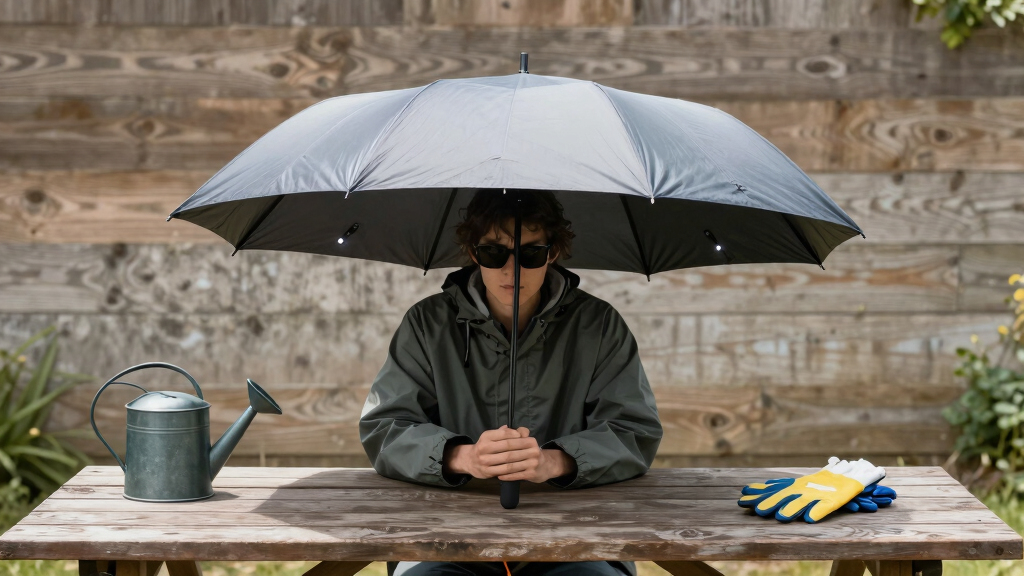
personal weather protection device
As an affiliate, we earn on qualifying purchases.
As an affiliate, we earn on qualifying purchases.
Unanswered Questions About Safety and Commercialization
It remains unclear when or if the autonomous flying umbrella will be available for consumer use. Details about safety standards, regulatory approvals, and cost are still under development. Additionally, questions about battery life, weather limitations, and real-world obstacle handling have not yet been fully addressed.
As an affiliate, we earn on qualifying purchases.
Next Steps for Development and Testing
AeroShield plans to continue refining the prototype through broader outdoor testing and safety assessments. The company aims to collaborate with regulatory bodies to ensure compliance and safety standards are met before considering commercial launch. Public demonstrations and potential pilot programs are expected in the coming months to assess practical usability and user acceptance.
As an affiliate, we earn on qualifying purchases.
Key Questions
How does the autonomous flying umbrella follow users?
The device uses GPS, computer vision, and obstacle detection sensors to track and follow a user within a specified range, adjusting its position and height accordingly.
Can it protect against both rain and sunlight?
Yes, the umbrella is designed to shield users from rain and direct sunlight, providing versatile weather protection.
Is this technology safe for public use?
Safety features are being developed, including obstacle avoidance and collision prevention. Full safety certification is still pending as the device remains in testing.
When might this device be available commercially?
There is no confirmed timeline yet; commercial release depends on further testing, safety approval, and regulatory compliance, which could take several years.
What are the limitations of the current prototype?
Limitations include battery life, weather conditions affecting flight stability, and obstacle detection accuracy, all of which are being addressed in ongoing development.
Source: hn
Halloween Picks
halloween
As an affiliate, we earn on qualifying purchases.