TL;DR
Open a free Amazon Business account
Business pricing, bulk buying and tax-exempt orders.
Create a free accountAs an affiliate, we earn on qualifying purchases.
Paralleling two inverter generators doubles your power while keeping things portable. Proper synchronization is key to safe, efficient operation. It’s ideal for RVers, outdoor events, and backup power, but check compatibility first.
Paralleling inverter generators effectively doubles your power capacity while maintaining portability and clean power.
Synchronization is vital—use manufacturer-approved cables or wireless systems, and follow setup instructions carefully.
Not all inverter generators can be paralleled—check compatibility before investing in equipment.
Paralleling is most cost-effective when you need more than 3000 watts regularly, such as for RVs or backup power.
Advances like wireless syncing and digital controls are making paralleling easier, safer, and more reliable.
Paralleling Two Inverter Generators
Connect two compatible inverter generators, synchronize their voltage and frequency, and they can operate as one larger power source. The payoff is modular capacity without committing to one bulky machine—but compatibility and correct setup are non-negotiable.
Three steps to one stable output
Paralleling is more than joining two sockets. The generators must be designed to communicate, align their electrical waveforms, and share demand without allowing either unit to become overloaded.
Check compatibility
Confirm parallel capability, rated voltage, phase, ports, control system, and approved kit. Similar wattage alone does not prove compatibility.
Use the correct link
With loads disconnected and units off, install the manufacturer-approved parallel cables, kit, or supported wireless link exactly as directed.
Start and share load
Start the generators in the specified sequence, allow synchronization, then add appliances gradually so both units share the load within their ratings.
Synchronization keeps the waveform in harmony
Voltage, frequency, and phase must align before the outputs combine. Modern parallel-ready units often manage this automatically, but the approved connection method and startup procedure still matter.
What must line up
These indicators illustrate the three dimensions that must remain coordinated for clean, stable output.
Failure points to prevent
Single unit or parallel pair?
A parallel setup trades a little extra equipment and setup time for modularity. Run one unit for light demand, then bring the second online when appliances, tools, or backup circuits require more capacity.
| Feature | Single inverter generator | Paralleled inverter generators |
|---|---|---|
| Maximum power | Typically 2,000–3,000 W | ✓Up to about 6,000 W with two suitable units |
| Portability | ✓One lightweight unit | Two manageable units instead of one large machine |
| Scalability | ~Fixed output | ✓Run one or both as demand changes |
| Noise | Usually around 50–65 dB | Similar character; total sound may rise with two units |
| Initial cost | ✓Lower and simpler | ~Second generator plus parallel equipment |
| Redundancy | One point of failure | ✓One unit may support essential lighter loads |
Actual combined output depends on rated running watts, outlet and kit limits, altitude, temperature, fuel, and manufacturer specifications.
Best when demand is high—but variable
The economic case is strongest when you regularly need more than roughly 3,000 watts, value portability, and can use a single generator during lighter periods.
Use one generator for charging and basic loads; connect the second when air conditioning or other high-demand appliances are needed.
Split the transport weight across two units while gaining capacity for tools with demanding startup loads.
Scale from essential electronics to a larger temporary load plan, provided transfer and connection requirements are handled safely.
From compatibility to clean power
Each link depends on the one before it. Skipping compatibility or connection checks undermines synchronization, load sharing, and safe delivery.
Safety rule
Never improvise a parallel connection or connect ordinary generator outlets together. Follow the manuals for both generators and the parallel kit. For home wiring or uncertain setups, use a qualified electrician or technician.
What comes next
Wireless synchronization, digital load monitoring, app-based controls, and more standardized parallel ports are making modular power easier to supervise. Compatibility remains the first question—even when the connection becomes smarter.
What Does Paralleling Inverter Generators Actually Mean?
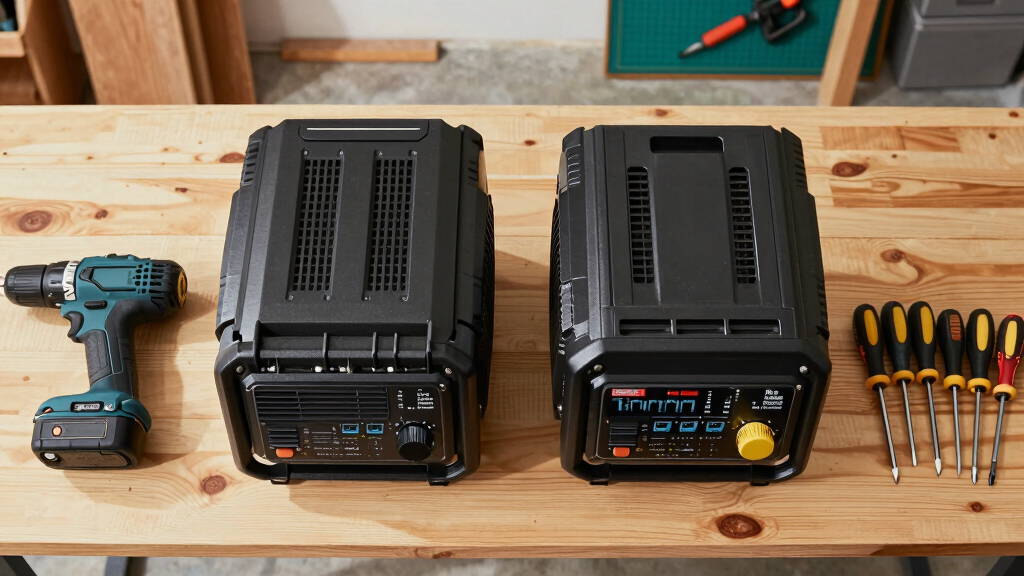
Paralleling involves connecting two (or more) inverter generators to operate as a single, larger power source. This means their outputs synchronize in frequency and voltage, allowing them to share the load evenly.
Think of it like two musicians playing in perfect harmony—if they’re out of sync, the music sounds off. Proper synchronization is critical to avoid surges or damage. When done right, you get more wattage without adding bulk or noise.
For example, if one inverter generator produces 2000 watts, paralleling two can give you up to 4000 watts—enough for a small RV, a jobsite, or a power backup for your home.
Understanding this process is crucial because improper paralleling can lead to uneven load distribution, risking damage or inefficiency. It’s not just about plugging in two units; it’s about ensuring they operate in unison to deliver stable, clean power. This stability is especially important for sensitive electronics, which require consistent voltage and frequency. The ability to scale power up or down by adding or removing units offers flexibility but demands proper setup and compatibility checks to avoid costly mistakes.
inverter generator paralleling kit
As an affiliate, we earn on qualifying purchases.
As an affiliate, we earn on qualifying purchases.
How Do You Paralleling Two Inverter Generators? 3 Simple Steps
- Check Compatibility: Ensure both units are designed to be paralleled or are compatible with a specific paralleling kit. Compatibility isn’t just a label—it’s about matching voltage, phase, and control systems, which ensures safe and efficient operation. Using incompatible units can cause uneven load sharing, surges, or damage, negating the benefits of paralleling.
- Connect Properly: Use the manufacturer-recommended cables or wireless systems to link the units. Proper connection isn’t just about physical plugs; it’s about ensuring secure, correctly polarized, and interference-free links that maintain synchronization. Using incorrect cables or makeshift connections can lead to phase mismatches or electrical faults.
- Synchronize & Share Load: Power on both units, follow setup instructions to synchronize their phase and frequency, then distribute your electrical load evenly. This step is critical because even slight phase differences can cause power surges or equipment damage. Many modern units have automatic synchronization features, but understanding manual procedures helps troubleshoot and optimize performance. Proper load sharing prevents overloading one unit, prolonging their lifespan and ensuring stable power delivery.
For example, a camper might connect two 2000-watt inverter generators using a dedicated paralleling kit, then run their RV’s appliances and charging stations with confidence. The key is understanding that the synchronization process is what makes the combined power output safe and reliable, preventing issues that could arise from mismatched operation.
dual inverter generator power station
As an affiliate, we earn on qualifying purchases.
As an affiliate, we earn on qualifying purchases.
Compare Single vs. Paralleled Inverter Generators Side-by-Side
| Feature | Single Inverter Generator | Paralleled Inverter Generators |
|---|---|---|
| Max Power | 2000-3000 watts | Up to 6000 watts (with two units) |
| Portability | Lightweight, easy to carry | Two units, slightly heavier but still manageable |
| Flexibility | Less scalable | Modular—add more units if needed |
| Noise Level | Quiet, 50-65 dB | Similar or slightly increased, depends on units |
| Cost | Lower initial | Higher due to additional equipment |
Choosing between a single or paralleled system depends on your specific needs. Paralleled units offer scalability, which means you can start with a smaller setup and expand as your power demands grow. This flexibility is especially advantageous for outdoor enthusiasts or small businesses that might need varying power levels. However, the initial investment and setup complexity are higher, so weigh these factors against your current and future power requirements.
portable inverter generator for RV
As an affiliate, we earn on qualifying purchases.
As an affiliate, we earn on qualifying purchases.
When Does Paralleling Make Financial Sense?
If you regularly need more than 3000 watts for outdoor work, RVs, or backup power, paralleling can save you money and hassle. Instead of buying a big, expensive generator, two smaller units can do the job at a lower upfront cost. This modular approach allows you to upgrade gradually, avoiding the steep investment of a single large generator.
For example, a homeowner with a 6000-watt load during outages might invest in two 3000-watt inverter generators. Over time, this setup can be more economical and flexible—plus, it’s easier to store and transport. The ability to run one unit during lighter loads extends fuel efficiency and reduces noise, which is beneficial for daily use.
However, if your power needs are sporadic or small, the extra cost and complexity might not be worth it. In those cases, a single, high-quality inverter generator might do the trick more simply. The key is assessing whether the added flexibility and capacity justify the initial investment and setup effort based on your specific power demands.
wireless inverter generator synchronization
As an affiliate, we earn on qualifying purchases.
As an affiliate, we earn on qualifying purchases.
What Are the Risks of Paralleling Generators? And How to Avoid Them
Connecting two incompatible or improperly synchronized units can cause power surges, damage to your electronics, or even generator failure. These risks are not just theoretical—they can lead to costly repairs or safety hazards. That’s why understanding compatibility and following strict setup procedures are essential.
For example, a DIY setup using mismatched units led to a blown circuit board in one case. This highlights the importance of verifying specifications, using recommended cables, and following safety protocols. Proper setup includes turning off all units before connecting, ensuring secure and correct wiring, and double-checking phase alignment.
Always wear PPE—gloves and eye protection—when working with electrical connections, as improper handling can cause shocks or short circuits. Never attempt to parallel generators without a thorough understanding of the process, as mistakes can be dangerous and costly. When in doubt, consult the manufacturer or a qualified technician to ensure safety and performance.
The Future of Paralleling: Wireless & Smart Tech
Recent advances make paralleling even easier. Some new inverter generators now sync wirelessly, eliminating messy cables. Digital controls and apps allow you to monitor both units’ status remotely, providing real-time data on load, runtime, and health.
For instance, a portable power enthusiast can check load, runtime, and health via their smartphone, ensuring everything stays balanced and safe—no more fiddling with cables or manual adjustments. These innovations reduce setup errors and improve safety by automating synchronization and load sharing processes.
This tech trend means more reliable, user-friendly options for outdoor power needs—making paralleling accessible to a broader audience. It also opens possibilities for smarter energy management, such as automatic load balancing and fault detection, which enhance safety and efficiency in complex setups.
Frequently Asked Questions
Can I connect any inverter generators together?
No, only models designed with paralleling features or compatible with specific kits can be linked. Always verify manufacturer specs before attempting to connect units.Is paralleling safe if I follow all instructions?
Yes, when done with compatible units and proper equipment, paralleling is safe. Follow setup procedures carefully, wear PPE, and double-check connections.How do I know if my inverter generators are compatible?
Check the manufacturer’s documentation for paralleling capabilities and ports. Some units have dedicated connectors or wireless options designed for this purpose.Will paralleling increase noise or fuel use?
Not significantly. Inverter generators are quiet, and running two units can be more efficient than a single large generator, depending on load management.When should I consider paralleling over buying a bigger generator?
If you need scalable, modular power or only require high wattage occasionally, paralleling offers flexibility and can be more cost-effective than a single large unit.Conclusion
Think of paralleling inverter generators as building your own power team—more wattage, more flexibility, with the peace of mind that comes from proper setup. When your power needs grow or change, this approach scales right alongside. It’s a smart move for outdoor living, work sites, or emergency prep—just remember, compatibility and safety come first. Now, ask yourself: could a modular power setup be your next step?NFL season / tailgating Picks
team gear
As an affiliate, we earn on qualifying purchases.