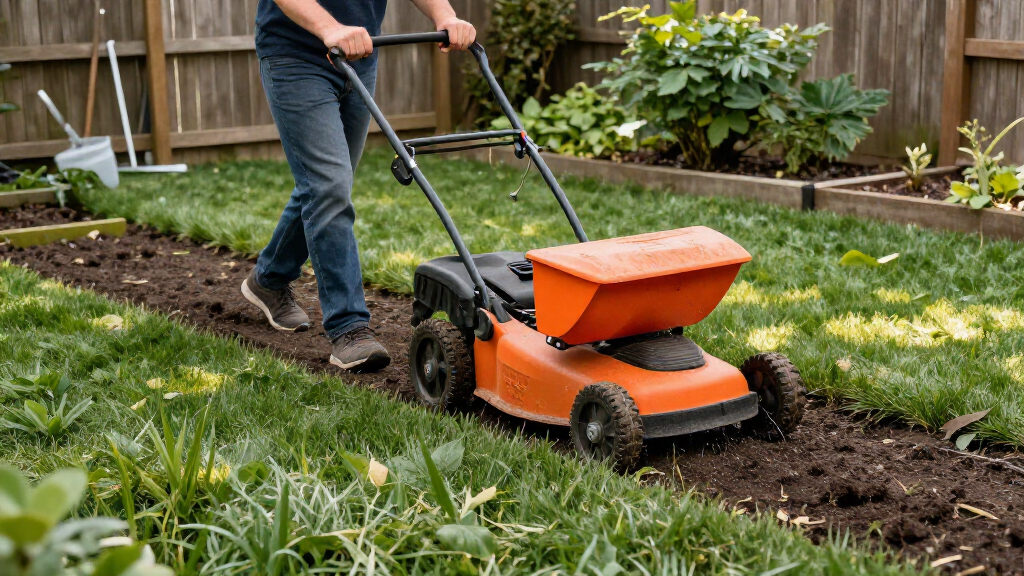
The best lawn seeder for most homeowners is the Scotts Turf Builder EdgeGuard DLX Broadcast Spreader, which pairs broad lawn coverage with an edge-control feature for more targeted application. For a larger property, the Agri-Fab 100 lb Tow-Behind Spiker Seeder combines seeding with soil contact, while the John Deere 3 lb Garden Seeder suits gardeners planting measured rows. The main choice is between compact hand tools, push spreaders, row planters, and tow-behind equipment: each handles a different area and seed-placement job. Capacity, control, storage needs, and the type of seed all affect which design makes sense. Read on for the full comparison and guidance on choosing a seeder that fits your lawn and planting plans.

Get business pricing on tools and workshop supplies
- Business-only prices and quantity discounts
- Tax-exempt purchasing
- Multiple users, one account, clear invoices
Complete the kit



Key Takeaways
- Broadcast spreaders lead for ordinary lawn coverage: the Scotts EdgeGuard DLX is the strongest all-around fit here, while the Yard Commander and VEVOR offer larger-capacity walk-behind alternatives.
- Seed placement changes the job: garden seeders such as the John Deere and Agri-Fab Push Garden Seeder plant rows, unlike lawn spreaders that scatter seed over an area.
- Large lawns favor tow-behind capacity: the Agri-Fab 100 lb Spiker Seeder is built for broad runs and soil contact, but it requires a compatible towing setup and more storage room.
- Handheld tools suit small patches, not acreage: the Minoru, Garden Guru, Chapin 8740A, and Chapin 84700G are easier to manage in tight spaces, with capacity and coverage limits compared with push models.
- Some products combine jobs rather than specializing in seeding: the Brinly aerator spreader can serve multiple lawn-care tasks, while the Scotts Whirl and Chapin 8740A are simpler spreaders with fewer reasons to choose them for extensive lawn work.
| Scotts Whirl Hand-Powered Spreader |  | Best Overall for Small Lawns | Brand: Scotts | Model: 71074 | Type: Hand-powered spreader | VIEW LATEST PRICE | See Our Full Breakdown |
| Minoru G-12 Handy Seeder for Coated Seeds |  | Best for Coated Seed Tray Sowing | Brand: Minoru | Model: G-12 | Compatible seed sizes: 2L, L, S, and 3S (source listing repeats L) | VIEW LATEST PRICE | See Our Full Breakdown |
| Garden Guru Handheld Seed Spreader – Multi-Use for Grass Seed, Fertilizer, Salt, Ice & Snow Melt – Adjustable Twist Cap with Multiple Openings – Lightweight 1 L Capacity |  | Best for Adjustable Handheld Control | Brand: Garden Guru | Model: SEEDER | Manufacturer part number: SEEDER | VIEW LATEST PRICE | See Our Full Breakdown |
| John Deere 3 lb Garden Seeder with 7 Seed Plates |  | Best for Row Planting in Prepared Soil | Manufacturer: Agri-Fab | Model number: 45-0640-JD | Weight: 9.48 pounds | VIEW LATEST PRICE | See Our Full Breakdown |
| Chapin 8740A 64 oz All-Season Hand Shaker Spreader |  | Best Simple Shaker for Small Areas | Model: 8740A | Capacity: 64 oz | Material: Poly | VIEW LATEST PRICE | See Our Full Breakdown |
| Chapin 8701G TurfPro Garden Push Seeder |  | Best for Vegetable Rows | Model: 8701G | Hopper capacity: 1.5 liters | Seed plates: 6 interchangeable plates for up to 20 vegetable varieties | VIEW LATEST PRICE | See Our Full Breakdown |
| VEVOR Walk-Behind Spreader 60 lb Capacity Push Broadcast Black |  | Best for Large Lawn Coverage | Model number: TC2135 | Hopper capacity: 60 pounds | Spreading width: Up to 9.8 feet | VIEW LATEST PRICE | See Our Full Breakdown |
| Chapin 84700G TurfPro 25 lb Handheld Bag Spreader |  | Best for Tight and Hard-to-Reach Areas | Model: 84700G | Capacity: 25 pounds | Style: Bag spreader | VIEW LATEST PRICE | See Our Full Breakdown |
| Brinly 40-Inch Tow-Behind Aerator Spreader with Weight Tray |  | Best for Aerating and Seeding in One Pass | Working width: 40 inches | Hopper capacity: 100 pounds (1.74 cubic feet) | Weight tray capacity: 75 pounds | VIEW LATEST PRICE | See Our Full Breakdown |
| Scotts Turf Builder EdgeGuard DLX Broadcast Spreader |  | Best for Controlled, Multi-Season Lawn Spreading | Model: 76232 | Type: Broadcast spreader | Capacity: Up to 15,000 sq. ft. of Scotts lawn products | VIEW LATEST PRICE | See Our Full Breakdown |
| Agri-Fab 100 lb Tow-Behind Spiker Seeder Drop Spreader, 32 in Working Width |  | Best Tow-Behind Seeder for Large Lawns | Model: 45-05431 | Hopper capacity: 100 lb | Working width: 32 in | VIEW LATEST PRICE | See Our Full Breakdown |
| Yard Commander 50 lb Walk-Behind Broadcast Spreader |  | Best for All-Season Walk-Behind Spreading | Model: YTL-002-001 | Hopper capacity: Up to 50 lb; varies by material | Spread radius: 10–12 ft | VIEW LATEST PRICE | See Our Full Breakdown |
| Agri-Fab Push Garden Seeder with 7 Seed Plates and Adjustable Row Marker |  | Best Garden Seeder for Beginners | Model: 45-0640 | Hopper capacity: 3 lb | Seed plates: 7 interchangeable | VIEW LATEST PRICE | See Our Full Breakdown |
| Charles Walters CWSRS Single Row Seeder |  | Best for Adjustable-Depth Row Planting | Model: CWSRS | Type: Push-style single-row seeder | Seed plates: 10 interchangeable | VIEW LATEST PRICE | See Our Full Breakdown |
| lawn seeder | Model | Warranty |
|---|---|---|
| Scotts Whirl Hand-Powered Spre | 71074 | — |
| Minoru G-12 Handy Seeder for C | G-12 | — |
| Garden Guru Handheld Seed Spre | SEEDER | Lifetime warranty; 90-day satisfaction guarantee |
| John Deere 3 lb Garden Seeder | — | 2-year limited warranty |
| Chapin 8740A 64 oz All-Season | 8740A | — |
| Chapin 8701G TurfPro Garden Pu | 8701G | 1-year limited warranty |
| VEVOR Walk-Behind Spreader 60 | — | — |
| Chapin 84700G TurfPro 25 lb Ha | 84700G | 2-year limited warranty |
| Brinly 40-Inch Tow-Behind Aera | — | — |
| Scotts Turf Builder EdgeGuard | 76232 | — |
| Agri-Fab 100 lb Tow-Behind Spi | 45-05431 | 3-year limited |
| Yard Commander 50 lb Walk-Behi | YTL-002-001 | 1 year |
| Agri-Fab Push Garden Seeder wi | 45-0640 | 1-year limited |
| Charles Walters CWSRS Single R | CWSRS | — |
More Details on Our Top Picks
Scotts Whirl Hand-Powered Spreader
For a compact lawn that needs occasional reseeding, I’d put the Scotts Whirl ahead of the larger push and tow-behind spreaders in this roundup. Its hand-powered format and coverage of up to 1,500 sq. ft. per fill suit spot repairs and modest yards without storing a full-size machine. The adjustable arm support is meant to make spreading more comfortable, while the design is described as providing smooth, even coverage—useful for avoiding obvious clumps in a small patch. It also handles fertilizer and winter materials, so it can serve more than one seasonal job. The tradeoff is its limited capacity: larger lawns mean repeated refills and hand operation. For tray-based planting, the Minoru G-12 is more specialized; for small-lawn broadcast seeding, this is the more flexible choice.
Pros:- Covers up to 1,500 sq. ft. per fill, a practical scale for small yards and repairs.
- Adjustable arm support is designed to make handheld spreading more comfortable.
- Works with grass seed, fertilizer, salt, and ice melt.
- Arrives fully assembled.
Cons:- Handheld operation and limited coverage make it inefficient for larger lawns.
- The supplied information does not specify an adjustable rate or capacity in volume or weight.
Best for: Homeowners reseeding small lawns or patchy areas who want one hand-powered tool for seed and seasonal granular treatments.
Not ideal for: Owners of large lawns who want to cover broad areas quickly without frequent refills or sustained hand operation.
- Brand:Scotts
- Model:71074
- Type:Hand-powered spreader
- Coverage:Up to 1,500 sq. ft.
- Suitable materials:Grass seed, lawn fertilizer, salt, and ice melt
- Dimensions:13 x 8.7 x 8.5 inches
- Materials:Metal and plastic
- Handle material:Rubber
- Assembly:Fully assembled
Our verdict“Choose the Scotts Whirl for versatile, small-yard broadcasting; pick a push or tow-behind spreader for larger areas.”
Minoru G-12 Handy Seeder for Coated Seeds
The Minoru G-12 is the specialist in this group: unlike the Scotts Whirl or Chapin 8740A, it is built for placing coated seeds into compatible trays, not broadcasting lawn seed over open ground. Its included rolls, adjustment plates, and guide provide a purpose-built setup for tray work, and the listed tray range of 288–448 holes helps define where it fits. The listed seed sizes are 2L, L, S, and 3S, though the source repeats L, so I would verify size compatibility before buying. At just 0.18 kg, it is lightweight for repetitive handling. That focus is also its main limitation: it is not a practical replacement for a lawn spreader, and its coated-seed restriction rules out many ordinary grass-seeding jobs. Choose it only if your project involves compatible trays and seed.
Pros:- Designed for coated seeds in multiple listed size categories.
- Works with trays in the 288–448-hole range.
- Includes three rolls, three adjustment plates, and a guide.
- Lightweight at 0.18 kg.
Cons:- Its tray-sowing design does not suit broadcast lawn seeding.
- The listed seed-size categories repeat L, leaving the usable size range unclear.
- Compatibility is limited to coated seeds and specified tray formats.
Best for: Growers sowing coated seeds into trays with 288–448 holes who need a dedicated, lightweight placement tool.
Not ideal for: Homeowners broadcasting grass seed across a lawn or anyone using uncoated seed; this tool is designed for coated seeds and compatible trays.
- Brand:Minoru
- Model:G-12
- Compatible seed sizes:2L, L, S, and 3S (source listing repeats L)
- Compatible tray capacity:288–448 holes
- Included accessories:3 rolls, 3 adjustment plates, and 1 guide
- Material:Resin
- Weight:0.18 kg
Our verdict“Buy the G-12 for compatible coated-seed tray work, not for spreading grass seed over a lawn.”
Garden Guru Handheld Seed Spreader – Multi-Use for Grass Seed, Fertilizer, Salt, Ice & Snow Melt – Adjustable Twist Cap with Multiple Openings – Lightweight 1 L Capacity
I’d choose the Garden Guru handheld spreader when control over opening size matters more than covering a large lawn in one go. Its adjustable twist-cap openings are intended to suit different granules, giving it a more configurable approach than the Chapin 8740A, whose lid offers three fixed opening sizes. The 1 L capacity and wide top opening keep refills straightforward, but that small volume is a real constraint if you are overseeding a broad area. The lightweight ergonomic body is aimed at reducing hand fatigue during smaller jobs, and its listed uses include grass seed, fertilizer, salt, and ice melt. The tradeoff is that a first-time user may need to learn the twist-cap settings, and the provided data does not give dimensions or a coverage area. I’d favor it for varied small-area tasks, not whole-lawn work.
Pros:- Adjustable twist-cap openings provide control for different granule sizes.
- Lightweight ergonomic design is intended to reduce hand fatigue.
- Wide top opening makes filling easier.
- Listed with a lifetime warranty and 90-day satisfaction guarantee.
Cons:- The 1 L capacity can mean frequent refills on larger areas.
- Twist-cap adjustment may take practice for first-time users.
- The supplied specifications do not state coverage area or dimensions.
Best for: Gardeners treating small lawns, borders, and paths with different granular products who value adjustable openings and easy refilling.
Not ideal for: People overseeding large lawns or anyone who wants a high-capacity spreader with a stated coverage area.
- Brand:Garden Guru
- Model:SEEDER
- Manufacturer part number:SEEDER
- Capacity:1 L
- Opening adjustment:Twist cap with multiple openings
- Listed uses:Grass seed, fertilizer, salt, ice melt, and other granules
- Warranty:Lifetime warranty; 90-day satisfaction guarantee
Our verdict“Choose Garden Guru for adjustable, multi-use spreading on small areas; the Chapin 8740A may be simpler if three fixed opening sizes are enough.”
John Deere 3 lb Garden Seeder with 7 Seed Plates
For planting garden rows rather than broadcasting seed across established turf, the John Deere 3 lb Garden Seeder is the most purpose-built option here. Its seven interchangeable plates support up to 20 seed types, while the adjustable row marker helps maintain spacing from one pass to the next. The integrated plow blade prepares a row as you move, and the push design reduces the bending associated with hand-sowing. That makes it a different proposition from the Scotts Whirl, which is better suited to scattering seed over an existing lawn. This seeder does, however, depend on prepared, well-cultivated soil; it is not a tool for cutting into compacted ground or broadcasting across turf. At 9.48 pounds, it is also heavier than a simple handheld spreader. Choose it for deliberate, repeatable garden rows.
Pros:- Seven interchangeable seed plates are listed as compatible with up to 20 seed types.
- Adjustable row marker helps maintain consistent spacing.
- Integrated plow blade prepares rows during use.
- Push operation can reduce the need to bend and hand-place seed.
Cons:- Designed for prepared, well-cultivated soil rather than compacted ground or existing turf.
- At 9.48 pounds, it is heavier than handheld seed spreaders.
- Row-by-row planting is slower for broad lawn overseeding than broadcast spreading.
Best for: Gardeners planting multiple seed types in prepared beds who want repeatable row spacing with less bending.
Not ideal for: Homeowners overseeding an established lawn or working in compacted, unprepared soil; this is a row seeder for cultivated ground.
- Manufacturer:Agri-Fab
- Model number:45-0640-JD
- Weight:9.48 pounds
- Dimensions:30.75 x 8.5 x 30 inches
- Seed plates:7 interchangeable plates
- Compatible seed types:Up to 20
- Warranty:2-year limited warranty
Our verdict“Pick this model for spaced garden rows in cultivated soil, not for quick broadcast seeding over a lawn.”
Chapin 8740A 64 oz All-Season Hand Shaker Spreader
The Chapin 8740A makes the most sense for a small lawn, path, or isolated repair where a straightforward shaker is easier to store than a wheeled spreader. Its 64 oz capacity is larger than the Garden Guru’s 1 L capacity, and the twist lid offers three opening sizes for different pelletized materials. The wide mouth simplifies filling, while the large handle is designed to work with bare hands or gloves. It can also store with product inside, which suits seasonal use for seed, fertilizer, salt, or ice melt. Compared with the Scotts Whirl, this is a simpler bottle-style option rather than a hand-powered spreader described as delivering smooth, even coverage. Its limits are clear: it is intended for small areas and paths, and the supplied information does not give a coverage figure or rate-control mechanism.
Pros:- 64 oz capacity exceeds the Garden Guru’s listed 1 L capacity.
- Three lid opening sizes suit different pelletized materials.
- Wide-mouth bottle and screw-top lid simplify filling.
- Large grip is designed for use with or without gloves.
Cons:- Intended for small areas and paths, not large-scale lawn seeding.
- The supplied specs do not state coverage area or a calibrated application rate.
Best for: Homeowners handling small lawn patches, paths, or seasonal spot treatments who want a portable shaker that can be stored with product inside.
Not ideal for: People covering a large lawn or seeking a spreader with a stated coverage area and more detailed rate control.
- Model:8740A
- Capacity:64 oz
- Material:Poly
- Lid openings:Three sizes: small, large, and wide
- Handle:Large grip designed for use with or without gloves
- Intended materials:Seed, fertilizer, salt, ice melt, sand, and pelletized products
- Intended area:Small areas and paths
Our verdict“Choose the Chapin 8740A for portable spot spreading and seasonal tasks, but use a larger spreader for whole-lawn coverage.”
Chapin 8701G TurfPro Garden Push Seeder
The Chapin 8701G is the most planting-focused option in this group: it marks a row, opens the soil, meters seeds, and covers them as you push. Its six interchangeable plates support up to 20 vegetable varieties, making it more adaptable for mixed garden beds than a broadcast spreader such as the Scotts Turf Builder EdgeGuard DLX, which scatters material over a broad area. The adjustable row marker also helps keep spacing consistent across successive passes. The tradeoff is that this is a garden seeder, not a lawn-wide overseeder: it is designed for prepared soil, and its 1.5-liter hopper means refills are part of the job. Choose it for controlled vegetable rows; skip it if your main task is covering an established lawn quickly.
Pros:- Six seed plates accommodate up to 20 vegetable varieties.
- Combines row marking, furrowing, seed dispensing, and covering in one push.
- Adjustable row-marking wheel helps maintain consistent spacing.
- Rust-resistant poly hopper and cushioned grips support regular garden use.
Cons:- Designed for prepared soil rather than hard or untilled lawn ground.
- The 1.5-liter hopper requires frequent refills for larger planting jobs.
- Its vegetable-row design is less suited to broad, even lawn coverage than broadcast spreaders.
Best for: Home gardeners planting several vegetable varieties in prepared beds who want repeatable rows and seed-specific plates.
Not ideal for: Homeowners overseeding a large lawn or working in untilled ground; it is designed for prepared soil and has a relatively small hopper.
- Model:8701G
- Hopper capacity:1.5 liters
- Seed plates:6 interchangeable plates for up to 20 vegetable varieties
- Dimensions:30.75 x 8.5 x 16 inches
- Weight:14.92 pounds
- Frame:Powder-coated steel
- Warranty:1-year limited warranty
Our verdict“Choose the Chapin 8701G for controlled vegetable planting in prepared beds, not for fast coverage across a lawn.”
VEVOR Walk-Behind Spreader 60 lb Capacity Push Broadcast Black
For a buyer who wants to spread seed across a broad lawn without carrying a hopper, the VEVOR’s 60-pound capacity is its clearest advantage. Its broadcast pattern reaches up to 9.8 feet, and 18 settings give more control over output than the Chapin 84700G handheld bag spreader, which is better suited to smaller or hard-to-reach areas. Pneumatic tires are intended for grass, gravel, and snow, so this push model has more surface versatility than a compact hand spreader. The compromise is that broadcast application is less targeted than a drop-style approach, and the 13.67-pound unit can feel cumbersome over long sessions. It fits residential lawns and small properties; buyers managing commercial acreage should look for higher-capacity equipment.
Pros:- 60-pound hopper reduces refill stops on larger residential lawns.
- Up to 9.8-foot coverage helps speed up broad-area spreading.
- 18 adjustable settings allow changes to material flow.
- Pneumatic all-terrain tires suit grass, gravel, and snow.
Cons:- Broadcast distribution is less targeted around beds and lawn borders than a drop spreader.
- At 13.67 pounds, it may be tiring to push during extended sessions.
- Its residential and small-farm positioning may not meet the needs of commercial-scale properties.
Best for: Homeowners and small-property managers who need to spread seed over broad lawn areas with fewer refills.
Not ideal for: People tending small, tightly bordered patches or commercial properties; its broadcast pattern can be less precise near edges, and its capacity may still fall short for large acreage.
- Model number:TC2135
- Hopper capacity:60 pounds
- Spreading width:Up to 9.8 feet
- Adjustable settings:18
- Tires:8-inch pneumatic all-terrain tires
- Dimensions:31.5 x 17.72 x 29.53 inches
- Weight:13.67 pounds
Our verdict“Pick the VEVOR for broad residential coverage and fewer refills, but choose a smaller or more targeted spreader for confined areas.”
Chapin 84700G TurfPro 25 lb Handheld Bag Spreader
The Chapin 84700G suits lawn work where a wheeled spreader is awkward: narrow side yards, small patches, and spots around obstacles. Its 25-pound bag capacity is larger than a compact hand shaker, while the adjustable gate and flow controls let you regulate how quickly material leaves the bag. A padded shoulder strap carries the load, and the rear baffle helps keep material off your legs and clothing. Compared with the VEVOR walk-behind spreader, this model trades broad coverage and less carried weight for better access in confined spaces. That makes it useful for detail work, but not the efficient choice for a large open lawn. The capacity also should not be mistaken for easy all-day carrying: a full bag can become a substantial load.
Pros:- Bag format reaches areas that are awkward for walk-behind spreaders.
- Adjustable gate and flow rate help regulate material output.
- Padded shoulder strap supports carrying during use.
- Rear baffle and zippered waterproof bag help contain material and shield it from weather.
Cons:- Carrying a full 25-pound load can be tiring over extended use.
- The bag capacity may require refills during larger spreading jobs.
- Handheld application can be harder to keep even across a broad lawn than a wheeled spreader.
Best for: Gardeners and homeowners who need to seed or treat small lawn sections, narrow strips, and spaces around obstacles.
Not ideal for: People spreading seed over a large open lawn or unable to carry a loaded shoulder bag; a push spreader can cover broad areas with less load carried on the body.
- Model:84700G
- Capacity:25 pounds
- Style:Bag spreader
- Flow controls:Adjustable gate and flow rate
- Other features:Rear baffle, padded shoulder strap, zippered bag, enclosed gears
- Use:Outdoor
- Warranty:2-year limited warranty
Our verdict“Choose the Chapin 84700G for targeted spreading in awkward or compact spaces, not for covering a broad lawn efficiently.”
Brinly 40-Inch Tow-Behind Aerator Spreader with Weight Tray
The Brinly combines two lawn-renewal jobs: it aerates while spreading, letting seed reach soil opened by the tines in the same pass. Its 40-inch working width, 100-pound steel hopper, and tray for up to 75 pounds of added weight make it a more substantial lawn-care tool than the push VEVOR spreader, which broadcasts seed without aerating. The 132 tine tips can penetrate up to two inches, and added tray weight supports penetration where soil conditions allow. That capability comes with a clear equipment tradeoff: at 77.8 pounds before added weight, it needs a suitable towing machine and storage space, and it is cumbersome to handle off the machine. Choose it for larger lawns where combined aeration and spreading justify the setup; skip it for small plots or owners without a compatible tractor or riding mower.
Pros:- Combines aeration and spreading in a single pass.
- 100-pound steel hopper supports longer jobs between refills.
- Weight tray accepts up to 75 pounds to help tine penetration.
- Galvanized tines and a steel construction are intended for durable lawn work.
Cons:- Requires a suitable towing machine, unlike walk-behind and handheld options.
- The 77.8-pound attachment is cumbersome to move and store.
- Its 40-inch width and assembly make it a poor fit for small, obstructed lawns.
Best for: Owners of larger lawns with a compatible towing machine who want to aerate and spread seed or other materials in one pass.
Not ideal for: People with small yards, no suitable towing machine, or limited storage; the heavy attachment and wide working path are excessive for compact spaces.
- Working width:40 inches
- Hopper capacity:100 pounds (1.74 cubic feet)
- Weight tray capacity:75 pounds
- Tine tips:132
- Aeration depth:Up to 2 inches
- Transport wheels:10-inch pneumatic
- Item weight:77.8 pounds
- Material:Steel with galvanized tines and nylon spacers
Our verdict“Choose the Brinly when you have a towing machine and want aeration and seeding together; skip it for small lawns or hand-powered work.”
Scotts Turf Builder EdgeGuard DLX Broadcast Spreader
The Scotts EdgeGuard DLX is a practical pick for homeowners who want one broadcast spreader for grass seed and year-round granular lawn products. Its pre-calibrated setup reduces guesswork, while the side shield helps limit scatter onto nearby paths and landscaping. That makes it more edge-conscious than the VEVOR’s broad broadcast approach, though the Scotts shield blocks only the right side of the pattern and does not turn it into a precision drop spreader. The curved hopper and dual-bladed agitator are intended to keep material flowing consistently, and its stated capacity covers up to 15,000 square feet of Scotts lawn products. Unlike the Chapin 8701G, it spreads over lawn areas rather than planting individual vegetable rows. Its main limitation is that the capacity claim is tied to Scotts products, so buyers using other materials should not assume the same coverage.
Pros:- Pre-calibrated setup helps reduce adjustment work before spreading.
- EdgeGuard side shield helps limit material on non-lawn areas to one side.
- Curved hopper and dual-bladed agitator support steady material flow.
- Can handle grass seed, fertilizer, granular weed killer, salt, and ice melt.
Cons:- The EdgeGuard shield blocks only the right side of the spread pattern.
- Specified coverage is for Scotts lawn products, limiting how confidently capacity can be compared across materials.
- Broadcast spreading is less exact than a row seeder for vegetable planting.
Best for: Homeowners who want a pre-calibrated broadcast spreader for lawn seed and other granular treatments, especially near sidewalks or landscaping.
Not ideal for: Buyers who need precise row planting, full control of both spread edges, or a capacity guarantee for products outside the stated Scotts lawn-product range.
- Model:76232
- Type:Broadcast spreader
- Capacity:Up to 15,000 sq. ft. of Scotts lawn products
- Compatible materials:Fertilizer, grass seed, granular weed killer, salt, and ice melt
- Calibration:Pre-calibrated
- Edge control:EdgeGuard side shield
- Material-flow features:Curved hopper and dual-bladed agitator
Our verdict“Choose the EdgeGuard DLX for convenient, multi-season lawn spreading with one-sided edge control, not for row planting or fully precise coverage.”
Agri-Fab 100 lb Tow-Behind Spiker Seeder Drop Spreader, 32 in Working Width
For a large lawn and a tractor to pull it, this Agri-Fab combines seeding, spreading, and spiking in one pass. Its 32-inch working width and 100-pound hopper can cut down on refill stops compared with the Yard Commander’s 50-pound walk-behind hopper, while eight galvanized spike disks help work seed toward the soil. The stated coverage reaches up to 17,500 square feet, though actual coverage varies with the material and application speed.
The tradeoff is that this is a tractor-dependent attachment, not a flexible choice for small yards or tight spaces. Its drop-spreader approach also differs from broadcast models, so it suits controlled placement better than throwing material broadly. Flat-free tires ease transport across uneven ground, and the 3-year limited warranty adds reassurance, but buyers still need compatible towing equipment and room to maneuver.
Pros:- Combines spiking, seeding, and spreading in one tow-behind attachment
- 100-pound hopper and 32-inch working width help reduce refill stops across large areas
- Eight galvanized spike disks support aeration and seed-to-soil contact
- Flat-free tires and a 3-year limited warranty add practical durability
Cons:- Requires a lawn or garden tractor for operation
- Large working width and tow-behind format are awkward in tight spaces
- Coverage varies by material and application speed
Best for: Homeowners with a lawn tractor and a broad area to seed, aerate, or spread material in fewer passes
Not ideal for: Small-lawn owners without a tractor, or anyone who needs a standalone walk-behind seeder for narrow or landscaped areas
- Model:45-05431
- Hopper capacity:100 lb
- Working width:32 in
- Stated coverage:Up to 17,500 sq ft
- Spike disks:8 galvanized steel
- Tires:10 in, flat-free
- Item weight:45.9 lb
- Warranty:3-year limited
Our verdict“Choose this Agri-Fab when you have a tractor and a large lawn; skip it if you need a compact, self-propelled seeder.”
Yard Commander 50 lb Walk-Behind Broadcast Spreader
The Yard Commander is the more versatile walk-behind choice here for spreading grass seed alongside fertilizer or ice melt. Its adjustable 10–12-foot spread radius covers more ground per pass than a single-row garden seeder such as the Charles Walters CWSRS, but broadcast spreading gives you less row-by-row placement control. The hopper holds up to 50 pounds, though capacity depends on the material, and the included cover helps protect the contents in light rain or snow.
A removable grate helps limit clogs, while the enclosed gear box shields the mechanism from exposure. Its 12-inch pneumatic tires are suited to varied terrain, but this is still a 26.4-pound unit that you push, not a tractor attachment like the Agri-Fab 100 lb model. The one-year warranty is shorter than that Agri-Fab’s three-year coverage, and buyers seeking precise vegetable-row planting should choose a plate-based garden seeder instead.
Pros:- Adjustable 10–12-foot spread radius suits broad lawn applications
- Corrosion-resistant composite hopper is designed for easier cleaning
- Removable grate helps reduce clogging
- Enclosed gear box and included hopper cover help protect the mechanism and material
Cons:- Actual hopper capacity varies with the type of material
- Cover is intended for light rain or snow, not extended exposure to wet conditions
- One-year warranty is shorter than the Agri-Fab tow-behind model’s limited warranty
Best for: Homeowners who want one walk-behind spreader for lawn seed, fertilizer, and seasonal ice melt
Not ideal for: Gardeners who need precise, single-row seed placement or buyers who want a tow-behind tool for very large properties
- Model:YTL-002-001
- Hopper capacity:Up to 50 lb; varies by material
- Spread radius:10–12 ft
- Hopper material:Corrosion-resistant composite
- Tires:12-inch pneumatic, studded rubber, high-flotation design
- Dimensions:40.9 x 21.3 x 36.4 in
- Item weight:26.4 lb
- Warranty:1 year
Our verdict“Pick the Yard Commander for versatile walk-behind broadcasting, but choose a garden seeder if planting accuracy matters more than coverage width.”
Agri-Fab Push Garden Seeder with 7 Seed Plates and Adjustable Row Marker
This Agri-Fab is a straightforward way to plant rows in well-cultivated garden soil. Seven interchangeable plates accommodate up to 20 seed types, so a beginner can switch between crops without buying separate planting tools. Its adjustable row marker helps keep spacing consistent, while the rust-resistant plow blade prepares a furrow as you push. Compared with the Charles Walters CWSRS, it offers fewer plates and no listed adjustable planting depth, but its feature set keeps the planting process simple.
The lightweight aluminum frame is easier to handle than a heavy lawn spreader, though the 3-pound hopper is small and better suited to garden rows than large lawn overseeding. This is not a broadcast spreader like the Yard Commander: it places seeds in a line rather than scattering them across turf. It also depends on soil that has already been cultivated, so compacted or rough ground can limit its usefulness.
Pros:- Seven interchangeable plates support up to 20 seed types
- Adjustable row marker helps maintain consistent spacing
- Lightweight aluminum frame and poly hopper are easy to handle
- Rust-resistant plow blade helps open rows in cultivated soil
Cons:- Designed for well-cultivated soil rather than compacted or rough ground
- Three-pound hopper requires frequent refilling for larger planting jobs
- Does not provide the adjustable planting depth listed for the Charles Walters CWSRS
Best for: New vegetable gardeners who want a lightweight push seeder for multiple seed types in prepared beds
Not ideal for: People overseeding a lawn, planting in compacted soil, or needing a large-capacity tool for extensive rows
- Model:45-0640
- Hopper capacity:3 lb
- Seed plates:7 interchangeable
- Seed compatibility:Up to 20 seed types
- Frame material:Aluminum
- Hopper material:Poly
- Row marker:Adjustable
- Warranty:1-year limited
Our verdict“Choose this Agri-Fab for simple, multi-seed planting in prepared garden beds, not for lawn-scale broadcasting or unworked soil.”
Charles Walters CWSRS Single Row Seeder
Among these four picks, the Charles Walters CWSRS is the clearest choice for gardeners who want control over planting depth. Its adjustable setting and 10 interchangeable seed plates offer more planting flexibility than the Agri-Fab push garden seeder, which has seven plates but no listed depth adjustment. A hopper lid helps keep seed contained, while the row marker, covering chain, and wider rear wheel support a consistent sequence of furrowing, covering, and firming the row.
That precision comes with a narrow role: this is a single-row push seeder, not a tool for broadcasting grass seed over a lawn. It weighs 11 pounds and requires steady pushing, so planting a large area can take time compared with using the Yard Commander’s broad spread radius. For personal gardens, market plots, and horticultural work, its included seed plates and row-focused design make more sense than a lawn spreader; for turf overseeding, they are the wrong format.
Pros:- Adjustable planting depth accommodates different seed requirements
- Ten interchangeable seed plates support a range of seed sizes
- Row marker, covering chain, and wider rear wheel aid consistent planting and soil coverage
- Hopper lid helps keep seeds contained and dry
Cons:- Single-row design is slow for large planting areas
- Requires pushing throughout operation
- Less suited to lawn overseeding than a broad-coverage spreader such as the Yard Commander
Best for: Gardeners and small-scale growers who plant varied seeds in rows and want to adjust planting depth
Not ideal for: Homeowners overseeding broad lawn areas or anyone who wants a broadcast spreader rather than a single-row tool
- Model:CWSRS
- Type:Push-style single-row seeder
- Seed plates:10 interchangeable
- Planting depth:Adjustable
- Row marker:Included
- Hopper lid:Included
- Weight:11 lb
- Intended use:Personal gardens, market gardening, and horticultural growing
Our verdict“Choose the CWSRS for adjustable-depth, single-row garden planting; skip it if your main goal is spreading seed across a lawn.”
How We Picked
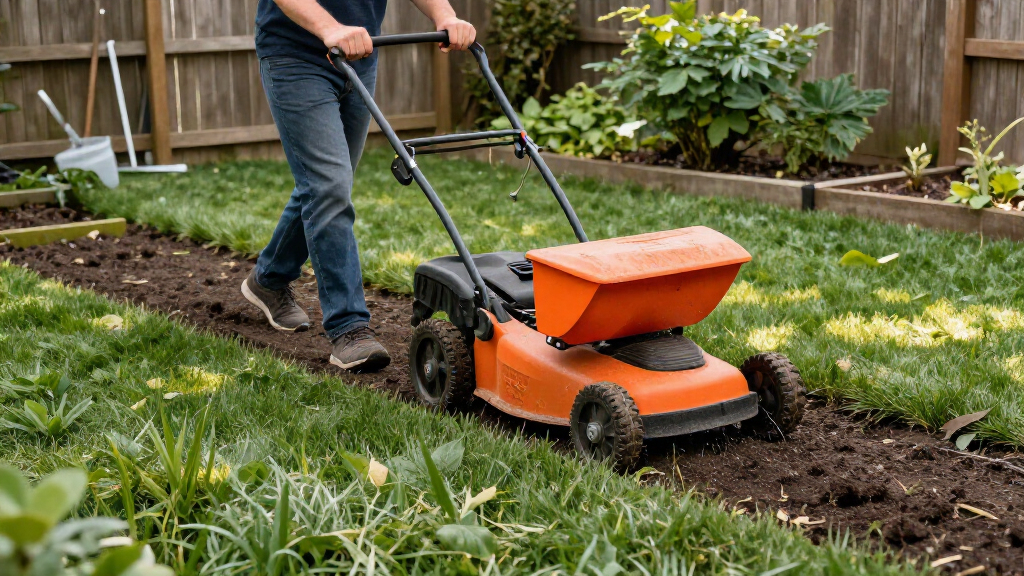
I compared these 14 products by the seeding job they can realistically handle: broad lawn coverage, spot repair, garden-row planting, or larger-property work. I weighed seed capacity, application control, ease of pushing or carrying, working width, compatibility with the intended seed, and whether a design combines seeding with another useful task. Build and upkeep also matter: moving parts, storage demands, and the effort needed to clean out seed can shape whether a tool is practical after the first use.
The ranking favors tools with a clear fit for common lawn-seeding needs and a useful balance of control, coverage, and effort. That places the Scotts EdgeGuard DLX ahead as a versatile broadcast choice, while the Agri-Fab tow-behind and row seeders rank higher for their narrower, specific jobs rather than as universal picks. Handheld and shaker models remain useful for small spaces and touch-ups, but their limited capacity and manual coverage keep them below push and tow-behind options for larger lawns. I treat the Brinly aerator spreader as a multi-task option, not a direct substitute for a dedicated row planter.
Factors to Consider When Choosing Best Lawn Seeders
Before choosing a lawn seeder, decide what you mean by “seeding.” Scattering grass seed across an existing lawn, filling bare patches, and planting vegetable or flower rows call for different mechanisms. These broader checks can help prevent buying a capable tool that is wrong for the job.
Match the seeder to the seed-placement job
A broadcast spreader throws seed across an area, which suits overseeding and covering open ground, but it does not place seed in neat rows. A garden seeder opens a furrow and meters seed into it, making it useful for crops but a poor choice for general lawn coverage. Spiker or aerator-style units add soil contact or opening action, though that does not mean every seed type will benefit from the same treatment. Check whether your goal is surface distribution, shallow placement, or row planting before comparing capacity. A common mistake is buying a row planter because it is called a seeder, then finding it cannot cover a lawn efficiently. If you have both jobs, a dedicated lawn spreader and a separate garden planter may be more practical than asking one tool to do both.
Choose capacity for your area and refill tolerance
Capacity affects how often you stop, but a larger hopper also adds weight and can make a spreader harder to steer when full. For a small repair, a hand shaker or handheld unit may be easier to carry and control than a full-size push model. On a larger property, frequent refills can slow the work and make consistent coverage harder to maintain. Estimate the area you plan to seed in one session, then think about whether you can comfortably move the loaded tool across it. Do not assume the biggest hopper is automatically the best fit; storage space and handling matter after the seeding job is done. If you seed only a few patches each year, a compact tool may be more useful than a machine sized for acreage.
Treat calibration and spread control as part of the job
Seed application depends on both the spreader setting and your walking pace, so a useful control system cannot replace calibration. Test the setting over a measured area before covering the lawn, and adjust based on the seed label and the amount applied. Overlapping passes can help avoid stripes, but too much overlap may leave dense patches. Edge-control features can reduce seed thrown onto paths or beds, while a simple shaker may offer less precision. Wind can carry lightweight seed away from the target, making calm conditions and careful pass direction worthwhile. Buying a more controlled spreader helps most when you have boundaries, narrow strips, or varied lawn areas; open ground may not need as much adjustment.
Account for terrain, access, and storage
Wheels and working width affect how a push spreader handles uneven ground, tight turns, and narrow gates. A tow-behind unit can reduce walking effort across a broad area, but it depends on a suitable vehicle and room to maneuver. Handheld tools reach around beds and obstacles more easily, though they demand repeated carrying and arm movement. Measure gates, shed doors, and storage corners before buying a wide or towable machine. Wet or clumpy seed can also interfere with flow, so a dry storage spot and prompt cleaning help preserve consistent operation. Buyers often focus on coverage and overlook whether the tool can reach the lawn or fit away afterward.
Decide whether a multi-task tool is worth the compromise
Some lawn tools combine spreading with aeration or other soil work, which may reduce the number of machines you store. That convenience matters if you already have a compatible setup and will use both functions. A combination design can still be less specialized than a dedicated spreader or planter, so compare how much control and capacity you give up. Tow-behind equipment also brings attachment and storage requirements that a hand or push model avoids. Pay more for added functions only when they solve jobs you actually do; an unused feature adds bulk without improving the seeding result. For a straightforward patch repair, a simple handheld tool may be the more sensible purchase.
Check seed compatibility and cleaning needs
Seed size, shape, coating, and moisture can affect how freely material moves through a hopper or opening. A seeder suited to coated garden seeds may not meter fine grass seed the same way, so check the maker’s guidance for the material you plan to use. Small openings can clog when seed is damp or dusty, while larger openings may release too much of a fine product. Empty the hopper after use and remove residue rather than leaving seed inside between seasons. For fertilizer, salt, or ice melt, confirm that the product is intended for those materials and clean the unit afterward to limit corrosion or buildup. Matching the tool to the seed and maintaining it can matter as much as buying a larger or more elaborate model.
Frequently Asked Questions
Can I use a garden row seeder to overseed an existing lawn?
Usually, a row planter is not the easiest tool for overseeding because it places seed in lines rather than spreading it evenly across the lawn. That pattern can leave visible rows and uneven coverage unless you make repeated passes. A broadcast spreader is better suited to distributing grass seed over an existing surface. Row seeders make more sense for vegetables, flowers, or other crops planted at planned spacing. If you need both functions, choose based on the job you will do most often rather than expecting one mechanism to perform both equally well.
Is a tow-behind seeder worth choosing if I do not own a riding mower or tractor?
A tow-behind model only makes sense if you have a compatible machine to pull it or plan to acquire one. Without that setup, its larger capacity and working width do not offset the difficulty of moving it. A push spreader can cover substantial ground without a towing vehicle, though it requires more walking effort. Handheld models may suit small lawns or patch repairs where a wide machine would be cumbersome. Compare the cost of the complete setup, including attachment compatibility and storage, rather than judging the seeder by capacity alone.
Should I buy a spreader with edge control for a small lawn?
Edge control can help when the lawn borders flower beds, sidewalks, driveways, or neighboring property where stray seed is unwelcome. On a simple open lawn, the feature may matter less because there are fewer boundaries to manage. A smaller handheld spreader can also offer useful control for narrow edges and spot repairs, although it may take more passes. Think about the shape of your lawn and how much cleanup you want after seeding. For a compact lawn with many borders, controlled application may be worth more than a larger hopper.
Will one seeder work for grass seed, fertilizer, and ice melt?
Some handheld spreaders are designed for multiple materials, but that does not mean every product is compatible with every tool. Check the manufacturer’s instructions for the material, particle size, and opening settings before loading it. Fine grass seed and coarse ice melt can flow differently, so a setting that works for one may not suit another. Clean the hopper and moving parts after switching materials, especially after corrosive products such as salt. If lawn seeding is your main task, prioritize dependable seed control rather than buying a multi-use model solely for its broad claims.
How do I avoid patchy coverage when using a broadcast seeder?
Start by checking the seed package rate and calibrating the spreader over a measured area instead of guessing at the setting. Walk at a steady pace and follow a consistent pass pattern, with only the overlap needed to prevent gaps. Wind can carry seed off course, so choose calm conditions and account for the direction of nearby beds and paths. If the tool has an edge-control feature, use it near boundaries rather than relying on cleanup afterward. After application, follow the seed maker’s directions for watering and care; a good spread pattern cannot make up for unsuitable ground preparation.
Conclusion
For most homeowners seeking a lawn-focused tool, I recommend the Scotts Turf Builder EdgeGuard DLX as the best overall choice because its broadcast design and edge control suit varied lawn areas. For the best value in a simple small-area tool, I would look at the Chapin 8740A or Scotts Whirl, while accepting that manual spreading takes more effort and offers less capacity than a push model. Beginners with a modest lawn may find a handheld spreader easier to store and manage; anyone planting garden rows should choose the John Deere or Agri-Fab Push Garden Seeder instead. For larger properties, the Agri-Fab 100 lb Tow-Behind Spiker Seeder is the premium, high-capacity pick if you have a compatible towing setup. Choose the Brinly 40-Inch Aerator Spreader for a specific multi-task need, and skip tow-behind or row-planting designs if your only job is straightforward lawn overseeding.
Black Friday Picks

Sony WH-1000XM4C (M4 2nd Gen) Wireless Noise-Cancelling Headphones, Black
As an affiliate, we earn on qualifying purchases.