Among these portable table saws, I’d put the Bosch GTS15-10 first for buyers who want a capable jobsite saw with a wheeled Gravity-Rise stand. The DEWALT DWE7491RS stands out for its 10-inch blade and 32-1/2-inch rip capacity, while the compact DEWALT DWE7485 suits users who value easier transport over a larger cutting platform. The main tradeoff is between cutting capacity and portability: larger saws handle sheet goods more readily, but compact models take up less room and are easier to move. Stand design, blade size, and included features also separate these picks. Read on for the full breakdown and help matching a saw to your workspace and workload.

Get business pricing on tools and workshop supplies
- Business-only prices and quantity discounts
- Tax-exempt purchasing
- Multiple users, one account, clear invoices
Complete the kit


Key Takeaways
- The DEWALT DWE7491RS leads for wide cuts: its 32-1/2-inch rip capacity gives sheet-goods users more room than the compact 8-1/4-inch models.
- The Bosch GTS15-10 makes mobility a priority: its Gravity-Rise wheeled stand is a distinct advantage for buyers who set up and move a jobsite saw often.
- Compact saws trade cutting room for easier handling: the DEWALT DWE7485 and SKIL 8-1/4-inch model suit tighter storage and transport needs, but their smaller platforms are less suited to broad stock.
- The SKIL SPT99-11 fills a different role: its worm-drive design sets it apart from the conventional 15-amp options for buyers focused on demanding cuts.
- Several 10-inch saws offer similar headline power: stand stability, rip capacity, included accessories, and support matter more to the choice than comparing RPM figures alone.


| portable table saw | Motor | Blade diameter | Weight | Rip capacity |
|---|---|---|---|---|
| DOVAMAN 10-Inch 15A Table Saw | 15A copper motor | — | 56 pounds | — |
| Bosch GTS15-10 10-Inch Portabl | 15A | 10 inches | 103 pounds | 32-1/8 inches |
| MarvTool 10-Inch Portable Tabl | 15A | 10 inches | 36 pounds | — |
| Evolution R10TBLX 10-Inch Jobs | 15A, 1,800W | 10 inches | — | 26 inches |
| Prostormer 10-Inch Table Saw w | 15A, 1,800W | 10 inches | — | — |
| SKIL 15-Amp 10-Inch Jobsite Ta | 15 A, 120 V | 10 in | 51.2 lb | 25.5 in |
| SKIL 10-Inch Heavy-Duty Worm D | — | 10 in | 94.3 lb | 30-1/2 in |
| POWSTR 10-Inch Portable Jobsit | 15 A pure copper | 10 in | — | — |
| MarvTool 10-Inch Portable Tabl | 15 A | — | 28.3 lb | — |
| DEWALT 8-1/4-Inch Portable Tab | 15 A, 120 V | 8-1/4 in | 66 lb | 24.5 in |
| Evolution R10TS 10-Inch Jobsit | 15A soft-start | 10 inches | — | 26 inches |
| SKIL 15-Amp 8-1/4-Inch Compact | 15 amps; 1800 watts | — | 40 pounds | 24.5 inches right; 12 inches left |
| DEWALT 10-Inch Jobsite Table S | — | 10 inches | 110 pounds | 32-1/2 inches |
| DEWALT DWE7485 15-Amp 8-1/4-In | — | 8-1/4 inches | 54 pounds | 24.5 inches |
More Details on Our Top Picks
DOVAMAN 10-Inch 15A Table Saw with Stand, 5300 RPM Copper Motor
The DOVAMAN DTS10A earns this role for buyers who want a portable saw with extra tabletop room without stepping up to the heavier Bosch GTS15-10. Its surface expands from 21.65 to 36.81 inches, giving longer workpieces more support as they pass the blade. The 15A motor reaches 5,300 RPM, and the included stand, rip fence, and miter gauge make it a ready-to-use package for common shop and jobsite cuts.
The tradeoff is that the extension adds width on one side only, so it does not provide balanced support for every setup. Its 3.35-inch maximum cut depth is also less than a full 4-inch capacity. Compared with the lighter MarvTool, this is the better fit for workpieces that need more surface support, but it is less convenient to carry at 56 pounds.
Pros:- Expandable tabletop adds support for longer workpieces.
- 15A copper motor runs at up to 5,300 RPM.
- Includes a stand, rip fence, and miter gauge.
- Blade guard, push stick, dust port, and storage compartments are included.
Cons:- Table extension is available on one side only.
- Maximum cut depth is 3.35 inches at 90 degrees.
- At 56 pounds, it is heavier to carry than the 36-pound MarvTool.
Best for: DIYers and small-shop woodworkers who frequently cut longer boards and want an included stand and expandable support surface.
Not ideal for: Buyers who need balanced extensions on both sides, routinely cut stock requiring a full 4-inch depth, or prioritize carrying a saw alone.
- Blade size:10 inches
- Motor:15A copper motor
- No-load speed:5,300 RPM
- Cut depth at 90°:3.35 inches
- Cut depth at 45°:2.48 inches
- Table width:Expandable from 21.65 to 36.81 inches
- Weight:56 pounds
- Included:Stand, miter gauge, rip fence, blade guard, push stick, dust port, and storage compartments
Our verdict“Choose the DOVAMAN if extra one-sided table support matters more than the MarvTool’s lighter carry weight.”
Bosch GTS15-10 10-Inch Portable Jobsite Table Saw with Gravity-Rise Wheeled Stand
The Bosch GTS15-10 is the strongest fit here for crews who move a saw around a jobsite but still need a wide rip capacity. Its Gravity-Rise wheeled stand is designed to make setup and transport easier, while the rack-and-pinion fence supports controlled adjustments for repeatable rips. A 32-1/8-inch rip capacity gives it more room for wide panels than the Evolution R10TBLX, whose stated capacity is 26 inches.
That jobsite capability comes with a real portability compromise: the saw weighs 103 pounds, so the wheels help, but lifting it into a vehicle is still a two-person or careful-loading task for many buyers. The Smart Guard package adds a riving knife, anti-kickback pawls, and barrier guard. Choose it over the lighter MarvTool for fence range and wheeled transport; skip it if you need a saw that is easy to carry by hand.
Pros:- 32-1/8-inch rip capacity supports wider workpieces than the Evolution R10TBLX.
- Gravity-Rise wheeled stand is designed for easier setup and movement.
- Rack-and-pinion fence supports precise adjustments.
- Smart Guard system includes a riving knife, anti-kickback pawls, and barrier guard.
Cons:- At 103 pounds, it is heavy to lift even with a wheeled stand.
- Tabletop clamp zones are intended only for light-duty secondary work.
Best for: Carpenters and remodeling crews who need a wide-ripping jobsite saw with a wheeled stand and adjustable rack-and-pinion fence.
Not ideal for: Solo users who frequently lift equipment into a vehicle or shoppers who need a lightweight saw for stairs and tight storage.
- Blade diameter:10 inches
- Motor:15A
- Speed:3,800 RPM
- Rip capacity:32-1/8 inches
- Single-cut capacity:4×4
- Weight:103 pounds
- Stand:GTA50W Gravity-Rise wheeled stand
- Safety features:Riving knife, anti-kickback pawls, and barrier guard
Our verdict“Pick the Bosch for wide rips and wheeled jobsite handling, but not if you need a saw that is easy to lift alone.”
MarvTool 10-Inch Portable Table Saw with Stand, 15-Amp Motor and 36-Tooth Blade
At 36 pounds, the MarvTool is the most carry-friendly choice in this group, making it a better match for a home workshop that has to pack equipment away or a user who moves a saw without a wheeled stand. Its detachable stand keeps the package self-contained, and the vacuum-compatible dust port offers a straightforward way to manage chips when connected to a shop vacuum. The 15A motor runs at up to 4,600 RPM, with bevel cuts available from 0 to 45 degrees.
Compared with the DOVAMAN, it is much lighter, but gives up the DOVAMAN’s wider extendable table and has a lower stated 45-degree cut depth of 2.1 inches. Its included 36-tooth blade is a practical general-purpose starting point, not a guarantee of the finish or cut behavior every material needs. This is a portability-first option, not the pick for heavy stock or maximum table support.
Pros:- 36-pound weight is lower than the other listed saws.
- Detachable stand supports storage and transport.
- Vacuum-connectable dust port can help collect debris.
- Supports 90-degree cuts and bevels from 0 to 45 degrees.
Cons:- Maximum cut depth at 45 degrees is 2.1 inches.
- The 36-tooth blade may not suit every material or finish requirement.
- Lacks the DOVAMAN’s expandable tabletop.
Best for: DIYers with limited storage who need to carry a table saw between a home workshop, garage, or occasional worksite.
Not ideal for: Buyers who regularly cut deep stock at a bevel or need a broad, extendable tabletop for long boards.
- Blade diameter:10 inches
- Blade teeth:36
- Motor:15A
- Speed:4,600 RPM
- Cut depth at 90°:3.4 inches
- Cut depth at 45°:2.1 inches
- Weight:36 pounds
- Dust collection:Dust port compatible with a vacuum
Our verdict“Choose the MarvTool when carrying and storing the saw matters more than extra table area or deeper bevel cuts.”
Evolution R10TBLX 10-Inch Jobsite Table Saw with Wheeled Stand
The Evolution R10TBLX stands apart from the wood-focused options in this batch because its tungsten carbide-tipped blade is specified for wood, mild steel, aluminum, and composites. That makes it a distinctive choice for users whose portable work includes more than lumber. The package also brings useful jobsite equipment: a collapsible wheeled stand, dual rack-and-pinion fence, cross-cut sled, zero-clearance throat plate, and dado plate. Compared with the Bosch GTS15-10, the Evolution trades some rip capacity—26 inches versus 32-1/8—for multi-material capability and dado-related accessories.
Its 15A corded motor still ties it to an outlet, and the maximum cut depth is 3-3/8 inches, so it is not a deeper-cutting solution than the DOVAMAN. The broad accessory set is valuable only if those tasks are part of your work; buyers cutting wood alone may prefer a simpler or lighter saw. The three-year limited warranty is longer than the DOVAMAN’s stated one-year coverage.
Pros:- Specified for cutting wood, mild steel, aluminum, and composites.
- Includes a collapsible wheeled stand and dual rack-and-pinion fence.
- Cross-cut sled, zero-clearance throat plate, and dado plate expand setup options.
- Electronic blade brake, anti-kickback pawls, and riving knife are included.
Cons:- Corded power limits use to locations with an electrical supply.
- 26-inch rip capacity is narrower than the Bosch GTS15-10’s 32-1/8 inches.
- Maximum cut depth is 3-3/8 inches.
Best for: Fabricators, remodelers, and serious DIYers who need one portable saw for wood plus compatible mild steel, aluminum, or composite stock.
Not ideal for: Wood-only users who do not need multi-material or dado features and would rather prioritize a wider rip capacity or lower carrying weight.
- Blade diameter:10 inches
- Motor:15A, 1,800W
- Blade teeth:40
- Rip capacity:26 inches
- Maximum cut depth:3-3/8 inches
- Bevel range:0–45 degrees
- Special features:Dado-compatible design, multi-material cutting, dual rack-and-pinion fence, and safety features
- Warranty:Limited, 3 years
Our verdict“Choose the Evolution if your portable work spans several compatible materials and you will use its included cutting accessories.”
Prostormer 10-Inch Table Saw with Stand
The Prostormer 10-Inch Table Saw is a straightforward fit for users who want a 10-inch corded saw with a stand, basic blade adjustments, and the core safety accessories. Its 1,800-watt, 15A motor runs at 5,000 RPM, while the blade can be set for 90-degree crosscuts or bevels up to 45 degrees. That makes it more conventional than the Evolution R10TBLX, whose appeal is its stated multi-material range and expanded accessory set.
The Prostormer includes a clear blade guard, push stick, metal supports, and tool storage, but its dust port only accepts an optional dust collector; the collector itself is not included. Unlike the DOVAMAN, it has no stated expandable tabletop, and the supplied information gives no rip-capacity or maximum cutting-depth figure to help buyers plan larger cuts. This makes it a sensible basic setup, but a weaker choice when detailed capacity data or extra workpiece support is central to the purchase.
Pros:- 15A, 1,800-watt motor runs at 5,000 RPM.
- Blade height and angle adjust for crosscuts and bevels up to 45 degrees.
- Includes a clear blade guard, push stick, metal supports, and tool storage.
- Compatible with wood, PVC, and non-ferrous metals.
Cons:- Dust collector is not included.
- No rip-capacity or maximum cutting-depth figure is supplied in the product data.
- Does not list an expandable tabletop like the DOVAMAN.
Best for: Home DIYers who want a stand-mounted 10-inch saw for routine wood, PVC, or non-ferrous-metal cuts and already have dust collection.
Not ideal for: Buyers who need a specified wide rip capacity, an expandable support surface, or a dust collector included with the saw.
- Blade diameter:10 inches
- Motor:15A, 1,800W
- Motor speed:5,000 RPM
- Voltage:120 volts
- Blade teeth:24
- Cutting angles:90-degree crosscuts; bevel cuts from 0 to 45 degrees
- Compatible materials:Wood, PVC, and non-ferrous metals
- Dimensions:22 x 23 x 33 inches
Our verdict“Pick the Prostormer for routine cuts and a basic included setup, but choose the DOVAMAN if you need stated cut-depth figures and added table support.”
SKIL 15-Amp 10-Inch Jobsite Table Saw with Folding Stand, TS6307-00
I’d put the SKIL TS6307-00 near the top for buyers who want a full 10-inch blade without a separate stand to haul and assemble. Its integrated folding legs make storage and setup simpler than the heavier SKIL SPT99-11, while the 25.5-inch rip capacity gives it useful reach for sheet goods. The rack-and-pinion fence helps make width changes quick, and micro-adjustable blade alignment is a practical advantage when accurate cuts matter. A 4×4 cutting capacity at 90 degrees also gives it more depth flexibility than the compact-blade DEWALT DWE7485WS. The tradeoff is that it lacks the SPT99-11’s larger rip capacity and wheeled mobility. Dado work also calls for a separate 8-inch set and insert.
Pros:- Integrated folding stand keeps setup and storage straightforward.
- 25.5-inch rip capacity accommodates a useful range of sheet and lumber cuts.
- Rack-and-pinion fence and adjustable blade alignment support repeatable accuracy.
- Dust port elbow helps direct debris toward a collection container.
Cons:- Its 25.5-inch rip capacity is narrower than the SKIL SPT99-11’s 30-1/2-inch capacity.
- Dado cuts require a separate 8-inch dado set and dado insert.
Best for: DIYers and small-shop woodworkers who want a 10-inch saw with an integrated folding stand for occasional transport and compact storage.
Not ideal for: Contractors who routinely move a saw across large or rough job sites, or woodworkers who need a wider rip capacity or ready-to-use dado setup.
- Motor:15 A, 120 V
- Blade diameter:10 in
- Rip capacity:25.5 in
- Bevel capacity:0–45°
- Cutting capacity:4×4 at 90°
- Stand:Integrated folding stand
- Weight:51.2 lb
- Dust management:Dust port elbow
Our verdict“Choose the TS6307-00 if you want a capable 10-inch portable saw with a folding stand and value easy setup over maximum rip capacity.”
SKIL 10-Inch Heavy-Duty Worm Drive Table Saw with Stand, SPT99-11
For portable saw buyers who regularly cut wide panels or dense stock, the SKILSAW SPT99-11 brings the lineup’s strongest combination of reach and cutting support. Its 30-1/2-inch rip capacity exceeds the SKIL TS6307-00 and DEWALT DWE7485WS, while the worm-drive power train is aimed at maintaining torque through demanding cuts. Outfeed and left support help a solo operator manage larger workpieces, and the wheeled stand is more suited to rolling the saw around a job site than carrying a folding-leg model. Those advantages come with a real portability cost: at 94.3 pounds, it is substantially heavier than the TS6307-00 and is not a casual lift. It also needs a corded outlet, so it is a better match for a mobile shop or powered site than remote work.
Pros:- 30-1/2-inch rip capacity handles wider sheet-goods cuts than the SKIL TS6307-00.
- Worm-drive power train is suited to demanding cuts.
- Outfeed and left support help manage larger workpieces with one operator.
- Wheeled stand and easy-load handles aid movement around a job site.
Cons:- At 94.3 pounds, it is heavy to lift and transport.
- Corded operation limits use to locations with an available power source.
Best for: Contractors and experienced woodworkers who need wide rip capacity, support for larger panels, and a wheeled stand for moving between work areas.
Not ideal for: DIYers who need a saw they can frequently lift into a vehicle or work where access to corded power is uncertain.
- Power source:Corded electric, 120 V
- Blade diameter:10 in
- Cutting depth:3-5/8 in
- Rip capacity:30-1/2 in
- Stand wheels:16 in
- Weight:94.3 lb
- Fence:Rack-and-pinion
- Included blade:24-tooth carbide blade
Our verdict“Pick the SPT99-11 when wide cuts and job-site mobility matter more than keeping the saw light enough to carry.”
POWSTR 10-Inch Portable Jobsite Table Saw with Stand, 15 Amp, 5000 RPM
The POWSTR’s clearest point of difference is its included 60-tooth blade, which is aimed at smoother cuts than the 24-tooth blades supplied with the SKIL TS6307-00 and SKIL SPT99-11. That makes it a plausible fit for projects where cut finish matters and the buyer wants a blade with more teeth included. It has a 15-amp motor, a stand, and bevel adjustment from 0° to 45°, covering common workshop tasks. But the product data gives no rip-capacity figure, so I can’t place it alongside the SKIL and DEWALT models as confidently for sheet-goods work. Its stated maximum depth also changes by angle: 3-11/32 inches at 90° and 2-9/16 inches on bevels. The corded design and limited published capacity details make this a more cautious pick than the established job-site-style alternatives.
Pros:- Included 60-tooth blade is geared toward smoother cuts than the 24-tooth blades on the SKIL models.
- 15-amp motor and 5000 RPM speed are specified.
- Stand is included for a ready-to-place work setup.
- Supports bevel cuts from 0° to 45°.
Cons:- No rip-capacity figure is provided, making sheet-goods planning harder.
- Maximum cutting depth is lower on bevel cuts than at 90°.
- Corded operation requires access to an outlet.
Best for: Home woodworkers who prioritize a finer cut from the included blade and mainly handle lumber or smaller project pieces near an outlet.
Not ideal for: Buyers who need a documented rip capacity for frequent sheet-goods cuts or want clear evidence of how the saw compares on job-site portability.
- Motor:15 A pure copper
- Speed:5000 RPM
- Blade diameter:10 in
- Blade teeth:60
- Maximum 90° cutting depth:3-11/32 in
- Maximum bevel cutting depth:2-9/16 in
- Bevel capacity:0°–45°
- Dimensions:22 x 14 x 26 in
Our verdict“Consider the POWSTR for smaller projects where its fine-tooth blade is appealing, but choose a saw with a stated rip capacity for regular panel work.”
MarvTool 10-Inch Portable Table Saw, 15-Amp, 4600 RPM
At 28.3 pounds, the MarvTool is the lightest clearly specified saw in this group, making it the most appealing choice here for buyers who prioritize carrying and storage. It has a 10-inch blade and supports bevel cuts up to 45°, unlike the DEWALT DWE7485WS, whose listed cutting angle is 90° only. Its 36-tooth alloy steel blade and vacuum-compatible dust port add flexibility for small projects involving plywood, hardwood, PVC, or thin aluminum. The compromise is limited cutting depth—3.4 inches at 90° and 2.1 inches at 45°—and the stated dimensions are surprisingly large for a lightweight model. No rip capacity is supplied, either, so I would favor the SKIL TS6307-00 or DEWALT for planned sheet-goods ripping. This is a portability-first option, not a documented wide-cut workhorse.
Pros:- At 28.3 pounds, it is easier to carry than the 51.2-pound SKIL TS6307-00.
- Supports 90-degree cuts and bevels from 0° to 45°.
- 36-tooth blade and vacuum-compatible dust port suit varied small-shop projects.
- Product data lists cutting compatibility with hardwood, plywood, OSB, thin aluminum, and PVC.
Cons:- Maximum cutting depth is 3.4 inches at 90° and 2.1 inches at 45°.
- No rip-capacity figure is provided for comparing sheet-goods capability.
- Listed dimensions are large relative to its 28.3-pound weight.
Best for: DIYers with limited storage who need a light saw for moving between small work areas and cutting a mix of common project materials.
Not ideal for: Cabinetmakers or contractors who need a stated rip capacity, deeper cuts, or compact dimensions relative to the saw’s weight.
- Motor:15 A
- Speed:4600 RPM
- Blade:10 in, 36-tooth alloy steel
- Maximum cutting depth at 90°:3.4 in
- Maximum cutting depth at 45°:2.1 in
- Weight:28.3 lb
- Dust collection:Vacuum-compatible dust port
- Dimensions:41.3 x 33.6 x 32.3 in
Our verdict“Choose the MarvTool when low weight and bevel capability matter more than deep cuts or confirmed sheet-goods capacity.”
DEWALT 8-1/4-Inch Portable Table Saw with Stand (DWE7485WS)
The DEWALT DWE7485WS is a strong choice for portable work when the job calls for ripping full-size panels but not the deeper cuts a 10-inch saw can offer. Its 24.5-inch rip capacity is specified for 4×8 plywood or OSB, and the rack-and-pinion fence rails make width adjustments quick. Compared with the 10-inch SKIL TS6307-00, the DEWALT uses a smaller 8-1/4-inch blade, so buyers give up blade diameter in exchange for a compact job-site format. The included stand, onboard accessory storage, blade brake, and power-loss reset add practical job-site features. At 66 pounds, though, it is not a featherweight for frequent carrying, and the listed cutting angle is 90° rather than the bevel range offered by the SKIL and MarvTool models.
Pros:- 24.5-inch rip capacity is specified for 4×8 sheet goods.
- Rack-and-pinion fence rails support fast, precise adjustments.
- Includes a jobsite stand and onboard accessory storage.
- Blade brake and power-loss reset add useful job-site features.
Cons:- The 8-1/4-inch blade is smaller than the 10-inch blades on the SKIL models.
- At 66 pounds, it can be cumbersome to carry frequently.
- Listed cutting angle is 90°, without the stated bevel range of the SKIL TS6307-00.
Best for: Remodelers and DIYers who need to rip full-size plywood or OSB and want a stand and accessory storage in a portable setup.
Not ideal for: Buyers who need a 10-inch blade, regular bevel cuts, or a saw light enough for frequent solo carrying.
- Motor:15 A, 120 V
- Blade diameter:8-1/4 in
- Rip capacity:24.5 in
- Speed:4300 RPM
- Fence:Rack-and-pinion telescoping rails
- Cutting angle:90°
- Weight:66 lb
- Stand:Jobsite stand included
Our verdict“Pick the DWE7485WS for portable sheet-goods ripping and useful job-site features, but choose a 10-inch model if blade size and bevel work take priority.”
Evolution R10TS 10-Inch Jobsite Table Saw with Dado Plate
The Evolution R10TS is the most adaptable choice here for buyers who want more than a wood-only saw. Its 10-inch carbide-tipped blade is specified for wood, mild steel, aluminum, and composites, while the included dado plate and zero-clearance throat plate extend its usefulness for joinery and cleaner cuts. Compared with the compact SKIL TS6308-00, it offers a deeper 3-3/8-inch cut and a larger blade, but it also takes up more space and still needs a corded outlet. The dual rack-and-pinion fence and cross-cut sled help with repeatable setup; an electronic blade brake and anti-kickback pawls add safety measures. Its 26-inch rip capacity is capable, though it falls short of the DEWALT DWE7491RS for wide sheet goods. Choose it for feature range, not maximum portability.
Pros:- Blade is specified for wood, mild steel, aluminum, and composites.
- Includes a dado plate and zero-clearance throat plate for more cutting options.
- Dual rack-and-pinion fence and cross-cut sled support controlled, repeatable cuts.
- Electronic blade brake, anti-kickback pawls, and onboard storage add practical safety and convenience.
Cons:- The 26-inch rip capacity is narrower than the DEWALT DWE7491RS’s 32-1/2-inch capacity.
- Its 10-inch format and 29-by-29-inch dimensions are less compact than the SKIL TS6308-00.
- Corded power limits use where an outlet is unavailable.
Best for: Woodworkers and remodelers who need a portable saw for mixed materials, dado cuts, and general jobsite work.
Not ideal for: Buyers who need cordless operation, the smallest possible footprint, or the widest rip capacity for frequent full-sheet cuts.
- Blade diameter:10 inches
- Motor:15A soft-start
- Power:120V corded electric; 1800W
- Rip capacity:26 inches
- Maximum cut depth:3-3/8 inches
- Bevel range:0–45°
- Fence:Dual rack-and-pinion
- Included components:Blade, dado plate, zero-clearance throat plate, cross-cut sled
- Safety features:Electronic blade brake, anti-kickback pawls, quick-release riving knife
Our verdict“Choose the R10TS if dado capability and cutting a range of materials matter more than the lightest, smallest setup.”
SKIL 15-Amp 8-1/4-Inch Compact Portable Jobsite Table Saw
The SKIL TS6308-00 puts compact storage ahead of full-size cutting depth. At 40 pounds and about 26 by 23 inches, it is easier to move and stow than the 110-pound DEWALT DWE7491RS, while its 24.5-inch right rip capacity still accommodates broad panel cuts. Rack-and-pinion fence rails and parallel blade alignment are useful for keeping adjustments consistent, and the aluminum table helps keep the package manageable. The tradeoff is its 2-1/2-inch maximum cut depth, well below the deeper 10-inch saws in this group; the smaller blade also limits capacity for thicker stock. A dust-port elbow is included, but a vacuum and compatible folding stand are separate purchases. This is a sensible portable choice for lighter work, not a substitute for a full-size saw when depth is a regular need.
Pros:- At 40 pounds, it is lighter than the DEWALT DWE7491RS and easier to stow.
- 24.5-inch right rip capacity supports cuts on wide panels.
- Rack-and-pinion fence rails and parallel blade alignment support accurate setup.
- Dust-port elbow can connect to a 2-1/2-inch vacuum hose.
Cons:- Maximum cut depth is 2-1/2 inches, less than the 10-inch saws in this roundup.
- Folding stand and vacuum are sold separately.
- The 8-1/4-inch blade offers less depth capacity than the Evolution R10TS’s 10-inch blade.
Best for: DIYers, finish installers, and mobile workers who prioritize easy storage and transport for sheet goods and routine cuts.
Not ideal for: Buyers who regularly cut thick lumber or want a ready-to-roll stand and dust vacuum included.
- Model:TS6308-00
- Blade size:8-1/4 inches
- Motor:15 amps; 1800 watts
- Weight:40 pounds
- Rip capacity:24.5 inches right; 12 inches left
- Maximum cut depth:2-1/2 inches at 0°
- Table material:Aluminum
- Dust port:Supports 2-1/2-inch hose connections
- Dimensions:25.98 × 22.83 × 12.99 inches
Our verdict“Pick the TS6308-00 for a compact, lighter saw when portability matters more than cutting thick stock.”
DEWALT 10-Inch Jobsite Table Saw with Rolling Stand, 15 Amp, 4800 RPM, 32-1/2-Inch Rip Capacity (DWE7491RS)
For repeated cuts on wide panels, the DEWALT DWE7491RS leads this group with a 32-1/2-inch rip capacity, wider than the 26-inch Evolution R10TS and the 24.5-inch compact saws. Its rack-and-pinion fence makes width changes easier to set, while the rolling stand helps move the assembled saw around a jobsite without carrying the 110-pound unit. That mobility is not the same as easy lifting: stairs, vehicle loading, and tight storage remain awkward. The 10-inch blade cuts to 3-1/8 inches at 90°, though the Evolution R10TS offers a slightly deeper listed cut and includes a dado plate. The DEWALT instead prioritizes panel capacity and a stable wheeled setup. Its dust port accepts a 2-1/2-inch extraction connection, so dust control requires a separate vacuum.
Pros:- 32-1/2-inch rip capacity is the widest listed in this batch.
- Rolling stand supports easier movement and setup than carrying a standalone saw.
- Rack-and-pinion fence allows quick, controlled width adjustments.
- Onboard storage keeps included accessories accessible.
Cons:- At 110 pounds, it is difficult to lift and carry despite its rolling stand.
- The Evolution R10TS offers a deeper listed cut and includes a dado plate.
- Dust extraction requires a separate vacuum connected to the 2-1/2-inch port.
Best for: Cabinet installers, remodelers, and serious DIYers who often rip plywood or other wide sheet materials on a jobsite.
Not ideal for: Buyers who must lift a saw into a vehicle alone, work in cramped storage areas, or need the smallest portable package.
- Model:DWE7491RS
- Blade diameter:10 inches
- Motor and speed:15 amp; 4800 rpm
- Rip capacity:32-1/2 inches
- Cutting depth at 90°:3-1/8 inches
- Cutting depth at 45°:2-1/4 inches
- Weight:110 pounds
- Dust collection port:2-1/2 inches
- Included stand:Rolling stand
Our verdict“Choose the DWE7491RS if wide sheet-goods capacity and a rolling stand outweigh the burden of its heavy chassis.”
DEWALT DWE7485 15-Amp 8-1/4-Inch Compact Portable Jobsite Table Saw
The DEWALT DWE7485 balances a compact footprint with enough rip capacity for common panel work. Its 24.5-inch capacity is listed for 4×8 sheet goods, matching the compact SKIL TS6308-00, while the rack-and-pinion telescoping fence supports quick width changes. At 54 pounds, it is not as light as the SKIL’s 40-pound model, but its metal roll cage and onboard storage suit jobsite handling. The 8-1/4-inch blade keeps the saw compact; the tradeoff is less cutting depth than the 10-inch DEWALT DWE7491RS or Evolution R10TS. Site-Pro guarding makes accessory changes tool-free, and the power-loss reset helps prevent an unexpected restart after an interruption. This is a corded saw, so compact dimensions do not remove the need for an outlet.
Pros:- 24.5-inch rip capacity supports cuts on 4×8 sheet goods.
- Rack-and-pinion fence rails enable fast, controlled adjustments.
- Metal roll cage and onboard storage suit transport and jobsite handling.
- Tool-free Site-Pro guarding and power-loss reset add practical setup and restart features.
Cons:- The 8-1/4-inch blade provides less cutting depth than the 10-inch Evolution R10TS and DEWALT DWE7491RS.
- At 54 pounds, it is heavier than the SKIL TS6308-00.
- Corded operation requires access to a 120V outlet.
Best for: Contractors and home renovators who need a durable, compact saw with quick fence adjustments for panel and trim work.
Not ideal for: Buyers who often cut thick stock, need a rolling stand included, or want the lightest compact saw in this group.
- Model:DWE7485
- Blade diameter:8-1/4 inches
- Motor and speed:15 amp; 5,800 RPM
- Power:120V corded electric; 1,800W
- Rip capacity:24.5 inches
- Weight:54 pounds
- Base:Metal roll cage
- Fence:Rack-and-pinion telescoping rails
- Special features:Site-Pro Modular Guarding System; power-loss reset
Our verdict“Choose the DWE7485 for a compact, jobsite-ready saw with useful panel capacity, provided its smaller blade suits your stock.”
How We Picked
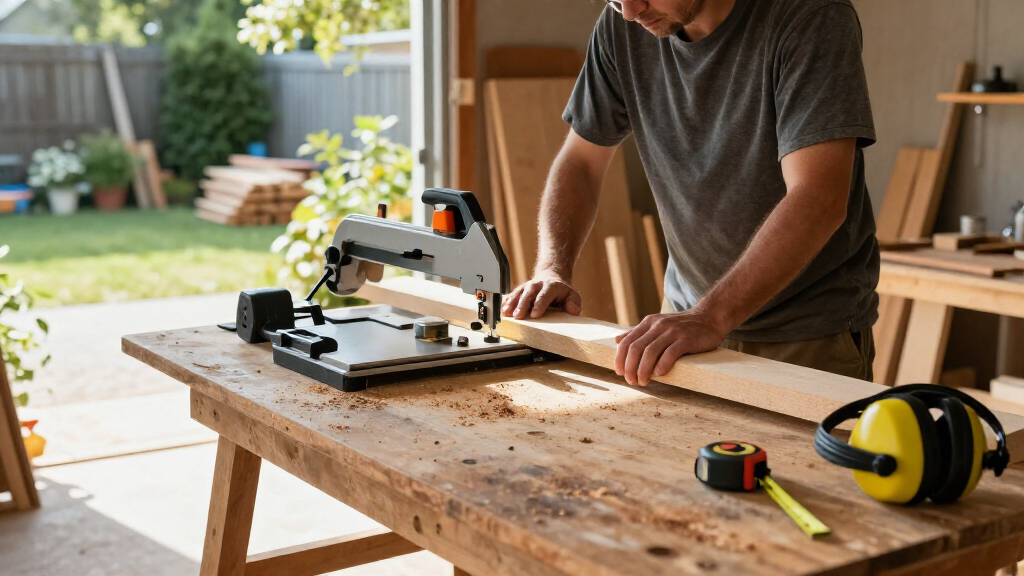
I ranked these portable table saws by how well their stated features address common buyer needs: moving a saw between sites, making accurate repeat cuts, handling wider stock, and storing the tool between jobs. I gave particular weight to cutting capacity, blade size, stand design, and useful included features, since those factors shape daily use more than a single motor-speed figure. I also considered whether a model’s design points to a clear audience, such as a compact-saw buyer, a sheet-goods user, or someone looking for a heavier-duty cutting setup.
The order reflects practical fit rather than a claim that one saw suits every user. Models with a strong balance of mobility, usable capacity, and jobsite-friendly setup rank ahead of options whose advantages are narrower. Compactness, specialized features, and value-minded configurations still earn a place, but their drawbacks matter when choosing a primary saw. Product-specific claims are limited to the supplied model names and specifications; I don’t treat unprovided performance data as verified.
Factors to Consider When Choosing Portable Table Saws
Before choosing a portable saw, I’d start with the work it must handle and the places it must go. A model that moves easily may be limiting when cutting full-width panels, while a larger saw can become a burden if it needs to travel every day. These broader checks can help you avoid paying for capacity you won’t use—or ending up with too little table for your regular cuts.
Match Blade Size to the Cuts You Make
A 10-inch blade generally gives a portable saw more depth capacity than an 8-1/4-inch blade, but blade diameter alone does not tell the whole story. Check the manufacturer’s listed maximum cut depth and compare it with the thickness of the stock you actually use. Compact saws can make sense for trim work, cabinetry components, and smaller projects where easier transport matters more than deep cuts. A common mistake is choosing a smaller saw solely because it is easier to carry, then discovering that routine material needs extra passes or a different tool. If your work often involves thicker lumber, verify the capacity rather than assuming all 10-inch saws perform alike.
Treat Rip Capacity as a Workload Choice
Rip capacity indicates how far the fence can position from the blade, which affects the width of material you can cut along its length. It is especially relevant for breaking down plywood and other sheet goods, but it does not make those large sheets easy to control on a small tabletop. Think about how often you cut wide panels and whether you will have outfeed support or a helper. Buyers who mostly rip narrow boards may not benefit from a very wide fence range, while frequent sheet-goods work can make limited capacity frustrating. Don’t confuse a large rip-capacity number with a complete solution for safely supporting bulky stock.
Choose a Stand for Your Actual Route
A stand’s value depends on how you move and set up the saw, not just whether it folds. Wheeled designs can help when a saw travels across a jobsite or garage, while a simpler folding stand may be enough for occasional moves and compact storage. Consider stairs, uneven ground, vehicle loading, and the space available for setup before choosing a rolling base. A stand that is easy to transport still needs a stable working position, so look for clear information on how it locks and supports the saw. Skipping this check can turn a portable purchase into a tool that is awkward to store or uncomfortable to use.
Plan for Support Around the Saw
The saw is only one part of the cutting station. Long boards and sheet goods need support beyond the tabletop, and that support affects control, accuracy, and safe handling. Before buying, measure the space where the saw will operate and identify where an outfeed table, roller stand, or workbench could go. A model with a generous rip range may still be a poor fit in a cramped garage if there is no room to feed material. Buyers who cannot provide a large setup area may be better served by a compact saw and a workflow built around smaller pieces.
Check Fence, Blade, and Accessory Compatibility
A dependable fence and a straightforward adjustment system matter because repeated cuts depend on consistent settings. Read the product details for fence locking, included blade type, guard and riving-knife arrangements, and any accessories that come with the saw. If you expect to use specialty blades or dado setups, confirm compatibility for the exact model instead of assuming a feature from another saw in the same brand family applies. Included accessories can reduce the need for separate purchases, but they should not outweigh core needs such as capacity and stable support. This check is also a good way to catch differences between similarly named model versions.
Weigh Long-Term Support Against a Lower Initial Outlay
Portable saws work in dusty, demanding settings, so replacement parts, manuals, and accessible service information can matter over time. Compare warranty terms and support channels for the exact model, since brand reputation alone does not answer how a specific product will be maintained. A lower-cost configuration may suit occasional DIY use, while regular jobsite work can justify paying more for a stand or capacity that saves setup effort. Avoid choosing by motor speed alone: the saw also needs a fence and platform suited to the cuts you make. The sensible spend is the one that removes a recurring limitation without adding weight or features you rarely use.
Frequently Asked Questions
Should I choose a 10-inch portable saw or an 8-1/4-inch model?
I’d choose a 10-inch model if your work regularly involves thicker material or you want a larger cutting range, then confirm the stated depth capacity for the exact saw. An 8-1/4-inch saw can be a better match when compact storage and easier transport matter more than maximum depth. The smaller blade does not automatically make a saw suitable for every small shop; table space, fence capacity, and support still shape its usefulness. Think through your most common cut, not just the largest cut you might make once. If you frequently work with thick stock, the larger blade is usually the safer starting point.
Is a rolling stand worth choosing over a folding stand?
A rolling stand can be worthwhile when you move the saw often over a reasonably clear route, especially between a vehicle and a work area. A folding stand may be enough if the saw mostly stays in one room or only moves occasionally. Neither design solves every portability problem: stairs, rough surfaces, storage space, and setup stability all matter. Check how the stand folds and locks, and measure where it will be stored before deciding. I’d prioritize a wheeled setup for frequent jobsite moves and a simpler folding option for a mostly stationary home workspace.
Can a portable table saw handle plywood by itself?
A portable saw can rip plywood, but safe and controlled handling depends on supporting the sheet before, during, and after the cut. Rip capacity tells you whether the fence can accommodate a particular width; it does not mean the tabletop alone can support a full sheet. Plan for outfeed and side support, and consider having another person help with large panels when appropriate. If your projects involve frequent full-sheet breakdown, compare capacity and workspace together rather than focusing on either one alone. A track saw or panel-cutting service may suit some buyers better for occasional sheet work.
Does a higher RPM rating mean a portable saw will cut better?
RPM is only one part of a saw’s cutting performance, and it does not tell you how cleanly a particular blade cuts a given material. Blade condition and tooth design, fence alignment, material support, and feed technique all affect the result. Two models with different speed figures may have more meaningful differences in capacity or stand design. I’d compare the saw’s intended use and documented specifications before using RPM as a deciding factor. Choose a suitable blade for the material rather than expecting motor speed alone to produce a clean finish.
What should I check before buying a saw for dado cuts?
Confirm that the exact model is designed to accept the dado setup you plan to use, including any required throat plate or dado insert. Compatibility can vary among models from the same brand, so a similar name or blade size is not enough. Check the manufacturer’s instructions for permitted dado dimensions and setup requirements before purchase. Also consider how often you will make dado cuts; a specialty feature may not justify a compromise in portability or rip capacity if the work is rare. If compatibility is unclear, get confirmation for the specific model number before choosing it.
Conclusion
For most buyers who want a well-rounded jobsite setup, I’d start with the Bosch GTS15-10 as my best overall pick, particularly when its wheeled Gravity-Rise stand matches the way the saw will be moved. The DEWALT DWE7491RS is my choice for buyers who need the wider rip capacity of a 10-inch saw, while the DEWALT DWE7485 is a strong fit when compact transport and storage take priority. For beginners, I’d favor a model whose stand, fence, and setup are manageable in the intended workspace rather than buying the largest saw available; the SKIL TS6307-00 offers a straightforward 10-inch jobsite format to compare against that need. Buyers seeking a more specialized, heavy-duty direction should look closely at the SKIL SPT99-11, while anyone focused on dado work should confirm the Evolution R10TS setup and compatibility details. My value pick is the MarvTool 10-inch model with stand for shoppers who want a basic portable configuration, provided its documented capacity and support meet their needs. Choose by the cuts you make most, the room you have, and how often the saw must travel.