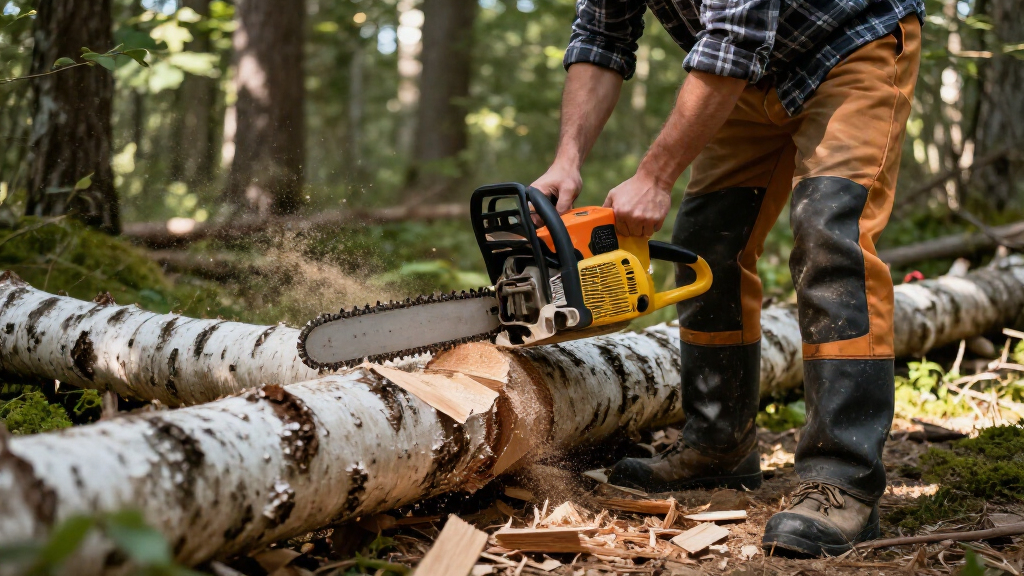
Among these gas-powered chainsaws, I’d put the Husqvarna 130 first for buyers who want a familiar 16-inch setup from an established brand; the PROYAMA 62cc stands out for buyers who want two longer bar options, while the compact VEVOR 25.4cc suits lighter cutting. The main tradeoff is between power and reach on one hand and weight, handling, and upkeep on the other. Bigger engines and longer bars can help with substantial wood, but they are not automatically the best choice for routine pruning or occasional firewood. Brand support, bar fit, and your comfort handling a saw matter alongside engine displacement. Continue reading for the full breakdown and guidance on choosing a saw for your work.

Get business pricing on tools and workshop supplies
- Business-only prices and quantity discounts
- Tax-exempt purchasing
- Multiple users, one account, clear invoices
Complete the kit



Key Takeaways
- The lineup splits into three practical groups: compact 25cc-class saws with 12-inch bars, midrange 38cc models with 16-inch bars, and roughly 58–68cc saws paired with 18- to 24-inch bars.
- Bar flexibility is a recurring selling point: several PROYAMA, NEO-TEC, VEVOR, WOIZAO, WTHW, and IVOVI listings include two bar lengths, but buyers should confirm which bar and chain combinations are supported before switching.
- Husqvarna’s 120 Mark III and 130 are the clearest homeowner-oriented options in this group, with 16-inch bars and smaller listed engines than the large-bar kits.
- The 62–68cc models prioritize cutting capacity over easy handling: PROYAMA’s 68cc model offers the longest listed bar option at 24 inches, while multiple 62cc and 63cc choices center on 20-inch bars.
- Several listings share similar displacement and bar configurations, so choosing among them calls for checking weight, safety equipment, parts access, and service details—not relying on engine size alone.
| PROYAMA 62cc Gas-Powered Chainsaw with 18- and 22-Inch Bars |  | Best for Bar-Length Versatility | Engine displacement: 62cc | Engine type: 2-cycle | Horsepower: 3.5 hp | VIEW LATEST PRICE | See Our Full Breakdown |
| VEVOR 25.4CC 2-Cycle Gas-Powered Chainsaw with 12-Inch Bar |  | Best for Compact Gas-Powered Trimming | Engine: 25.4cc, 2-cycle | Horsepower: 1.2 hp | Engine power: 0.75 kW | VIEW LATEST PRICE | See Our Full Breakdown |
| WOIZAO 58cc Gas Chainsaw with 20″ and 18″ Dual Guide Bars Kit |  | Best for Included Cutting Accessories | Engine displacement: 58cc | Horsepower: 3.4 hp | Maximum RPM: 10,500 rpm | VIEW LATEST PRICE | See Our Full Breakdown |
| NEO-TEC Upgraded NCS2511 25cc 12‑inch Top‑Handle Gas Chainsaw (2‑Cycle) |  | Best for Lightweight Pruning | Engine displacement: 25cc | Horsepower: 1.5 hp | Power source: Gas powered | VIEW LATEST PRICE | See Our Full Breakdown |
| Lewhale 63cc Gas Chainsaw with 20-Inch Bar |  | Best for Firewood and Property Clearing | Engine displacement: 63cc | Engine type: Two-stroke gasoline | Horsepower: 3.5 hp | VIEW LATEST PRICE | See Our Full Breakdown |
| WTHW 58cc Gas Chainsaw with 20-Inch and 18-Inch Bars |  | Best for Bar-Length Flexibility | Engine displacement: 58cc | Engine type: 2-cycle | Horsepower: 3.5 hp | VIEW LATEST PRICE | See Our Full Breakdown |
| Husqvarna 120 Mark III 16-Inch Gas Chainsaw |  | Best for Light Home and Garden Work | Engine displacement: 38cc | Engine power: 1.8 HP | Engine type: 2-cycle X-Torq | VIEW LATEST PRICE | See Our Full Breakdown |
| NEO-TEC 62cc Gas-Powered Chainsaw with 20- and 22-Inch Guide Bars |  | Best for Included Setup Accessories | Engine displacement: 62cc | Engine type: 2-stroke | Horsepower: 3.5 hp | VIEW LATEST PRICE | See Our Full Breakdown |
| PROYAMA 68cc Gas-Powered Chainsaw with 20- and 24-Inch Bars |  | Best for Heavy-Duty Cutting Reach | Engine displacement: 68cc | Engine type: 2-cycle | Horsepower: 4.5 HP | VIEW LATEST PRICE | See Our Full Breakdown |
| VEVOR 62cc Gas-Powered Chainsaw with 20-Inch Bar |  | Best Single-Bar Workhorse | Engine displacement: 62cc | Engine type: 2-stroke | Horsepower: 3.8 hp | VIEW LATEST PRICE | See Our Full Breakdown |
| SUPMIXTOOLS 62cc 2-Cycle Gas Chainsaw with 20-Inch Bar |  | Best for Heavy Cutting on a Single Bar | Engine displacement: 62cc | Engine type: 2-cycle, 2-stroke | Horsepower: 4.2 hp | VIEW LATEST PRICE | See Our Full Breakdown |
| VEVOR 62cc 3.8 HP Gas Chainsaw with 20- and 22-Inch Guide Bars |  | Best for Bar-Length Flexibility | Engine displacement: 62cc | Horsepower: 3.8 hp | Engine type: 2-cycle | VIEW LATEST PRICE | See Our Full Breakdown |
| Husqvarna 130 Gas Chainsaw, 16-Inch Bar |  | Best for Homeowner Yard Maintenance | Engine displacement: 38 cc | Engine power: 2 HP | Engine technology: X-Torq | VIEW LATEST PRICE | See Our Full Breakdown |
| IVOVI 63cc 2-Cycle Gas Chainsaw with 20-Inch and 18-Inch Guide Bars |  | Best Two-Bar Kit for a Lighter Listed Weight | Engine displacement: 63cc | Horsepower: 3.7 hp | Engine speed: 8,500 RPM | VIEW LATEST PRICE | See Our Full Breakdown |
| Husqvarna 120 Mark III Gas Chainsaw, 38 cc, 1.8 HP, 16-Inch Bar |  | Best for Light Home and Garden Cutting | Engine displacement: 38 cc | Engine type: 2-cycle X-Torq | Engine power: 1.8 HP | VIEW LATEST PRICE | See Our Full Breakdown |
| gas powered chainsaw | Engine displacement | Horsepower | Engine type |
|---|---|---|---|
| PROYAMA 62cc Gas-Powered Chain | 62cc | 3.5 hp | 2-cycle |
| VEVOR 25.4CC 2-Cycle Gas-Power | — | 1.2 hp | — |
| WOIZAO 58cc Gas Chainsaw with | 58cc | 3.4 hp | — |
| NEO-TEC Upgraded NCS2511 25cc | 25cc | 1.5 hp | 2-cycle |
| Lewhale 63cc Gas Chainsaw with | 63cc | 3.5 hp | Two-stroke gasoline |
| WTHW 58cc Gas Chainsaw with 20 | 58cc | 3.5 hp | 2-cycle |
| Husqvarna 120 Mark III 16-Inch | 38cc | — | 2-cycle X-Torq |
| NEO-TEC 62cc Gas-Powered Chain | 62cc | 3.5 hp | 2-stroke |
| PROYAMA 68cc Gas-Powered Chain | 68cc | 4.5 HP | 2-cycle |
| VEVOR 62cc Gas-Powered Chainsa | 62cc | 3.8 hp | 2-stroke |
| SUPMIXTOOLS 62cc 2-Cycle Gas C | 62cc | 4.2 hp | 2-cycle, 2-stroke |
| VEVOR 62cc 3.8 HP Gas Chainsaw | 62cc | 3.8 hp | 2-cycle |
| Husqvarna 130 Gas Chainsaw | 38 cc | — | — |
| IVOVI 63cc 2-Cycle Gas Chainsa | 63cc | 3.7 hp | — |
| Husqvarna 120 Mark III Gas Cha | 38 cc | — | 2-cycle X-Torq |
More Details on Our Top Picks
PROYAMA 62cc Gas-Powered Chainsaw with 18- and 22-Inch Bars
The PROYAMA earns this spot for buyers who want one saw configured for different jobs: its kit includes 18-inch and 22-inch bars, so you can choose a shorter setup for more manageable cuts or a longer one for larger work. Its 62cc, 3.5 hp engine is a stronger fit for substantial property upkeep than the compact VEVOR 25.4CC 12-inch model, which is aimed at trimming. A three-point spring vibration system and easy-pull starter address comfort and starting effort, while the transparent tank makes fuel checks straightforward. The tradeoff is weight: at 14 lb, it can become tiring during long sessions or overhead work. The two-cycle engine also requires fuel mixing and routine maintenance, so this is less convenient than a simple electric saw.
Pros:- Includes 18-inch and 22-inch bars and chains for different cutting needs.
- 62cc, 3.5 hp engine is suited to heavier work than the small-engine VEVOR 25.4CC.
- Three-point spring system is designed to reduce vibration and hand fatigue.
- Transparent fuel tank and included bag, ear defenders, and face shield add practical convenience.
Cons:- At 14 lb, it may be tiring to use for extended periods or overhead.
- Two-cycle operation requires fuel mixing and ongoing engine maintenance.
Best for: Property owners who alternate between firewood cutting and larger outdoor jobs and want two bar sizes in one gas-powered saw.
Not ideal for: People doing frequent overhead pruning or seeking a low-maintenance, lightweight saw; its 14 lb weight and two-cycle upkeep are poor fits.
- Engine displacement:62cc
- Engine type:2-cycle
- Horsepower:3.5 hp
- Guide bar lengths:18 in and 22 in
- Vibration reduction:3-point spring system
- Item weight:14 lb
- Certification:EPA certified
Our verdict“Choose the PROYAMA if you want a capable gas saw with two useful bar configurations and can manage its weight and engine upkeep.”
VEVOR 25.4CC 2-Cycle Gas-Powered Chainsaw with 12-Inch Bar
Among these gas-powered options, the VEVOR is the compact choice for trimming and smaller wood, not a substitute for a full-size firewood saw. Its 25.4cc engine and 12-inch bar keep the format more manageable than the 62cc PROYAMA, whose longer bars and higher output suit larger cuts but add bulk. VEVOR lists a maximum cutting diameter of 9.84 inches, giving buyers a useful boundary for the kind of work this saw is intended to handle. The wrap-around top handle and separate fuel and chain-oil tanks suit short, targeted jobs. There is a notable uncertainty in the supplied data: weight is listed as 9.26 lb in the description but 18.7 lb in item details. Startup issues are also mentioned, so buyers should be prepared for some variability.
Pros:- 12-inch bar and stated 9.84-inch maximum cutting diameter suit compact cutting tasks.
- 25.4cc engine and 1.2 hp output provide a smaller gas-powered alternative to the larger PROYAMA 62cc.
- Wrap-around top handle is designed for a secure grip during trimming.
- Separate 230 ml fuel and 160 ml chain-oil tanks.
Cons:- Limited bar length and engine size make it a poor match for larger logs and heavy firewood work.
- Supplied weight figures conflict: 9.26 lb in the description and 18.7 lb in item details.
- Product information notes that startup issues may occur; two-cycle operation also requires fuel and maintenance.
Best for: Garden and property owners who need a small gas saw for occasional limb trimming and wood cuts within its stated capacity.
Not ideal for: Buyers cutting large firewood rounds or seeking a predictable lightweight tool; the weight figures conflict and startup issues are noted.
- Engine:25.4cc, 2-cycle
- Horsepower:1.2 hp
- Engine power:0.75 kW
- Bar length:12 in
- Maximum cutting diameter:9.84 in / 250 mm
- Fuel tank capacity:230 ml
- Chain oil tank capacity:160 ml
- Listed weight:9.26 lb in description; 18.7 lb in item details
Our verdict“Pick the VEVOR for smaller trimming jobs if you accept its limited cutting capacity and check the conflicting weight information before buying.”
WOIZAO 58cc Gas Chainsaw with 20″ and 18″ Dual Guide Bars Kit
The WOIZAO stands out for combining a 58cc, 3.4 hp engine with two bar-and-chain sets and a useful accessory kit. Switching between its 18-inch and 20-inch bars gives it a more focused range than the PROYAMA 62cc, which supplies an 18-inch and a longer 22-inch option. Automatic oiling supports consistent chain lubrication, while the supplied tool kit and oil jug mean fewer basic items need to be sourced separately. The listing also specifies a two-year warranty, a clear point of distinction in this group. Its main drawback is heft: at 18 lb, it is substantially heavier than the compact NEO-TEC 25cc 12-inch saw and may be tiring for prolonged work. It still requires mixed two-cycle fuel and regular gas-engine care.
Pros:- Includes 18-inch and 20-inch bars and chains for two cutting configurations.
- 58cc, 3.4 hp engine offers substantial capacity without moving to the PROYAMA 62cc class.
- Automatic oiling and anti-vibration technology support chain care and comfort.
- Includes a tool kit, oil jug, bar cover, and a stated two-year warranty.
Cons:- At 18 lb, it is heavy for extended or overhead use, especially compared with the NEO-TEC 25cc.
- Two-cycle fuel mixing and gas-engine maintenance add work between cutting sessions.
- The larger configurations are unnecessary for light pruning and small-yard tasks.
Best for: Homeowners who want a mid-to-large gas saw with two bar setups, automatic lubrication, and included maintenance accessories.
Not ideal for: Users who prioritize low weight, frequent overhead trimming, or minimal maintenance; the 18 lb body and two-cycle engine work against those needs.
- Engine displacement:58cc
- Horsepower:3.4 hp
- Maximum RPM:10,500 rpm
- Guide bar sizes:18 in and 20 in
- Item weight:18 lb
- Chain lubrication:Automatic oil supply system
- Warranty:2 years
- Included components:Two bars, two chains, bar cover, oil jug, tool kit, and manual
Our verdict“Choose the WOIZAO if you value two practical bar sizes and included upkeep accessories more than a lightweight, low-maintenance design.”
NEO-TEC Upgraded NCS2511 25cc 12‑inch Top‑Handle Gas Chainsaw (2‑Cycle)
At a listed 8.5 lb, the NEO-TEC is the lightest clearly specified saw in this set and the most targeted pick for pruning and limb work. Its 25cc engine and 12-inch chain favor control and portability over the log-cutting capacity of the Lewhale 63cc with its 20-inch bar. The easy-pull start and anti-kickback chain are useful features for occasional users, though they do not turn this into a heavy-duty saw. Compared with the similarly compact VEVOR 25.4CC, the NEO-TEC has a stated weight that is easier to interpret, while VEVOR’s listing gives conflicting weight figures and mentions possible startup issues. The NEO-TEC’s clear limitation is scope: it is meant for light cutting, not large trees or substantial firewood rounds.
Pros:- Listed weight of 8.5 lb makes it easier to carry and maneuver than the larger WOIZAO or Lewhale.
- 12-inch chain and 25cc engine are suited to pruning and light cuts.
- Easy-pull start is aimed at simpler starting for occasional users.
- Anti-kickback chain adds a safety-focused feature for its intended work.
Cons:- Not suited to heavy logging, large tree removal, or large-diameter firewood.
- Small bar and engine offer less cutting capacity than the 18- and 20-inch saws in this roundup.
- Two-cycle gas operation still requires fuel mixing and routine engine care.
Best for: Occasional users and property owners who need a portable gas saw for pruning limbs and light cutting, with low tool weight as a priority.
Not ideal for: People cutting large logs, felling substantial trees, or preparing lots of firewood; its 12-inch chain and 25cc engine are intended for lighter work.
- Engine displacement:25cc
- Horsepower:1.5 hp
- Power source:Gas powered
- Engine type:2-cycle
- Chain length:12 in
- Weight:8.5 lb
- Dimensions:12 x 9 x 9 in
Our verdict“Choose the NEO-TEC for light pruning when a compact, 8.5 lb gas saw matters more than the cutting reach of a full-size model.”
Lewhale 63cc Gas Chainsaw with 20-Inch Bar
The Lewhale is the straightforward large-cutting pick here: its 63cc, 3.5 hp two-stroke engine is paired with a fixed 20-inch bar, a setup aimed at firewood and outdoor landscaping rather than frequent bar changes. That makes it a simpler alternative to the dual-bar PROYAMA 62cc, which offers more configuration flexibility but also asks the owner to manage two setups. The Lewhale’s automatic chain oiler helps keep the bar and chain lubricated, while its anti-vibration, non-slip handle and air-cleaning system target comfort and engine upkeep. Its size and output are also the drawbacks: this is more saw than a pruning-focused buyer needs, and the listing provides no weight figure. As with the other two-stroke gas models, fuel mixing and ongoing maintenance remain part of ownership.
Pros:- 63cc, 3.5 hp engine and 20-inch bar suit firewood and broader landscaping work.
- Automatic chain oiler supports regular bar-and-chain lubrication.
- Anti-vibration and non-slip handle are designed to improve comfort and grip.
- Air-cleaning system is intended to extend air-filter life and reduce fuel consumption.
Cons:- Large engine and 20-inch bar are excessive for light pruning and small-yard tasks.
- Two-stroke operation requires fuel mixing and ongoing engine maintenance.
- No weight is supplied, making it harder to judge handling alongside the 14 lb PROYAMA.
Best for: Rural property owners who regularly cut firewood or clear outdoor growth and prefer a fixed 20-inch setup over interchangeable bars.
Not ideal for: Gardeners doing mostly small branches or overhead pruning, and buyers who need a known weight before choosing; the supplied specs omit weight.
- Engine displacement:63cc
- Engine type:Two-stroke gasoline
- Horsepower:3.5 hp
- Power:1000 watts
- Bar length:20 in
- Maximum engine speed:8500 rpm
- Chain lubrication:Automatic chain oiler
- Dimensions:20.47 x 10 x 11.8 in
Our verdict“Choose the Lewhale for regular firewood and property-clearing work if a fixed 20-inch bar suits you and the missing weight specification is acceptable.”
WTHW 58cc Gas Chainsaw with 20-Inch and 18-Inch Bars
I’d choose the WTHW 58cc when one saw needs to cover varied yard and firewood jobs: its included 18-inch and 20-inch bars let buyers switch to a shorter setup for more manageable cuts or use the longer bar for larger wood. That flexibility sets it apart from the VEVOR CN-62G, which has a single 20-inch bar, and from the lighter-duty Husqvarna 120 Mark III with its 16-inch bar and smaller engine. The 3.5 hp engine, automatic oiler, anti-vibration system, and inertial chain brake round out a practical feature set. The tradeoff is a 14.5-pound weight and the upkeep of a two-cycle gas engine; changing bars also means handling and storing extra cutting equipment.
Pros:- Includes 18-inch and 20-inch bars and matching chains for different cutting tasks.
- 3.5 hp, 58cc engine is suited to heavier work than the Husqvarna 120 Mark III.
- Automatic chain lubrication supports ongoing bar-and-chain oiling.
- Anti-vibration features, anti-slip handle, and inertial chain brake support handling and safety.
Cons:- At 14.5 pounds, it can be tiring to hold through extended cutting sessions.
- Its two-cycle engine requires fuel mixing and routine gas-engine maintenance.
- Switching bar lengths adds setup and storage work.
Best for: Property owners who alternate between routine yard cutting and larger firewood or storm-cleanup jobs and want two bar options in one package.
Not ideal for: Buyers who mainly prune or limb small branches, or who want a lighter saw without fuel mixing and engine maintenance.
- Engine displacement:58cc
- Engine type:2-cycle
- Horsepower:3.5 hp
- Bar lengths:18 inches and 20 inches
- Chain speed:91 ft/s
- Fuel tank capacity:550 ml
- Oil tank capacity:260 ml
- Item weight:14.5 pounds
- Warranty:2 years
Our verdict“Choose the WTHW if you want both 18- and 20-inch cutting setups for mixed property work and can accept the weight and gas-engine upkeep.”
Husqvarna 120 Mark III 16-Inch Gas Chainsaw
The Husqvarna 120 Mark III is the most approachable fit here for homeowners whose regular cutting means pruning, limbing, light felling, or preparing modest amounts of firewood. Its 38cc, 1.8 hp engine and 16-inch bar make it less suited to large trunks than the 68cc PROYAMA PCS68, but also keep it oriented toward lighter jobs rather than the most demanding cuts in this group. Starting aids, a simple tensioning system, and LowVib technology address the practical hassles of occasional use, while centrifugal air cleaning helps keep larger debris away from the air filter. It still needs 50:1 mixed fuel, and the single short bar limits reach and capacity. I’d skip it if heavy storm cleanup or frequent large-log cutting is the main job.
Pros:- 38cc engine and 16-inch bar suit light home and garden cutting.
- Air purge and combined choke/stop controls are designed to simplify starting.
- LowVib dampeners help reduce vibration during use.
- Centrifugal Air Injection and simple chain tensioning support routine upkeep.
Cons:- The 1.8 hp engine and 16-inch bar are less suited to large or demanding cuts than the higher-powered options.
- Requires fuel mixed with lubricant at a 50:1 ratio.
- Includes one bar length, with less flexibility than the WTHW’s two-bar package.
Best for: Homeowners with occasional firewood, pruning, limbing, or light felling who prefer a manageable 16-inch gas saw.
Not ideal for: Users regularly cutting large trunks, processing heavy firewood volumes, or seeking the longer bars and greater engine capacity of the PROYAMA PCS68.
- Engine displacement:38cc
- Engine power:1.8 HP
- Engine type:2-cycle X-Torq
- Bar length:16 inches
- Oil tank volume:0.15 L
- Starting features:Air purge system and combined choke/stop control
- Vibration reduction:LowVib technology
- Air cleaning:Centrifugal Air Injection system
- Safety feature:Inertia-activated chain brake
Our verdict“Pick the Husqvarna 120 Mark III for occasional light-duty cutting and easier handling, not for frequent work on large logs.”
NEO-TEC 62cc Gas-Powered Chainsaw with 20- and 22-Inch Guide Bars
The NEO-TEC 62cc stands out for buyers who want a two-bar saw package with several setup items already included: the box lists engine oil, bar oil, a mixing container, gloves, and a tool kit alongside 20-inch and 22-inch bars. That makes it more kitted out than the WTHW, which also supplies two bars but does not list those oils or mixing accessories. Its 3.5 hp engine and longer bar option are aimed at substantial cutting, though the 22-pound listed weight is a major handling burden compared with the 14.5-pound WTHW. The 25:1 fuel-to-oil ratio also calls for careful mixing, and the data does not list an easy-start feature or chain brake. I’d favor it for buyers who value package contents over a lighter saw or a simpler fuel routine.
Pros:- Includes both 20-inch and 22-inch guide bars and chains.
- Package lists engine oil, bar oil, mixing container, gloves, and tool kit.
- 62cc engine rated at 3.5 hp is suited to substantial cutting tasks.
- Anti-vibration system, non-slip handle, and side-mounted chain tensioner support control and adjustment.
Cons:- Listed weight of 22 pounds is substantially heavier than the WTHW and VEVOR options.
- Requires fuel and oil mixed at a 25:1 ratio.
- Product data does not list a chain brake or dedicated starting aid.
Best for: Buyers setting up for larger property or firewood jobs who want two bar sizes and basic oil-mixing accessories in the package.
Not ideal for: Users who need a lighter saw for prolonged overhead or limb work, or who prefer a more conventional fuel-mixing ratio.
- Engine displacement:62cc
- Engine type:2-stroke
- Horsepower:3.5 hp
- Maximum speed:7,500 RPM
- Guide bar lengths:20 inches and 22 inches
- Fuel capacity:550 ml
- Fuel-to-oil ratio:25:1
- Weight:22 pounds
- Chain pitch and gauge:0.325-inch pitch; 0.058-inch gauge
Our verdict“Choose the NEO-TEC if included oils and accessories plus 20- and 22-inch bar options matter more to you than lower weight.”
PROYAMA 68cc Gas-Powered Chainsaw with 20- and 24-Inch Bars
Among these five, the PROYAMA PCS68 is the most power-focused choice: its 68cc, 4.5 HP engine is paired with 20-inch and 24-inch bars, giving it more reach and capacity than the 62cc NEO-TEC or the single-bar VEVOR CN-62G. That combination suits buyers facing large logs, tree work, or demanding firewood cutting more than routine pruning. The magnesium-alloy chain brake and case are intended to add durability, while the easy-start and vibration-reduction features address some of the strain of operating a larger saw. The tradeoff is size: a 24-inch bar can be cumbersome in tight spaces and is excessive for many small-yard jobs. Gas-engine upkeep remains part of ownership, and the listed warranty is one year.
Pros:- 68cc engine rated at 4.5 HP is the highest stated output among these five products.
- Includes both 20-inch and 24-inch bars for larger cuts and varied reach.
- Magnesium-alloy chain brake and case are designed for durability.
- Easy-start and vibration-reduction features support operation of a larger saw.
Cons:- The 24-inch bar is less manageable for small or confined cutting tasks.
- Two-cycle gas operation requires fuel and ongoing engine maintenance.
- One-year warranty is shorter than the two-year coverage listed for the WTHW.
Best for: Experienced property owners or firewood cutters who regularly handle large logs and want a long-bar option with a higher-output engine.
Not ideal for: Occasional users working in small yards, confined areas, or mainly on branches and modest logs where a shorter, lighter setup is easier to manage.
- Engine displacement:68cc
- Engine type:2-cycle
- Horsepower:4.5 HP
- Bar lengths:20 inches and 24 inches
- Chain brake and case material:Magnesium alloy
- Starting feature:Easy-start system
- Vibration feature:Anti-vibration system
- Warranty:1 year
Our verdict“Choose the PROYAMA PCS68 for frequent large-log cutting where its 4.5 HP engine and 24-inch bar justify the added size.”
VEVOR 62cc Gas-Powered Chainsaw with 20-Inch Bar
The VEVOR CN-62G is a straightforward fit for buyers who want a substantial gas saw without keeping two bars and chains on hand. Its 62cc, 3.8 hp engine and 20-inch bar are specified for cutting material up to 18 inches in diameter, while the WTHW and NEO-TEC provide multiple bar lengths for buyers who want more setup flexibility. Cold- and hot-start options, an emergency stop, chip guard, and adjustable chain tension add useful operating and maintenance provisions. At 16.1 pounds, it is heavier than the WTHW and far heavier than the light-duty Husqvarna 120 Mark III, so extended work can be tiring. Its listed 40:1 fuel mixture also requires mixing fuel and oil rather than running on straight gasoline.
Pros:- 62cc engine rated at 3.8 hp paired with a 20-inch guide bar.
- Specified maximum cutting diameter is 18 inches.
- Cold- and hot-start options, emergency stop, and chip guard are listed features.
- Separate fuel and chain-oil tanks with adjustable chain tension support routine operation.
Cons:- At 16.1 pounds, it is heavier than the WTHW and may tire users during extended work.
- Requires a 40:1 fuel mixture.
- One included bar length offers less flexibility than the WTHW and NEO-TEC packages.
Best for: Property owners who want one 20-inch setup for trunks, firewood, and branches and do not need interchangeable bar lengths.
Not ideal for: Users prioritizing low weight, frequent small-branch work, or the flexibility of the WTHW’s 18- and 20-inch or PROYAMA’s 20- and 24-inch bars.
- Engine displacement:62cc
- Engine type:2-stroke
- Horsepower:3.8 hp
- Guide bar length:20 inches
- Maximum cutting diameter:18 inches
- Maximum speed:12,000 rpm
- Fuel mixture:40:1
- Fuel tank capacity:550 ml
- Item weight:16.1 pounds
Our verdict“Pick the VEVOR CN-62G if you want a single 20-inch gas saw for substantial property cutting and do not need extra bar options.”
SUPMIXTOOLS 62cc 2-Cycle Gas Chainsaw with 20-Inch Bar
The 62cc engine and 20-inch bar make this a straightforward choice for homeowners who regularly cut larger logs and want substantial reach without swapping bars. Compared with the Husqvarna 130, it offers a longer bar and a larger-displacement engine, making it better suited to demanding cuts but less appealing for light pruning or frequent overhead work. Its listed 14-pound weight is lower than the 19.7-pound VEVOR 62cc model, though it can still become tiring over a long session. A low-kickback chain, safety switch, and quick-stop chain brake add useful safety features, but they do not replace proper training and protective equipment. The tradeoff is the usual one for a large two-cycle saw: buyers need to mix fuel and handle routine engine maintenance.
Pros:- 62cc engine is suited to demanding cutting tasks.
- 20-inch bar reaches larger logs without changing equipment.
- Listed 14-pound weight is lower than the VEVOR 62cc model’s 19.7 pounds.
- Safety switch and quick-stop chain brake are included.
Cons:- Two-cycle operation requires fuel mixing and ongoing engine maintenance.
- The 20-inch setup is less convenient for fine pruning and tight spaces.
- A 14-pound saw can still cause fatigue during extended work.
Best for: Homeowners preparing firewood or cutting larger fallen limbs who want a 20-inch bar and a 62cc engine in a comparatively lighter listed package.
Not ideal for: Buyers focused on light yard pruning, minimal maintenance, or extended work where a 14-pound gas saw may be tiring.
- Engine displacement:62cc
- Engine type:2-cycle, 2-stroke
- Horsepower:4.2 hp
- Guide bar length:20 inches
- Chain speed:8,500 rpm/min
- Weight:14 pounds
- Safety features:Safety switch and quick-stop chain brake
- Included components:Installation toolkit
Our verdict“Choose this SUPMIXTOOLS if you want a large-bar, 62cc gas saw and prefer its listed weight over the heavier VEVOR 62cc alternative.”
VEVOR 62cc 3.8 HP Gas Chainsaw with 20- and 22-Inch Guide Bars
The clearest reason to choose this VEVOR is its pair of 20- and 22-inch bars: the shorter setup suits more routine cutting, while the longer option offers extra reach for larger logs. Its listed maximum log thickness is 19.88 inches, and the 62cc engine is aimed at substantial work. Compared with the single-bar SUPMIXTOOLS 62cc, this package gives buyers more setup flexibility, but the VEVOR weighs 19.7 pounds versus the SUPMIXTOOLS’s listed 14 pounds. That difference matters if a job involves repeated repositioning or long sessions. A throttle-synced choke, lockout switch, and protective guard add practical operating features; however, buyers still need to manage the specified 40:1 fuel mix. This is the most adaptable large-saw pick here, not the easiest one to carry.
Pros:- Includes both 20- and 22-inch guide bars for different cutting needs.
- 62cc engine and stated 19.88-inch maximum log thickness target substantial cuts.
- Throttle-synced choke is designed to simplify starting.
- Lockout switch and protective guard are included.
Cons:- At 19.7 pounds, it is substantially heavier than the listed 14-pound SUPMIXTOOLS and IVOVI saws.
- Requires a 40:1 fuel-to-oil mixture.
- The longer bar setup may be cumbersome for limbing and tight work.
Best for: Property owners who cut a mix of medium and larger logs and want two included bar lengths for different jobs.
Not ideal for: Buyers who prioritize a lighter saw for prolonged handling, or who do not want to prepare a 40:1 fuel-to-oil mixture.
- Engine displacement:62cc
- Horsepower:3.8 hp
- Engine type:2-cycle
- Guide bar lengths:20 and 22 inches
- Maximum log thickness:19.88 inches
- Chain speed:11,800 RPM
- Fuel-to-oil ratio:40:1
- Weight:19.7 pounds
Our verdict“Pick the VEVOR if switching between two bar lengths matters more to you than carrying a lighter gas chainsaw.”
Husqvarna 130 Gas Chainsaw, 16-Inch Bar
The Husqvarna 130 takes a more manageable approach than the 62cc saws in this roundup. Its 38cc, 2 HP X-Torq engine and recommended 14–16-inch bars suit routine limbing, yard cleanup, and smaller firewood jobs better than the long-bar SUPMIXTOOLS 62cc or VEVOR 62cc. That smaller scale means less reach and less capacity for large logs, but it also makes this a more fitting choice for homeowners who do not need a heavy-duty cutting setup. LowVib dampening addresses vibration during use, while the fuel pump and combined choke/stop control are designed to make starting and shutdown more straightforward. Air Injection helps remove larger debris before it reaches the air filter. It still requires a 50:1 fuel mix, and its compact bar range limits its usefulness for bigger cutting jobs.
Pros:- 38cc engine and 14–16-inch recommended bar range suit common homeowner tasks.
- LowVib dampening is designed to reduce operator vibration.
- Fuel pump and combined choke/stop control support easier starting and shutdown.
- Air Injection helps keep larger debris away from the air filter.
Cons:- Smaller engine and bar range are less suited to large logs than the 62cc options.
- Requires a 50:1 gasoline and two-stroke oil mixture.
- Does not include the bar-length flexibility of the VEVOR or IVOVI kits.
Best for: Homeowners handling seasonal yard cleanup, limbing, and modest firewood cutting who prefer a smaller gas saw with features aimed at easier routine operation.
Not ideal for: Buyers cutting large trunks or wanting a 20-inch-plus bar; the 14–16-inch recommendation is more limited than the SUPMIXTOOLS and VEVOR options.
- Engine displacement:38 cc
- Engine power:2 HP
- Engine technology:X-Torq
- Recommended bar length:14–16 inches
- Oil mix ratio:50:1
- Oil tank volume:0.26 L (0.549 US pint)
- Vibration reduction:LowVib technology
- Chain brake:Inertia-activated
Our verdict“Choose the Husqvarna 130 for routine homeowner cutting and easier handling features, not for frequent large-log work.”
IVOVI 63cc 2-Cycle Gas Chainsaw with 20-Inch and 18-Inch Guide Bars
The IVOVI pairs a 63cc, 3.7 hp engine with 20- and 18-inch bars, giving buyers a shorter option for more controlled cuts and a longer one for larger material. Unlike the VEVOR 62cc, which supplies 20- and 22-inch bars, this kit trades some maximum reach for an 18-inch setup that may be easier to manage across mixed yard and firewood work. Its listed 14-pound weight is also well below the VEVOR’s 19.7 pounds, though it remains a substantial gas saw for extended use. An easy-start recoil system, shock-absorbing handles, and automatic oiler address starting effort, vibration, and chain lubrication. The main ownership wrinkle is replacement-chain compatibility: the two supplied chains have different link counts, so buyers should match specifications carefully.
Pros:- Includes 18- and 20-inch bars with matching chains.
- Listed 14-pound weight is lower than the VEVOR 62cc’s 19.7 pounds.
- 63cc engine and 3.7 hp rating are aimed at demanding cuts.
- Automatic oiler and shock-absorbing handles support routine operation.
Cons:- Replacement chains need to match the distinct specifications for each bar.
- At 14 pounds, it may still tire users during prolonged handling.
- Its longest supplied bar is shorter than the VEVOR’s 22-inch option.
Best for: Property owners who want a large-engine saw with two bar options and a shorter 18-inch setup for varied cutting jobs.
Not ideal for: Buyers who need the VEVOR’s 22-inch reach or want straightforward replacement-chain ordering without checking bar-specific chain specifications.
- Engine displacement:63cc
- Horsepower:3.7 hp
- Engine speed:8,500 RPM
- Chain speed:85 ft/s
- Guide bars:18 and 20 inches
- Weight:14 pounds
- Automatic oiler capacity:0.26 L
- Warranty:1 year
Our verdict“Choose the IVOVI if you want two useful bar lengths and a lower listed weight than the VEVOR, while accepting extra care with replacement-chain fit.”
Husqvarna 120 Mark III Gas Chainsaw, 38 cc, 1.8 HP, 16-Inch Bar
The 120 Mark III is the more task-specific small-saw pick: its 38cc, 1.8 HP engine and 16-inch bar are aimed at pruning, limbing, light felling, and modest firewood work. Compared with the Husqvarna 130, it has a lower listed power rating and a fixed 16-inch included bar, though it supports compatible bars from 14 to 18 inches. It is far less suited to the large-log jobs targeted by the SUPMIXTOOLS 62cc and other 20-inch models, but its homeowner-focused setup makes more sense for occasional yard maintenance than a heavier, larger saw. Air purge and combined choke/stop controls are designed to aid starting, while LowVib and Air Injection address vibration and air-filter debris. The 50:1 fuel mixture remains part of ownership, and its intended workload is limited.
Pros:- 16-inch bar and 38cc engine fit light home and garden cutting.
- Air purge and combined choke/stop control are designed to simplify starting.
- LowVib dampeners address vibration during operation.
- Air Injection helps remove larger debris before it reaches the air filter.
Cons:- Lower 1.8 HP rating and smaller bar make it less suited to heavy cutting than the 62cc saws.
- Requires a 50:1 gasoline and two-stroke lubricant mixture.
- Its intended use is limited to lighter work compared with the SUPMIXTOOLS 20-inch saw.
Best for: Homeowners who need a gas chainsaw for occasional pruning, limbing, light felling, or small firewood tasks and value starting and vibration-reduction features.
Not ideal for: People regularly cutting large trunks or preparing substantial amounts of firewood; its 1.8 HP engine and 16-inch bar are aimed at lighter work.
- Engine displacement:38 cc
- Engine type:2-cycle X-Torq
- Engine power:1.8 HP
- Bar length:16 inches
- Compatible bar lengths:14–18 inches
- Lubricant mix ratio:50:1
- Oil tank capacity:0.32 US pint (0.15 L)
- Safety feature:Inertia-activated chain brake
Our verdict“Choose the Husqvarna 120 Mark III for occasional light cutting around the home, but select a 62cc model for regular large-log work.”
How We Picked
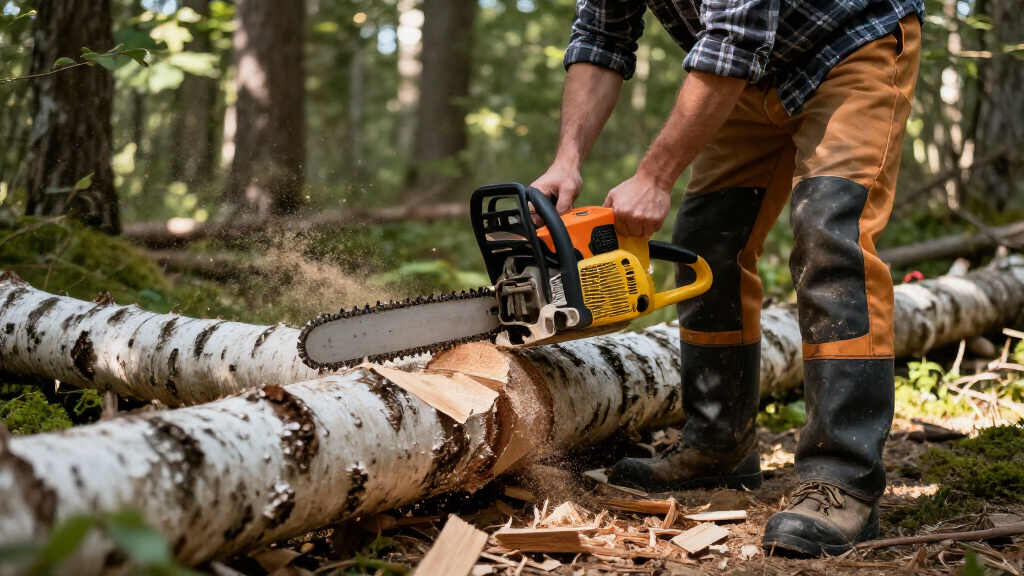
I compared the 15 saws by the details buyers can use to match a tool to real cutting tasks: listed engine displacement, bar length, availability of alternate bars, and the likely balance between cutting reach and manageable handling. I also considered how clearly each model’s intended role comes through, from compact top-handle saws to larger general-purpose and long-bar options.
The order favors a useful balance of capability, suitability, and clarity of fit rather than simply putting the largest engine first. A longer bar or higher displacement can make sense for larger wood, but it also narrows the group of buyers who can comfortably use the saw. Models with established homeowner positioning rank well for routine property work, while large-displacement kits earn their place for buyers who need greater reach or multiple bar choices. Where listings provide similar engine and bar combinations, I treat support, maintenance needs, and verified specifications as key points for buyers to check before choosing.
Factors to Consider When Choosing Gas Powered Chainsaws
I’d start with the wood you actually cut and how often you cut it, then work back to engine size and bar length. These choices affect handling, maintenance, and suitability as much as they affect cutting capacity.
Match Engine Size to the Wood You Cut
Engine displacement is a rough clue to a saw’s intended workload, not a guarantee of cutting speed or quality. The compact 25cc-class models in this roundup suit lighter tasks better than the 58–68cc group, which is aimed at larger cutting jobs. Buying a large engine for occasional small limbs can leave you carrying more saw than the work calls for. On the other hand, frequent cutting of thick firewood can make a small saw feel underpowered and slow. Think about the largest wood you routinely process, not the biggest log you might encounter once. Match the saw to your usual work, and arrange another tool or help for work beyond your comfort or training.
Choose Bar Length for Control, Not Just Reach
A longer bar can reach across larger wood, but it also adds leverage and can make the saw harder to guide. This roundup ranges from 12-inch bars to a listed 24-inch option, so the differences are substantial. A common mistake is to treat the longest bar as an upgrade that belongs on every saw; bar compatibility and engine capability have to match. A shorter bar can be easier to control for many routine cuts, while a longer one may suit experienced users handling larger material. Two-bar kits offer flexibility, but check whether both bars and chains are included and how replacements are specified. Select the shortest compatible bar that handles your regular work comfortably.
Account for Weight, Balance, and Saw Type
Displacement and bar length do not tell the whole story of handling; overall weight, balance, and grip design matter during repeated cuts. Top-handle models such as the NEO-TEC NCS2511 have a different intended role from conventional rear-handle saws and are not interchangeable choices for every user. Do not choose a top-handle saw simply because it looks compact: these tools are generally intended for trained users working in specific situations. If you are new to chainsaws, prioritize a conventional layout you can control from a stable stance. Compare complete operating weight where the manufacturer provides it, including the bar, chain, and fluids. If that information is missing, seek it out before committing to a saw for extended work.
Check Parts, Service, and Maintenance Access
Gas saws need routine attention to the chain, bar, air filter, spark plug, fuel system, and lubrication, so ownership support affects how practical a model is. Before buying, check whether replacement chains, bars, filters, and other routine parts are easy to identify and obtain. Listings with similar engine sizes can still differ in service documentation and parts availability. A low-complexity purchase is not much help if a worn chain or damaged bar is difficult to replace. Read the manual for fuel and oil requirements rather than assuming every two-cycle saw uses the same mixture or procedure. If you expect frequent use, access to clear instructions and support may matter more than a small difference in listed displacement.
Budget for Protective Gear and Safe Use
The saw is only one part of a safe cutting setup. Plan for suitable eye, hearing, hand, leg, and foot protection, and learn the controls and operating guidance before starting work. A larger, longer-bar saw can raise the consequences of poor handling, so extra capacity is not a reason to take on work beyond your skill. Buyers often focus on engine and bar specifications while overlooking the cost and fit of protective equipment. Also check for key safety features and read the product manual rather than relying on a brief listing. If you are unfamiliar with chainsaw operation, training and supervised practice should come before choosing a more powerful model.
Frequently Asked Questions
Is a 62cc chainsaw a better choice than a 38cc model for home use?
Not automatically. A 62cc saw with a 20-inch bar is aimed at more demanding cutting than a 38cc, 16-inch model, but that extra capacity can bring more weight and handling demands. For regular small-to-medium property work, the smaller saw may be easier to use and store. If you routinely cut larger firewood or handle substantial wood, the larger engine may be a more suitable match. Base the choice on your typical jobs and your ability to control the complete saw.
Should I choose a chainsaw that includes two bar lengths?
A two-bar kit can be useful if your work ranges from smaller limbs to larger logs, but it does not make either bar right for every task. Check that the saw is approved for both lengths and confirm which chains, pitch, and gauge fit each setup. Changing bars also takes time and requires correct chain tension and installation. If nearly all your work fits one bar length, a simpler single-bar setup may be easier to maintain. Treat the second bar as useful flexibility only when you have a real job for it.
Is a top-handle gas chainsaw suitable as my first chainsaw?
A top-handle saw is not a general substitute for a conventional rear-handle model. Its design is intended for particular work situations and trained operators, and its compact form should not be mistaken for easier or safer handling. For a first saw, I’d focus on a conventional layout, manageable bar length, clear operating instructions, and appropriate protective gear. Learn safe cutting practices before moving to specialized equipment. If your work calls for a top-handle saw, get qualified guidance on whether that tool and work method fit your needs.
What should I verify before buying a gas chainsaw with limited listing details?
Look for the complete operating weight, compatible bar and chain specifications, safety features, warranty terms, and access to replacement parts. Confirm whether advertised bars and chains are both included, rather than assuming a kit photo shows everything in the box. Read the manual for fuel mixture, starting, maintenance, and break-in instructions. If those details are hard to find, ask the seller or manufacturer before purchase. Missing information can affect both day-to-day use and the cost of keeping the saw in service.
When is it worth choosing a longer bar instead of a shorter one?
A longer bar can help when you regularly cut wood that exceeds the practical reach of a shorter setup, provided the saw is rated for that bar. It can also increase leverage, weight, and the care needed to maintain control. For many buyers, a 16- or 18-inch setup is a more manageable fit than a 20- or 24-inch option, depending on the work and the saw. Do not buy extra length just in case if it makes routine cuts harder. If you regularly handle large wood, choose a compatible saw and bar combination and get training for the work involved.
Conclusion
For a balanced homeowner pick, I’d start with the Husqvarna 130, whose 16-inch setup is better aligned with routine property work than the largest saws here. For a value-focused buyer who needs multiple bar choices, compare the PROYAMA 62cc and similar dual-bar kits closely, verifying parts and support before choosing. The best premium direction in this lineup is the Husqvarna pair for buyers who favor established homeowner models, though the right choice between the 120 Mark III and 130 depends on the exact specifications and support available. Beginners should favor a conventional, manageable 16-inch saw such as the Husqvarna 120 Mark III rather than a long-bar or top-handle model. For larger wood, the PROYAMA 68cc’s 20- and 24-inch options suit buyers who need reach; for lighter, compact cutting, consider the 12-inch VEVOR or NEO-TEC top-handle only if its intended use fits your experience. Match the saw to your regular work, then check operating weight, safety equipment, and service details before deciding.