
TL;DR
Listen free for 30 days with Audible
Thousands of audiobooks and originals — cancel anytime.
Start your free trialAs an affiliate, we earn on qualifying purchases.
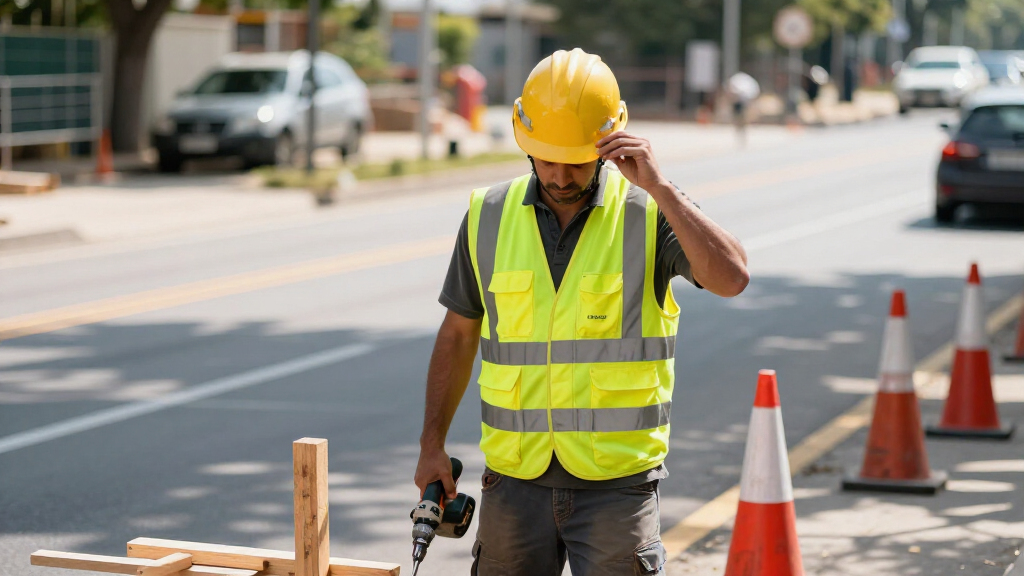
Roadside property work generally calls for ANSI/ISEA 107 Type R, Performance Class 2 apparel when workers are exposed to moving traffic or construction vehicles, especially within a public right-of-way. Class 2 improves daytime and nighttime recognition, but Class 3 apparel and stronger traffic controls may be needed near open lanes, high-speed traffic, darkness, bad weather, or limited sight distance.
A fluorescent vest can glow like a traffic cone and still be the wrong garment for roadside work. When mower noise fills the air, grass clippings hang in the sun, and cars pass a few yards away, you need more than a bright color. You need the right garment type, performance class, fit, and traffic-control setup for the actual exposure.
This guide shows you when roadside property work calls for Class 2, what that designation means, and when you should step up to Class 3. You will also learn how the public right-of-way, open-lane distance, prevailing speed, weather, equipment movement, and contract rules affect the decision. The goal is practical: help you outfit a crew before the trailer ramp drops and the first mower rolls onto the shoulder.
The label on the garment matters, but it is only one layer of protection. A vest cannot stop a distracted driver, fix a blind curve, or keep a backing dump trailer from pinning a worker. Treat high-visibility apparel as part of a struck-by prevention system that also includes signs, cones, barriers, spotters, lighting, and deliberate vehicle placement.
Specify ANSI/ISEA 107 Type R, Performance Class 2 on purchase orders; a bright shirt or generic fluorescent vest is not proof of compliance.
Base the apparel decision on traffic exposure, open-lane distance, sight distance, weather, worker movement, and equipment hazards rather than job title or one…
Move to Class 3 and stronger traffic controls when workers face high speeds, darkness, bad weather, active-lane exposure, complex traffic, or limited sight dis…
Check OSHA duties, the MUTCD, state and local rules, permits, client policies, and contract language before the job starts.
Inspect garments daily and replace items with faded fabric, damaged reflective tape, tears, heavy soil, or an expired laundering or service-life limit.
Hi-Vis Classes Explained: When Roadside Property Work Calls for Class 2
Type R, Performance Class 2 is a common baseline when property crews are exposed to moving traffic or construction vehicles—especially within a public right-of-way. It improves recognition, but it is only one layer in a complete struck-by prevention system.
Designed for workers exposed to roadway traffic.
More visible material than limited-exposure Class 1.
Greater coverage and stronger recognition of body movement.
Traffic, lane distance, sight distance, weather, movement, and rules.
What Class 2 gives you that a bright shirt does not
A fluorescent garment can glow like a traffic cone and still be wrong for roadside work. Compliance applies to the finished garment design, including verified material coverage, construction, testing, labeling, and care information.
Type R means roadway use
Type R identifies apparel intended for workers exposed to public-road traffic and roadway work vehicles. It is not a traffic-zone category or worker license.
Fluorescent background
High-contrast yellow-green or orange-red material stands apart from pavement, vegetation, shadows, and roadside visual clutter.
Retroreflective striping
Reflective bands return headlight beams toward the driver, helping the motorist recognize a person rather than an unidentified bright object.
Read the permanent label
Brightness is not certification
A neon athletic shirt may be conspicuous at noon yet lack reflective striping, minimum material coverage, testing, and a compliance label. “Class 2 material” also does not make the finished garment Class 2.
Where Class 1, Class 2, and Class 3 part ways
As traffic and visibility become more difficult, greater body coverage helps drivers identify human form and movement. The correct choice still depends on the full hazard assessment and governing requirements.
| Apparel category | Practical role | Example setting | Roadway fit | Main limitation |
|---|---|---|---|---|
| Type O Class 1 |
Limited visibility for controlled, off-road occupational vehicle exposure. | Warehouse yard separated from public traffic. | ✗Not intended as roadway apparel. | Lower material coverage and recognition. |
| Type R Class 2 |
Common roadway baseline with more background and reflective material than Class 1. | Shoulder mowing while workers remain outside the active lane. | ✓Designed for roadway exposure. | May be insufficient for severe or low-visibility exposure. |
| Type R Class 3 |
Greater coverage and stronger recognition of human form and motion. | Night work immediately beside a fast, open lane. | ✓Higher-visibility roadway option. | More fabric can increase heat and bulk. |
| Class 2 + Class E |
Compatible upper garment plus trousers or overalls forms a Class 3 ensemble. | Work requiring added visibility of leg movement. | ~Only with an approved, properly labeled combination. | Both pieces and manufacturer instructions must support the ensemble. |
✓ Suitable category ✗ Not intended for roadway use ~ Conditional on labeling and compatibility
Class 2 may not be enough
There is no reliable one-number shortcut such as “Class 2 above 25 mph.” Exposure compounds: proximity, speed, darkness, weather, movement, and sight distance can turn a routine verge job into a higher-risk operation.
Exposure escalation profile
Conceptual risk indicators for planning—not regulatory thresholds.
Private ground, substantial distance, or a solid barrier may reduce roadway exposure.
Roadside or right-of-way exposure while remaining outside active lanes.
Open lanes, higher speeds, poor visibility, complex traffic, or contract mandates.
Ordinary property work can become roadside work
A worker does not need “road crew” in the job title to face a struck-by hazard. Public traffic, work vehicles, loaders, trailers, and mowers can create overlapping risks.
Mowing and trimming
Shoulders, verges, sidewalks, medians, corner lots, and roadside easements.
Fence, mailbox, and sign work
Tasks near a curb can put bent or kneeling workers below a driver’s normal sight line.
Tree and hedge work
Branches, equipment, shadows, and parked vehicles can obscure workers from view.
Drainage, utility, and survey
Right-of-way tasks may require workers to move repeatedly toward or across traffic.
Snow, leaves, and litter
Weather, debris, glare, and changing pavement conditions reduce recognition time.
Loading, unloading, and backing
A roadside trailer, driveway entrance, skid steer, or backing truck adds mobile-equipment risk.
A mower operator forty feet inside a lawn and a trimmer operator between the sidewalk and curb need separate assessments. Position, movement, concealment, and escape space change the risk.
Ask these 10 questions before the trailer ramp drops
Use the answers to select apparel, establish the traffic-control plan, position vehicles, and determine whether the assignment needs redesign or escalation.
Is any work inside the public right-of-way?
Include shoulders, sidewalks, medians, verges, and easements.
How close is the nearest open lane?
Consider worker reach, tools, debris, and unintended movement.
What are prevailing speed and traffic volume?
Use actual operating conditions, not only the posted limit.
Can drivers see the crew in time?
Check curves, hills, parked vehicles, vegetation, and visual clutter.
Will light or weather reduce visibility?
Account for dusk, darkness, rain, fog, snow, glare, and shadow.
Must anyone cross or enter a lane?
Include brief trips for tools, debris, signs, or equipment.
What equipment will move nearby?
Map backing trucks, trailers, loaders, mowers, and blind spots.
Are garments labeled, compatible, and serviceable?
Verify Type R, class, edition, fit, care limit, and condition.
What traffic controls are required?
Plan signs, cones, barriers, lighting, spotters, and vehicle placement.
Do rules or contracts require more?
Check OSHA duties, MUTCD provisions, permits, agency rules, and client policy.
Document the basis
Confirm distance, barriers, access routes, and mobile-equipment exposure.
Start with Class 2
Use labeled Type R apparel and complete the traffic-control assessment.
Escalate protection
Move to Class 3, improve controls, relocate work, or close the exposure.
The protection chain
A vest cannot stop a distracted driver, correct a blind curve, or prevent a backing trailer from pinning a worker. Apparel belongs inside a system.
Assess exposure
Traffic, right-of-way, lane distance, visibility, equipment, and worker movement.
Check authority
OSHA duties, MUTCD provisions, state rules, permits, clients, and contracts.
Select apparel
Choose labeled type, class, size, fit, ensemble compatibility, and condition.
Build controls
Add signs, cones, barriers, lighting, spotters, and deliberate vehicle placement.
Reassess on site
Pause when traffic, weather, lighting, crew position, or equipment movement changes.
Class 2 is a classification—not a guarantee
It improves worker recognition but does not create separation from traffic. Pair apparel with controls that reduce driver-worker conflict and provide the crew with warning, distance, and escape space.
Four overlapping requirements
No single source replaces the others. Verify every layer before work begins.
Five takeaways to carry into the field
The garment label matters, but daily condition, correct fit, traffic controls, and a live assessment determine whether the system still works.
Specify ANSI/ISEA 107 Type R, Performance Class 2. A generic fluorescent vest or bright shirt is not proof of compliance.
Base the decision on exposure. Consider the right-of-way, open-lane distance, sight distance, weather, worker movement, and equipment hazards.
Step up when risk compounds. Class 3 and stronger controls may be needed for speed, darkness, weather, active-lane work, complex traffic, or short sight distance.
Verify governing requirements. Review OSHA duties, the MUTCD, state and local rules, permits, client policies, and contract language.
Treat visibility as a system. Combine suitable apparel with signs, cones, barriers, spotters, lighting, safe positioning, and controlled equipment movement.
Inspect before every shift
Replace the garment when fluorescent fabric is faded, reflective tape is damaged, the item is torn or heavily soiled, the fit prevents proper coverage, or its laundering or service-life limit has been reached.
What Class 2 Gives You That a Bright Shirt Does Not
Roadside property work calls for Class 2 when workers need enough fluorescent and reflective material for drivers to recognize them as people near traffic. Type R identifies roadway-use apparel, while Performance Class 2 sets minimum areas for the background fabric and retroreflective material under ANSI/ISEA 107.
Think of fluorescent material as the daytime half of the system. Its hot yellow-green or orange-red surface stands out against dark hedges, gray pavement, and brown winter grass. Retroreflective striping handles the nighttime half by returning headlight beams toward the driver, producing the sharp silver-white flash you see as a vehicle approaches.
A crew member once showed up to a shoulder-mowing job in a neon athletic shirt. It looked bright beside the truck, but it lacked retroreflective striping, a compliance label, and verified material coverage. At dusk, that shirt faded into the visual clutter while the properly labeled Class 2 vest still traced a recognizable torso.
For a compliant garment, inspect the permanent label for the manufacturer, ANSI/ISEA 107 edition, garment type, performance class, size, and care instructions. ANSI/ISEA 107-2020 remains a common purchasing reference and covers garment design, testing, labeling, and related performance details [1]. Fabric advertised as Class 2 material does not make the finished garment compliant; certification applies to the complete design.
Class 2 is an apparel classification, not a road-zone category, job license, or promise that a worker is safe without traffic controls.
ANSI Class 2 high visibility safety vest
As an affiliate, we earn on qualifying purchases.
As an affiliate, we earn on qualifying purchases.
The Jobs That Turn Ordinary Yard Work Into Roadside Exposure
Roadside property work calls for Class 2 based on exposure, not the worker’s title or the property owner’s name. A landscaper trimming a verge can face the same moving-traffic hazard as a utility crew if both stand within reach of an open roadway and passing construction equipment.
Common examples include mowing shoulders, trimming hedges, collecting leaves, repairing mailboxes, clearing snow, and maintaining drainage. Fence, sign, tree, irrigation, survey, and retaining-wall work can create the same problem. Loading a skid steer from a roadside trailer or backing a truck from a driveway adds another moving-machine hazard even when nobody plans to enter a travel lane.
Take a two-person mowing crew working along a corner lot. One operator stays forty feet inside the lawn, while the second uses a string trimmer on the narrow strip between the sidewalk and curb. The job address is the same, but the exposure is not: the trimmer operator stands inside the roadside environment, partly hidden by parked cars and bent forward toward the grass.
- Shoulders, verges, sidewalks, medians, and roadside easements can place workers inside the public right-of-way.
- Crossing the road for tools or debris creates exposure even when the main work area sits away from traffic.
- Curves, hills, vegetation, shadows, and parked vehicles shorten the time drivers have to react.
- Work trucks, loaders, trailers, and mowers can strike workers independently of public traffic.
Work entirely on private ground, well separated by distance or a solid barrier, may sit outside roadway-specific MUTCD coverage. That does not erase a foreseeable struck-by hazard. If a swerving vehicle can reach the crew, or if workers must step into the roadside to unload, the employer still needs a documented assessment and suitable protection.
performance class 2 hi-vis work apparel
As an affiliate, we earn on qualifying purchases.
As an affiliate, we earn on qualifying purchases.
See Where Class 1, Class 2, and Class 3 Part Ways
Class 2 sits between limited-exposure Class 1 apparel and higher-coverage Class 3 apparel. The practical difference is how much visible material surrounds the worker and how clearly drivers can recognize a human shape. More difficult traffic and visibility conditions usually push the decision toward greater coverage.
| Apparel category | Practical role | Example setting | Main limitation |
|---|---|---|---|
| Type O, Class 1 | Visibility in off-road occupational settings with controlled vehicle exposure | A warehouse yard separated from public traffic | Not intended as roadway apparel |
| Type R, Class 2 | Roadway visibility with more background and reflective material than Class 1 | Mowing a shoulder while remaining outside the active lane | May lack enough coverage for severe or low-visibility exposure |
| Type R, Class 3 | Greater body coverage and stronger recognition of human form and movement | Night work beside a fast open lane | More fabric can add heat and bulk |
| Class 2 plus Class E | A compatible upper garment and trousers or overalls forming a Class 3 ensemble | A worker who needs added leg movement visibility | Labels and manufacturer instructions must support the combination |
Imagine two workers beside the same four-lane road. One stands behind a barrier at noon while pruning shrubs; the other places cones near an open lane after sunset. A Class 2 vest may fit the first exposure, while the second worker’s moving arms and legs need Class 3 coverage, lighting, and a properly designed traffic-control area.
Class 3 brings a real tradeoff during humid summer work. More fabric can trap heat when a crew walks several acres behind blowers and trimmers. You still select protection for the hazard, then manage heat with breathable compliant garments, water, shade, work-rest cycles, and sensible scheduling rather than dropping to an inadequate class.
high visibility traffic safety clothing
As an affiliate, we earn on qualifying purchases.
As an affiliate, we earn on qualifying purchases.
Use This 10-Question Check Before the Crew Leaves the Yard
Roadside property work calls for Class 2 only after you check the work zone, traffic exposure, visibility, equipment movement, and governing rules. A dependable decision uses the conditions drivers and workers will actually face, not a single speed-limit shortcut or whatever vest happens to be in the truck.
- Will anyone work in or enter the public right-of-way?
- Could a driver reach the worker after one mistake or moment of distraction?
- How close will the worker stand to an open traffic lane?
- What are the posted, actual, and prevailing vehicle speeds?
- Can approaching drivers see the worker with enough distance to react?
- Will the work continue through dusk, darkness, fog, rain, glare, or snow?
- Will workers bend, kneel, cross the road, or disappear behind vegetation?
- Do trucks, trailers, mowers, loaders, or reversing vehicles add another hazard?
- Does a permit, state DOT, municipality, utility, client, or employer policy name a class?
- Would Class 3, a barrier, lane closure, spotter, or different work method reduce the risk?
Suppose your crew must clear leaves from a 45-mph roadside ditch. The workers remain outside the lane, but an inside curve, wet pavement, and a parked dump trailer cut the sight distance. Class 2 may be the stated baseline, yet Class 3 garments and advance warning controls make more sense because drivers meet the crew with little reaction time.
Do not rely on claims such as Class 2 is always required above 25 mph. Speed matters, but traffic volume, separation, sight distance, weather, worker movement, and agency requirements can change the answer. Write down the assessment, confirm the controlling specification, and review it when the weather, lane setup, or scope changes.
reflective safety gear for roadside workers
As an affiliate, we earn on qualifying purchases.
As an affiliate, we earn on qualifying purchases.
Know Which Rule Controls Before You Order a Case of Vests
Four overlapping layers can govern roadside apparel: OSHA duties, the MUTCD, ANSI/ISEA 107, and local or contractual rules. You need to check all four because none creates a simple nationwide formula saying every job near a road automatically requires Class 2. The controlling authority and actual exposure decide the answer.
OSHA requires employers to address recognized struck-by and visibility hazards and provide suitable protective equipment. The federal MUTCD addresses workers within public-road rights-of-way who are exposed to traffic or construction equipment. According to the 11th Edition of the federal MUTCD, released in 2023, qualifying high-visibility apparel remains part of worker protection in these settings, while states and local agencies handle adoption and added requirements [2].
ANSI/ISEA 107 supplies the performance language used on the garment label. A purchasing request should say ANSI/ISEA 107 Type R, Performance Class 2, including any edition required by the contract, instead of asking for a generic safety vest. Some buyers still specify a particular edition even when newer garments are available, so read the bid documents before ordering twenty boxes in the wrong specification.
For example, a property company may win a municipal mowing contract that names Class 3 apparel for every worker inside the right-of-way. Your internal assessment might have accepted Class 2 for a quiet shoulder, but the contract’s stricter rule still governs the crew. A state DOT manual, utility standard, permit condition, or city policy can work the same way.
If the location or permit language is unclear, contact the road authority or project safety representative before mobilization. Roadway setup can involve enforceable traffic-control requirements, so use trained personnel and qualified traffic-control professionals where the plan, lane closure, or local rules call for them. A vest does not substitute for a compliant work-zone design.
Keep Class 2 Visible After Sweat, Mud, and Equipment Take Their Toll
A Class 2 garment only performs while its required material remains visible, correctly worn, and in serviceable condition. Dirt, fading, tears, abrasion, covered striping, and poor fit can turn compliant apparel into a dull shape beside the road. Daily inspection and correct layering keep the specification working in the field.
A vest worn open can fold behind the body, while a black rain jacket over it wipes out the fluorescent background completely. Tool harnesses, backpacks, radios, logo patches, and blower straps can also cover required material. If cold rain rolls in, use a properly labeled high-visibility outer layer rather than burying the vest under a waterproof shell.
One autumn cleanup crew learned this after several hours of wet leaf collection. Brown spray coated the lower half of each vest, and backpack blowers hid much of the rear striping. At the afternoon check, the supervisor moved the workers farther from traffic, cleaned or replaced the dirty garments, and changed equipment positioning so drivers could see fluorescent and reflective areas from relevant directions.
- Check for faded background fabric, cracked tape, missing reflective sections, tears, and permanent stains before each shift.
- Follow the manufacturer’s washing method and laundering limit; harsh chemicals and high heat can damage performance.
- Choose a fit that stays closed without restricting bending, climbing, or mower operation.
- Confirm that screen-printed logos, patches, and equipment do not remove too much visible compliant material.
- Retire the garment when damage, soil, fading, or the maker’s service-life limit says it is done.
Color choice also depends on the background. Yellow-green can stand out against asphalt and dark equipment, while orange-red may separate better from green summer vegetation. Agency rules may settle the choice, but when they do not, select the color that creates the strongest contrast against the actual work setting.
Add the Controls a Vest Can Never Provide
High-visibility apparel helps drivers detect workers, but it cannot control traffic or create physical separation. Roadside property work generally calls for Class 2 as one layer inside a larger plan that may include signs, cones, barriers, spotters, lighting, safer parking, and schedule changes.
Park work vehicles to avoid blocking sight lines or forcing workers to unload into traffic. Set the trailer ramp toward the protected side whenever the site allows it, and keep loose tools out of the road. If a worker must back a truck near pedestrians or crew members, use a trained spotter and a clear communication method over the engine’s low diesel growl.
Consider a hedge crew working beside a narrow two-lane road. Class 2 vests make the workers easier to identify, but branches fall toward the shoulder and the chipper creates noise, dust, and repeated vehicle movement. Moving the chipper to a protected driveway, adding advance warning, and assigning a spotter remove exposure that brighter fabric alone cannot touch.
If one steering error can put a vehicle into the work area, apparel is not the only control you need.
Conditions can also change during a single job. Morning sun may give clear visibility, while afternoon glare turns every windshield into a white mirror. Recheck the setup after equipment moves, traffic builds, rain starts, or the crew approaches a curve; then upgrade the apparel class, separation, warning devices, or work method before continuing.
When a project requires workers to occupy an active lane, control traffic, or build a formal temporary traffic-control zone, bring in people with the proper training. Follow the permit and road-authority requirements, wear appropriate PPE, and keep workers out of live traffic until the required controls are in place.
Frequently Asked Questions
Is Class 2 mandatory whenever I work beside a road?
No single rule makes Class 2 automatic for every job beside a road. The answer depends on traffic exposure, public right-of-way boundaries, employer duties, MUTCD coverage, local rules, and contract terms. A worker trimming behind a solid barrier faces a different hazard from one trimming the curb with cars passing six feet away.
Does the speed limit determine whether I need Class 2?
Speed affects the decision, but it does not decide it alone. Traffic volume, actual vehicle speed, lane distance, weather, glare, worker movement, and sight distance all matter. A 25-mph blind curve packed with parked vehicles can present a worse exposure than a straight, lightly traveled road with a higher posted limit.
Is Class 2 enough for highway property work?
Class 2 can suit some highway-side work, but it is not automatically enough. High-speed traffic, nighttime work, lane occupancy, short sight distance, and complex visual backgrounds often support Class 3 apparel and stronger traffic controls. The road authority or contract may also require Class 3 regardless of your internal minimum.
Can I wear a regular jacket over a Class 2 vest?
Do not cover required high-visibility material with a noncompliant jacket. Once the fluorescent fabric and reflective bands disappear, the vest cannot provide its intended recognition. In cold or wet weather, wear a labeled high-visibility jacket or other approved outer layer suited to the required type and class.
Can a Class 2 vest and reflective pants count as Class 3?
A labeled Class 2 upper garment and compatible Class E trousers or overalls can form a Class 3 ensemble. Check both labels and the manufacturer’s instructions before treating the combination as Class 3. Random reflective work pants do not create a compliant ensemble just because they shine in headlights.
How often should I replace high-visibility apparel?
There is no universal replacement date for every garment. Retire apparel when the background is badly faded or stained, reflective tape is cracked or missing, fabric is torn, or the maker’s wash or service-life limit has been reached. A vest that looks muddy and gray from twenty yards away has already lost much of its practical value.
Are U.S. Class 2 and European Class 2 the same?
No, the classifications are not interchangeable. U.S. roadway apparel commonly follows ANSI/ISEA 107, while European and many international garments use EN ISO 20471. Both standards use numbered classes, but their test methods, garment designs, labeling, and legal frameworks differ.
Conclusion
Your working rule is simple: judge exposure, identify the controlling rule, and dress for the hardest condition the crew will face. For many shoulder, verge, sidewalk, and roadside-easement jobs, Type R Class 2 is the baseline. When traffic moves faster, sight lines shrink, daylight fades, or workers approach an open lane, step up the apparel and the traffic controls together.
Before the mower deck starts humming, walk the site from the driver’s point of view. Check the label, the lane distance, the curve, the weather, and the escape path. A worker should appear as a clear human figure with room to work safely, not a last-second flash of color in the headlights.
NFL season / tailgating Picks
team gear
As an affiliate, we earn on qualifying purchases.