
TL;DR

Get business pricing on tools and workshop supplies
- Business-only prices and quantity discounts
- Tax-exempt purchasing
- Multiple users, one account, clear invoices
Battery zero-turn mowers drain faster on hills because climbing requires more power. Steeper slopes, heavier loads, and terrain resistance boost energy use, reducing runtime by up to 50%. Proper equipment and techniques can extend mowing time and safety.
Ever noticed how your battery-powered zero-turn mower seems to run out of juice faster when you hit a hill? That’s no coincidence. Slopes turn your efficient machine into a power hog in a heartbeat. If you’re mowing a hilly property, understanding why hills drain your battery packs faster can save you frustration—and maybe even your safety.
In this guide, you’ll see exactly how terrain, load, and machine design influence runtime. Plus, I’ll share practical tips for getting the most out of your electric mower when tackling hills, so you won’t be caught off guard next time you face a slope.
Slopes cause your battery to work harder, decreasing runtime by up to 50%.
Steeper slopes, heavier loads, and terrain resistance all boost energy demand.
Modern tech like slope sensors and smarter BMS can help extend battery life on hills.
Reducing speed, maintaining your mower, and planning routes are simple ways to save battery.
Gas mowers still handle hills better, but high-capacity batteries and tech improvements are closing the gap.
Why Slopes Suck Up Your Battery Faster
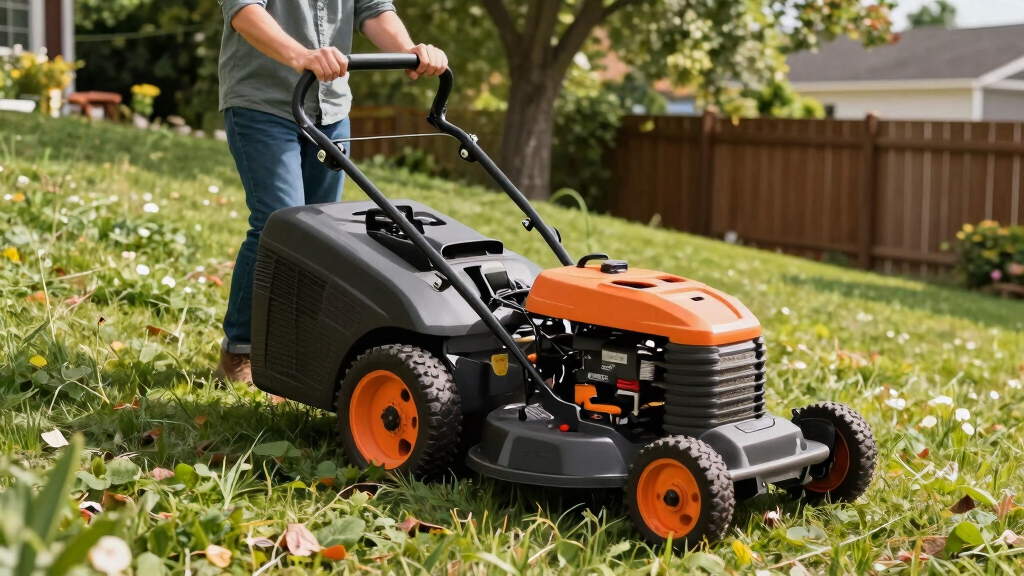
Battery zero-turn mowers use electric motors that work harder on hills. Climbing a slope requires more torque—think of it like pedaling uphill on a bike. The motor has to generate extra power to fight gravity and keep moving.
For example, on flat ground, a mower might run for 2.5 hours. On a 15-degree incline—roughly a moderate hill—that runtime could drop to just 1.5 hours. That’s a 40% hit in battery life, all because of gravity and increased resistance.
In real-world terms, imagine trying to mow a sloped backyard. You notice the battery gauge dropping faster when climbing the hill than when mowing flat. That’s the battery fighting gravity—using more energy to keep the blades spinning and wheels turning.
electric zero-turn mower battery extension kit
As an affiliate, we earn on qualifying purchases.
As an affiliate, we earn on qualifying purchases.
How Slopes Impact Power Use — The Science in Simple Terms
Battery drain on slopes comes down to physics. When you go uphill, your mower’s motor must produce extra torque to lift the machine against gravity. This extra effort translates directly into higher power consumption.
According to an anonymous researcher from Outdoor Pro Masters, operating on slopes can increase energy demands by 20-50%. That’s like running your battery at 150% of its usual workload just to climb a hill.
Think of it as pushing a heavy cart uphill—you’re exerting more force, and your energy depletes faster. The steeper the hill, the more power needed, and the quicker your battery runs out.
high-capacity lithium-ion mower batteries
As an affiliate, we earn on qualifying purchases.
As an affiliate, we earn on qualifying purchases.
Factors That Make Hills Drain Batteries Even Faster
- Incline steepness: The sharper the slope, the more power needed. A gentle hill of 10 degrees drains less than a steep 20-degree incline. This is because steeper slopes require exponentially more torque to overcome gravity, meaning your battery faces a much heavier workload. The tradeoff is clear: steeper inclines drastically cut your mowing time and can strain your equipment, increasing the risk of overheating or damage. Choosing manageable slopes or adjusting your route can help balance efficiency and safety.
- Load and weight: Heavier mowers or those with attachments burn more juice climbing hills. Extra weight means the motor has to work harder to generate the necessary torque, which accelerates battery depletion. This is especially relevant when hauling bags or using attachments like aerators. The implication is that lighter equipment or minimizing attachments can significantly extend your mowing window on slopes, but it also means balancing workload with equipment capacity to avoid overloading the motor.
- Terrain resistance: loose gravel, thick grass, or uneven ground increases friction, forcing motors to work harder. This resistance acts like an additional load that the motor must overcome, further draining the battery. Understanding terrain helps you anticipate increased energy use, and adjusting your mowing strategy—such as reducing speed or choosing smoother paths—can help conserve power. Ignoring terrain resistance may lead to unexpected shutdowns or reduced efficiency, especially on longer or steeper slopes.
- Battery age and capacity: Older batteries or smaller capacity packs hit their limit quicker when working on slopes. As batteries age, their ability to deliver high current diminishes, making climbing hills even more taxing. Smaller capacity packs simply have less stored energy, so they deplete faster under increased load. Recognizing these limitations is crucial for planning mowing sessions—upgrading or maintaining batteries can be a key factor in successfully tackling hilly terrain without interruptions.
For instance, mowing a steep hillside with a 50-pound bag of grass clippings in tow will cut your runtime in half compared to a flat yard without load. This example underscores how combined factors—like load and slope—compound to reduce efficiency, emphasizing the importance of equipment choice and route planning for optimal performance.
As an affiliate, we earn on qualifying purchases.
What Tech Is Doing to Help Batteries Last Longer on Slopes
Manufacturers are tackling this challenge with smarter tech. Advanced Battery Management Systems (BMS) monitor how much power the mower uses and adjust accordingly.
Newer models feature brushless DC motors (BLDC), which are more efficient and generate less heat—both good for extending runtime. Some mowers include slope sensors that detect incline and automatically dial back power to conserve battery life.
Plus, innovations like quick-swappable batteries and rapid chargers mean you can get back to work faster, even if your first battery runs out mid-mow.
battery-powered mower accessories for hills
As an affiliate, we earn on qualifying purchases.
As an affiliate, we earn on qualifying purchases.
What You Can Do to Maximize Battery Life on Hills
- Reduce your mowing speed: Slow down when climbing or descending slopes to prevent sudden power surges. This helps manage the load on the motor, avoiding unnecessary spikes that drain the battery quickly. A controlled pace not only conserves energy but also improves safety, reducing the risk of slipping or tipping. The tradeoff is slightly longer mowing time, but the extended battery life and safety benefits often outweigh this inconvenience.
- Use higher-capacity batteries: Bigger packs last longer, especially on hilly terrains. Investing in larger capacity batteries means more stored energy, which translates to longer run times and less frequent stops. However, larger batteries can add weight and cost, so balancing capacity with machine portability and budget is important. The key is to match your battery choice with your terrain and mowing needs for optimal efficiency.
- Maintain your machine: Keep batteries charged, motors clean, and tires well-inflated for optimal efficiency. Regular maintenance reduces unnecessary resistance and ensures the machine operates at peak performance. For example, under-inflated tires increase rolling resistance, making the motor work harder and draining the battery faster. Proper maintenance is a simple yet effective way to maximize your mower’s efficiency on slopes.
- Follow slope ratings: Never exceed the manufacturer’s recommended incline—safety first. Operating beyond these limits increases the risk of tipping or rollovers, which can be dangerous. More importantly, exceeding slope ratings can strain the motor and battery, leading to premature failure or shutdowns. Adhering to recommended inclines ensures safety and preserves battery life, allowing you to work confidently on hilly terrain.
- Plan your route: Tackle hills when the battery is full, and avoid unnecessary back-and-forth on steep terrain. Strategic route planning minimizes the number of climbs and descents, reducing overall energy expenditure. Starting at the top of a hill and working downward conserves battery and reduces strain on the motor. This planning also helps avoid situations where you’re caught midway up a slope with a depleted battery, which could leave you stranded or force you to restart the session.
For example, on a property with a 15-degree slope, mowing from the top down with a full battery and a slow pace can extend your runtime by 20-30%. This approach maximizes efficiency and safety, especially on challenging terrain.
Compare Battery and Gas Zero-Turn Mowers on Slopes
| Feature | Electric Zero-Turn | Gas Zero-Turn |
|---|---|---|
| Power Consistency | Limited by battery capacity, drops on steep slopes | Steady, higher torque, better on hills |
| Runtime on Hills | 20-50% reduction depending on slope | Less affected, longer continuous run |
| Maintenance | Less, no oil or filters | More, oil changes and tune-ups needed |
| Noise & Emissions | Quiet, no emissions | Louder, emits fumes |
For hilly properties, gas mowers often handle inclines better due to consistent power. But advances in high-capacity batteries and slope sensors are narrowing that gap.
Frequently Asked Questions
Why does my zero-turn mower run out of battery faster on hills?
Because climbing slopes requires more torque and power, forcing the motor to work harder. This increased effort drains the battery quicker than on flat terrain.How steep is too steep for a battery-powered zero-turn mower?
Most models are rated for slopes up to 15-20 degrees. Beyond that, safety becomes a concern, and battery efficiency drops sharply, so stay within manufacturer guidelines.Can I improve battery life when mowing on hills?
Yes. Reduce your speed, avoid sudden accelerations, keep batteries well-maintained, and consider higher-capacity packs or models with slope sensors designed for hilly terrain.Are zero-turn mowers better for hills or flat yards?
Gas-powered mowers often handle hills more reliably due to steady power output. However, newer electric models with advanced tech are making strides, especially on lighter slopes.What safety tips should I follow when mowing on slopes?
Always stay within the recommended incline limits, mow slowly, avoid sudden turns, and never operate on excessively steep terrain to prevent tipping or accidents.Conclusion
Hills are the enemy of battery efficiency, but smart choices and tech can keep your mower running longer on slopes. Always respect slope ratings, adjust your mowing style, and pick the right equipment for your terrain.
Next time you face a hill, remember: a little planning goes a long way toward getting the job done faster and safer. After all, a well-chosen tool and a cautious approach turn a battery drain into a manageable challenge—not a dead-end.
Fall yard work Picks
leaf blowers
As an affiliate, we earn on qualifying purchases.