
TL;DR

Get tools and workshop supplies delivered free — and shop member deals
- Fast, free delivery on millions of items
- Access to Prime Big Deal Days deals on October 6–7
- Prime Video, Amazon Music and more included
Meshdiff is a new tool that enables users to compare two STL files visually within a web browser, running entirely on the client side. This development simplifies version review workflows for 3D modelers and engineers, eliminating the need for dedicated software or server-based solutions.
Meshdiff has been launched as a web-based tool that allows users to visually compare two STL 3D model files directly in their browser. This platform-independent solution runs entirely on the client side, requiring no server or external software, and aims to streamline the review process for designers, engineers, and 3D printing professionals.
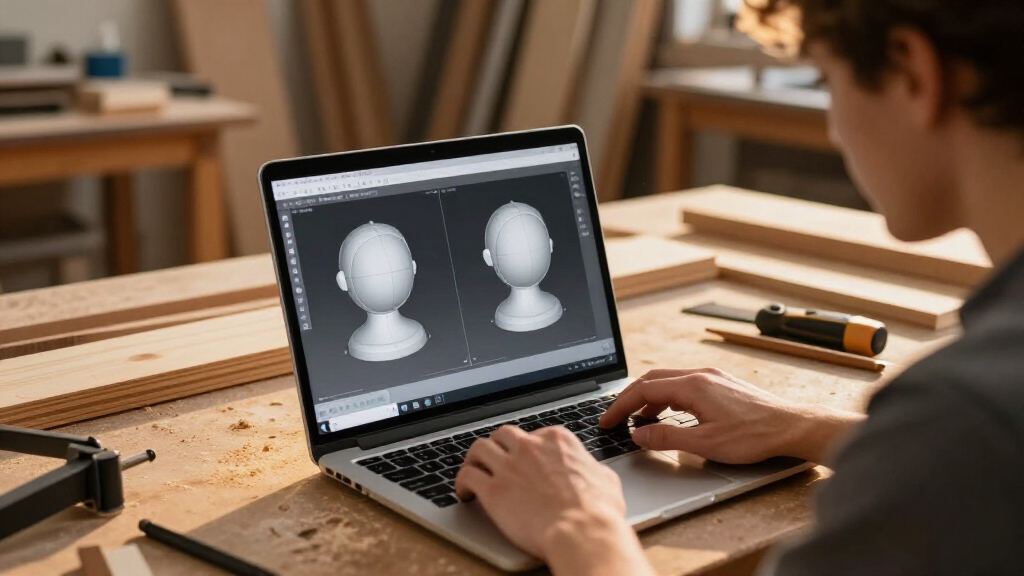
The tool was developed by a team of software engineers focusing on improving accessibility and efficiency in 3D model verification. Meshdiff supports loading two STL files simultaneously, providing side-by-side visualizations, difference highlighting, and interactive controls such as zoom and rotation. According to the developers, the application is entirely browser-based, utilizing WebGL for rendering, and does not require any installation or backend server.
Meshdiff’s interface is designed for ease of use, enabling quick uploads and comparisons. It can be accessed via a standard web browser on any operating system, including Windows, macOS, and Linux. The developers claim that this approach enhances collaboration and review workflows, especially in remote or distributed teams, by removing barriers related to software installation and compatibility.
Impact on 3D Model Review and Collaboration
This development matters because it offers a fast, accessible, and software-free way to compare STL files, a common task in 3D printing, CAD, and prototyping workflows. By eliminating the need for specialized software or server-based solutions, Meshdiff could reduce review times and improve collaboration among distributed teams. It also lowers barriers for users who lack access to expensive CAD tools or do not wish to install additional software.
Furthermore, running entirely in the browser enhances security and privacy, as models are processed locally without uploading to external servers. This feature is particularly relevant for sensitive or proprietary designs.
As an affiliate, we earn on qualifying purchases.
Advances in Browser-Based 3D Model Tools
Over recent years, browser-based CAD and 3D visualization tools have gained popularity, driven by improvements in WebGL and JavaScript frameworks. Existing solutions typically focus on viewing or light editing of models, but few offer detailed visual comparison features. Meshdiff’s launch builds on this trend, offering a specialized tool for version comparison, which has traditionally required desktop software like MeshLab or proprietary CAD programs.
Prior to Meshdiff, users often relied on manual overlaying or side-by-side viewing with external applications, which could be cumbersome. The new tool aims to fill this gap by providing an intuitive, fast, and accessible comparison capability directly in the browser.
As an affiliate, we earn on qualifying purchases.
Limitations and Compatibility Questions
It is not yet clear how Meshdiff handles very large STL files or complex geometries in terms of performance and responsiveness. Additionally, compatibility with other 3D formats or integration with existing CAD workflows remains unconfirmed. Developers have not yet released detailed technical documentation or user feedback, so some limitations and potential bugs are still unknown.
As an affiliate, we earn on qualifying purchases.
Upcoming Features and Broader Adoption
Developers plan to update Meshdiff with features such as difference metrics, annotation tools, and support for additional file formats. They also intend to gather user feedback to refine usability and performance. Widespread adoption will depend on community testing, integration options, and potential extensions for editing or exporting comparison results.
As an affiliate, we earn on qualifying purchases.
Key Questions
Can I use Meshdiff without installing any software?
Yes, Meshdiff runs entirely in your web browser, requiring no installation or downloads.
What file formats does Meshdiff support?
Currently, Meshdiff exclusively supports STL files, but future updates may include additional formats.
Is Meshdiff suitable for large or complex models?
Performance with very large or complex models has not been fully tested; users may experience limitations depending on their hardware and browser capabilities.
Does Meshdiff store or upload my models?
No, all processing is client-side, so your models are not uploaded or stored externally.
Will Meshdiff be integrated into existing CAD tools?
There are no current plans for direct integration, but developers may explore APIs or plugins in future versions.
Source: hn
Fall yard work Picks
leaf blowers
As an affiliate, we earn on qualifying purchases.


![Introduction To Data-Oriented Design [Pdf]](https://outdoorpromasters.com/wp-content/uploads/2026/07/introduction-to-data-oriented-design-pdf-featured-560x300.jpg)