
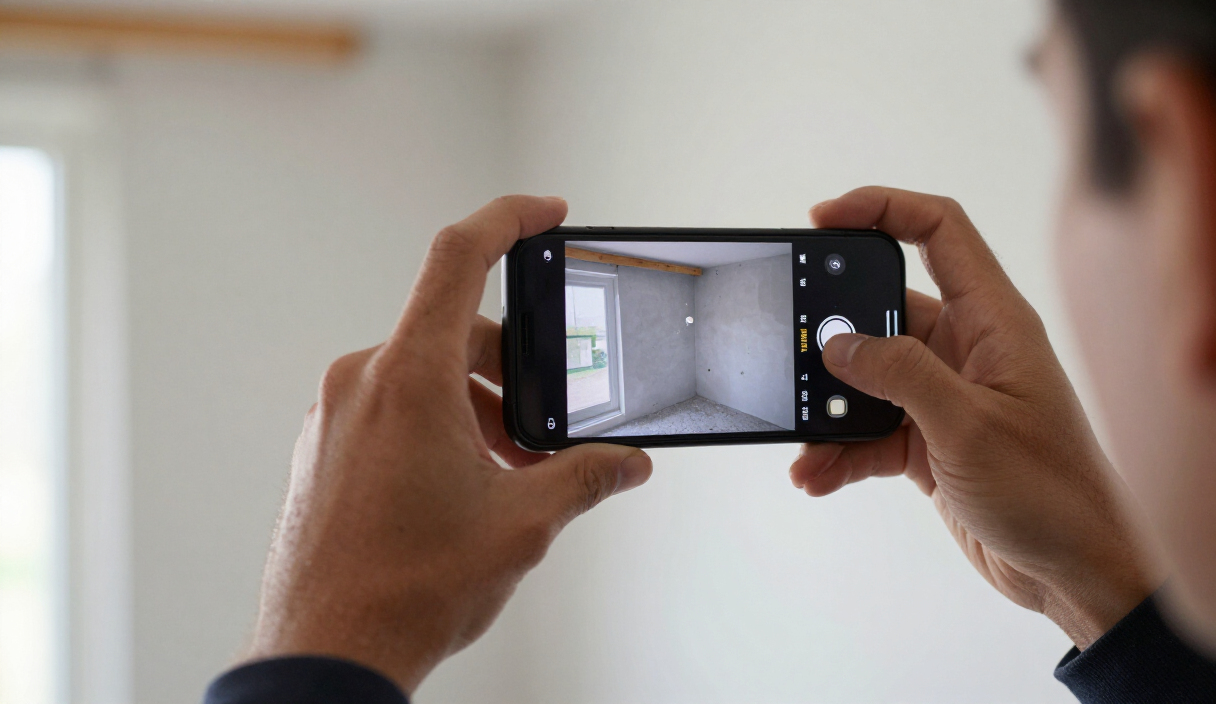
On a job site, information rarely disappears all at once. It slips away in small, familiar pieces: the defect you photographed but can no longer find, the verbal instruction nobody recorded, the responsible trade that was never clearly assigned, or the daywork report reconstructed three weeks after the work happened.
Open a free Amazon Business account
Business pricing, bulk buying and tax-exempt orders.
Create a free accountAs an affiliate, we earn on qualifying purchases.
The job-site evidence gap
Speak the daywork report before the details disappear.
Gewerkton’s article-level argument is about timing: evidence is strongest while the work, people and context are still in front of the site manager.
Fields that turn fragments into action
Trade · deadline · responsible person — attached to the photograph, defect, instruction or daywork record.
Product lines, distinct jobs
Field captures on site. Studio handles plans and models in the browser. Cloud coordinates operations and data.
AI providers supported
Bring your own keys and select a provider region across the EU, US and Asia, including mainland China.
Content languages
International teams can work in their own languages while the original evidence remains part of the record.
Public beta planned
Gewerkton is currently in beta: an actively developing platform, not a finished system already in general release.
Field is where the record begins: voice-first capture for defects, daywork reports, takt and portal work — including offline capture in dead zones.
From a site manager’s perspective, that is the real documentation problem. The work may have been completed, discussed and photographed, but the usable record is scattered or incomplete. A picture without context is only a picture. A deadline without a responsible person is difficult to act on. A verbal instruction without a written trail depends on somebody remembering it later.
Gewerkton approaches this problem as a voice-first construction documentation and defect management platform. Its central idea is straightforward: capture the information where the work happens, while the details are still fresh, and turn spoken input into structured evidence. The marketing line puts the principle neatly: “On site, what counts is what’s proven.”
The platform is in beta now, with a public beta planned for fall 2026. That status matters. It should be considered as a product under active development, not presented as a finished system already in general release.
digital job site documentation tools
As an affiliate, we earn on qualifying purchases.
As an affiliate, we earn on qualifying purchases.
The report that should not wait three weeks
Daywork reports are a good test of any site-documentation process because they depend heavily on immediate context. The site manager knows which trade carried out the work, what happened and who needs to deal with the next step. Leave the report until later and those details must be reconstructed from photographs, conversations and memory.
The speakable daywork report is therefore the centrepiece of Gewerkton Field. Instead of treating documentation as separate office work, the site manager dictates on site. The spoken account becomes structured evidence that can include the trade, the deadline and the responsible person. At handover, the report can be signed on the device.
That sequence is practical because it follows the actual movement of information. The person standing near the work already has the context. Speaking captures it before attention moves to the next trade, meeting or problem. Structuring the result gives the record identifiable fields instead of leaving it as an isolated voice note. The signature on the device completes the handover at the point where the report is available.
This is not simply about replacing typing with dictation. Voice is useful because it changes when the report can be created. A site manager does not have to return to a desk before recording the day’s information. The account can begin at the location where the work is visible and the people involved are known.
![PhotoStage Slideshow Software - Share Pictures and Videos to Music or Narration [Download]](https://m.media-amazon.com/images/I/A1SHEKN-pRL._SL500_.jpg)
PhotoStage Slideshow Software – Share Pictures and Videos to Music or Narration [Download]
- Create multimedia slideshows easily: Share pictures, videos, music, narration
- Multiple sharing options: Burn to DVD, share online, save to device
As an affiliate, we earn on qualifying purchases.
As an affiliate, we earn on qualifying purchases.
A photograph needs a record around it
Construction sites generate plenty of visual evidence, but finding and interpreting that evidence later is another matter. A defect photograph is valuable only when it remains connected to the information that makes it actionable. Which trade is involved? Who is responsible? What is the deadline?
Field is the voice-first construction site app within the Gewerkton brand. Its stated scope covers dictation to evidence, defects, daywork reports, takt and a portal. In housing and building construction, that means defects can be recorded with a photograph and deadline, while daywork reports can be dictated and signed on the device at handover.
The important shift is from collecting fragments to creating evidence. A photo sitting somewhere on a phone is a fragment. A spoken instruction that only two people heard is a fragment. A deadline mentioned during a walk-through is a fragment. Documentation becomes useful when those pieces are captured in a form that preserves the trade, deadline and responsible person alongside the underlying site record.
That same discipline applies to verbal instructions. On long-duration infrastructure and tunnel projects, where there may be many change orders, instructions can be backed by the original audio. The point is not to pretend that site communication happens only through forms. It is to recognise that people speak first and that the spoken source can remain part of the evidence.

136GB(18800H) AI Noise Reduction Voice Activated Recorder – Pexqil Voice Recorder with OTG Transfer, Portable Auto Save Recording Device, Audio Recorder for Business Lectures Interviews
- Storage Capacity: 136GB for 18800 hours of recording
- Voice-Activated Recording: Automatically records on sound detection
- Noise Reduction: DSP 5.0 AI filters 97% ambient noise
As an affiliate, we earn on qualifying purchases.
As an affiliate, we earn on qualifying purchases.
Field is where the record begins
Gewerkton has three product lines under one brand: Field, Studio and Cloud. Field carries this story because it is the part used for voice-first capture on the construction site. It is where dictation becomes evidence and where defects, daywork reports, takt and portal work are handled.
That focus also fits distributed work. On wind farms and renewable-energy projects, sites may be spread out, crews may rotate and field acceptance may take place where connectivity is poor. Field supports offline capture in dead zones, allowing information to be captured where the work is happening rather than waiting for a reliable connection.
Data centres and industrial plants create a different kind of pressure. Many trades operate in parallel and deadlines are tight. In that environment, meeting decisions can become trade-sorted task lists. The value is not another general meeting summary; it is the ability to organise decisions according to the trades expected to act on them.
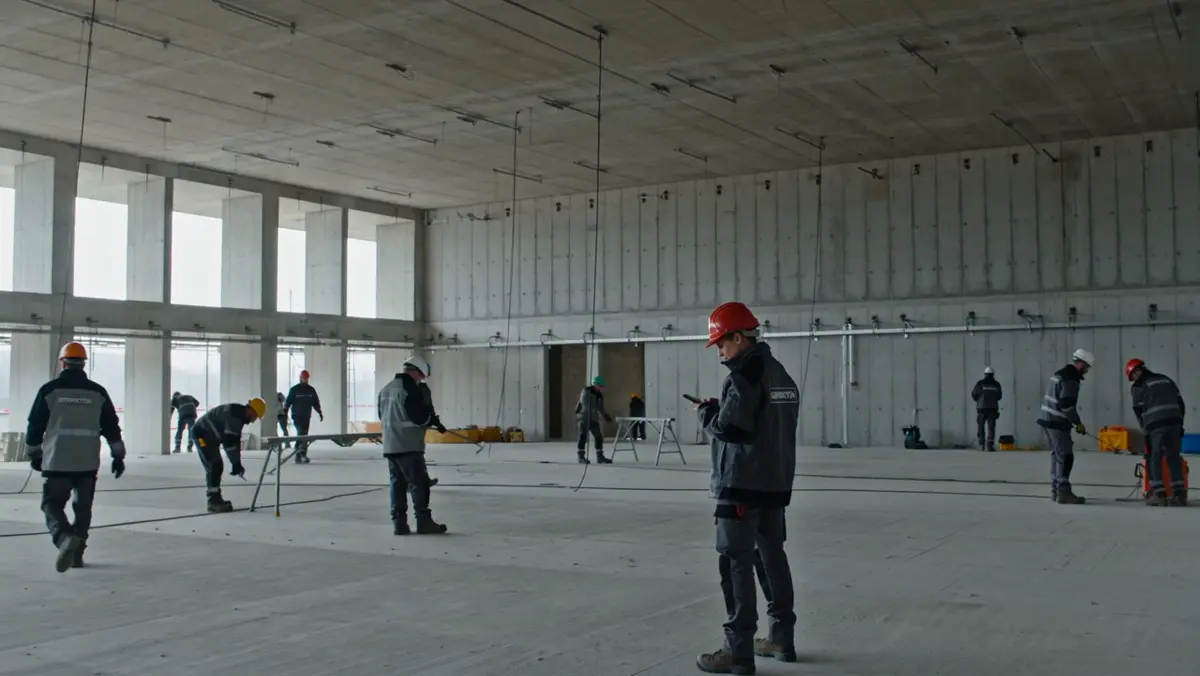
Housing and building construction brings the workflow closer to the everyday concerns of site managers and self-builders: defects with photographs and deadlines, dictated daywork reports and a signature on the device during handover. The project may be smaller, but the information problem remains recognisable. Work still needs to be identified, responsibility still needs to be clear and records still need to be retrievable.
As an affiliate, we earn on qualifying purchases.
Small builds need the same discipline
A tinyhouse43-style self-builder may not be coordinating an industrial plant, but a small project does not make memory more reliable. There are still materials, trades, deadlines, changes and handovers. A photograph can still become separated from the reason it was taken. A spoken agreement can still be remembered differently later. A report can still be postponed until its details have blurred.
The useful lesson is proportional rather than corporate. Small-scale builders do not need to imitate the volume of documentation on major infrastructure projects. They do benefit from the same basic discipline: capture the issue when it is visible, identify the relevant trade, name the responsible person, set the deadline and complete the handover record while everybody has the same context.
Voice-first capture is especially relevant here because it keeps the task close to the work. Dictating a daywork report on site is a direct action. It does not require the builder to recreate an entire working day from notes at some later point. For a self-builder balancing physical work with coordination, the timing of documentation can matter as much as the format.
Plans and models belong in Studio
Field is the on-site entry point, but not every part of a project belongs on a phone or at the workface. Gewerkton Studio is the browser workspace for plans and models. Where no model exists, the site team can create one in the browser.
That gives the three-product structure a clear division. Field captures and handles site information. Studio provides the browser environment for plans and models. The arrangement also acknowledges that not every project begins with a complete model. A site team can still establish one in the browser when none is available.
The distinction matters because documentation should not be treated as one undifferentiated pile. The site record, the plan context and the coordination layer serve different purposes. Keeping Field at the centre of site capture does not mean asking it to replace the browser workspace used for plans and models.
Cloud connects the working parts
Gewerkton Cloud handles operations and model or data coordination between Field, Studio and third parties. It is the connecting product line rather than a fourth place to perform the same task.
Data residency is offered as a choice: an EU cloud or the user’s own infrastructure. Gewerkton also follows a bring-your-own-AI approach. It supports 13 AI providers, allows users to bring their own keys and makes the provider region selectable across the EU, US and Asia, including mainland China. The stated aim is to avoid vendor lock-in.
These choices are relevant to global projects because the platform is designed for international use. Gewerkton was born in the German market and has its deepest German commercial integration through GAEB, REB, XRechnung and DATEV. At the same time, it is intended for global markets, with 27 content languages and regional AI-provider choice.

One project, several working languages
Cross-border construction teams can include people in the EU, US and APAC working on the same project, each in their own language. Gewerkton’s multilingual approach is intended to keep the original evidence unambiguous while allowing people to work in their own language.
For projects in Asia, the stated use cases include Chinese, Korean and Vietnamese crews, multilingual handling from capture to report, and data residency by choice. The provider options also include Asian providers, including providers in mainland China.
This is important at the capture stage. If the system begins with speech, language cannot be treated as a cosmetic setting added after the record has been made. The spoken input, the structured report and the original evidence need to remain connected across the workflow.
The broader Gewerkton platform presents these capabilities through a marketing site available in 27 languages. The site uses zero trackers, has no cookie banner and runs on a fully egress-free architecture. Its media bank contains more than 51 self-produced clips and posters.
Built unusually, tested deliberately
Gewerkton is being built by a solo founder directing a fleet of coding agents using Codex and Claude. In one night, that fleet shipped 21 software packages. Those packages were verified with negative controls and mutation tests.
That development model is unusual enough to note, but it does not change the current product status. Gewerkton remains in beta, and the public beta is planned for fall 2026. The development story explains how the software is being produced; it is not a substitute for being clear about where the product stands today.
Capture the facts while they are still on site
The biggest loss on a job site is not necessarily the absence of information. Often the information existed, but only briefly in a useful form. The photograph was taken. The instruction was spoken. The work was seen. The handover happened. What disappeared was the connection between those moments and a structured, retrievable record.
The speakable daywork report addresses that gap at the point where it starts. Dictate while the context is present. Connect the account to the trade, deadline and responsible person. Capture defects with photographs and deadlines. Obtain the signature on the device at handover. Where instructions matter over long project durations, retain the original audio as support.
For a site manager, that is the practical promise of voice-first documentation: less reconstruction after the fact and a clearer route from what was said and seen to what can be shown. For a self-builder, the scale changes but the principle does not. Record the work before the working day moves on, because on site, what counts is what’s proven.
Fall Picks
fall essentials
As an affiliate, we earn on qualifying purchases.